

BOWTIED VITAMINS GUIDE TO ASHWAGANDHA
You’ve probably heard a lot about ashwagandha — both good & bad.
BTV is here to set the record straight & show you how to incorporate this stress-reducer into your supplement stack.
Read on for the definitive guide to ashwagandha 🧵👇
You’ve probably heard a lot about ashwagandha — both good & bad.
BTV is here to set the record straight & show you how to incorporate this stress-reducer into your supplement stack.
Read on for the definitive guide to ashwagandha 🧵👇

Ashwagandha, also know as “Indian ginseng,” “winter cherry” & withania somnifera, is an evergreen shrub native to India & SE Asia that has been used in Ayurvedic medicine for thousands of years.
In Ayurveda, ashwagandha is considered a rusayana, or rejuvenative…
In Ayurveda, ashwagandha is considered a rusayana, or rejuvenative…
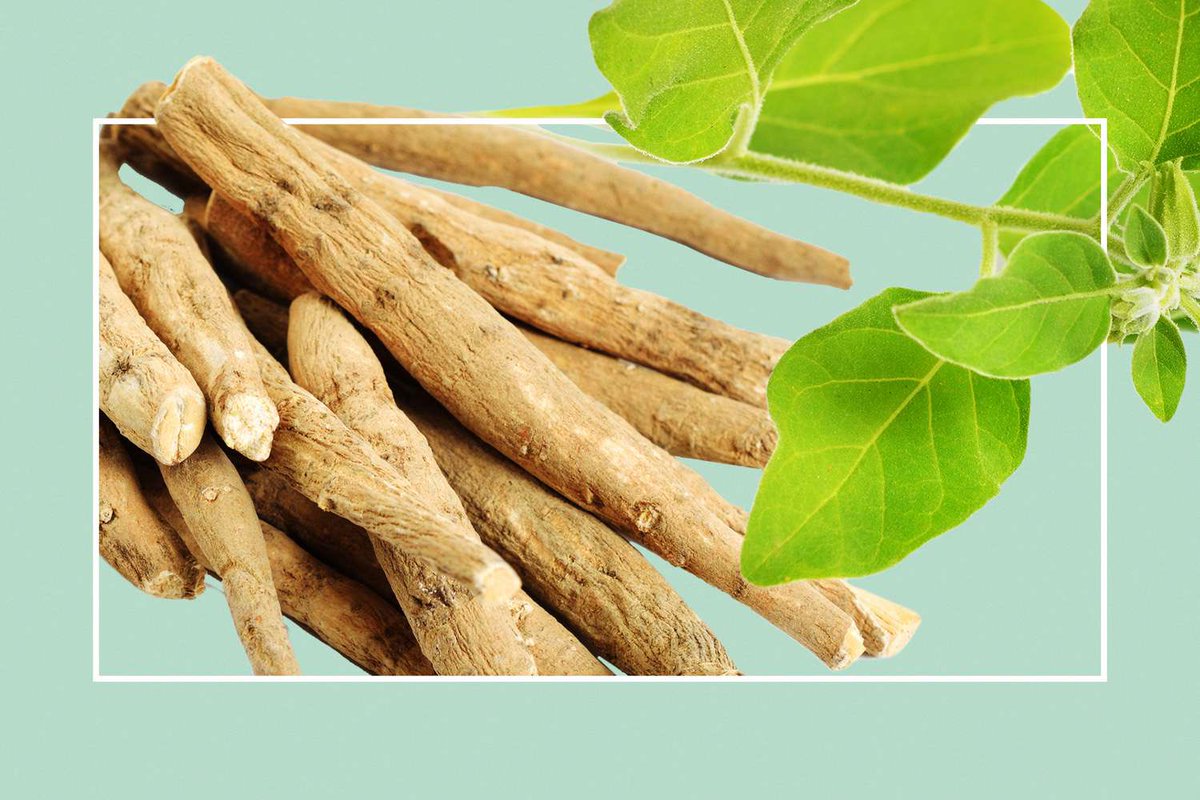
For its ability to restore depleted tissues, frazzled nerves & low libido.
As the king of adaptogenic herbs, it is known to support adrenal & thyroid function — key players in balancing hormones — helps the body cope with stress & lowers cortisol.
As the king of adaptogenic herbs, it is known to support adrenal & thyroid function — key players in balancing hormones — helps the body cope with stress & lowers cortisol.
Traditionally, the roots of the plant are used, which can be difficult to digest — people with low agui, or digestive fire, may want to avoid.
To improve digestibility, traditional preparations will pair it with an anupana (carrier) such as ghee, honey, or boiled milk…
To improve digestibility, traditional preparations will pair it with an anupana (carrier) such as ghee, honey, or boiled milk…
With black pepper or cinnamon.
Today, most people take ashwagandha in supplement form, which consists of an extract made from the roots and/or leaves.
Today, most people take ashwagandha in supplement form, which consists of an extract made from the roots and/or leaves.
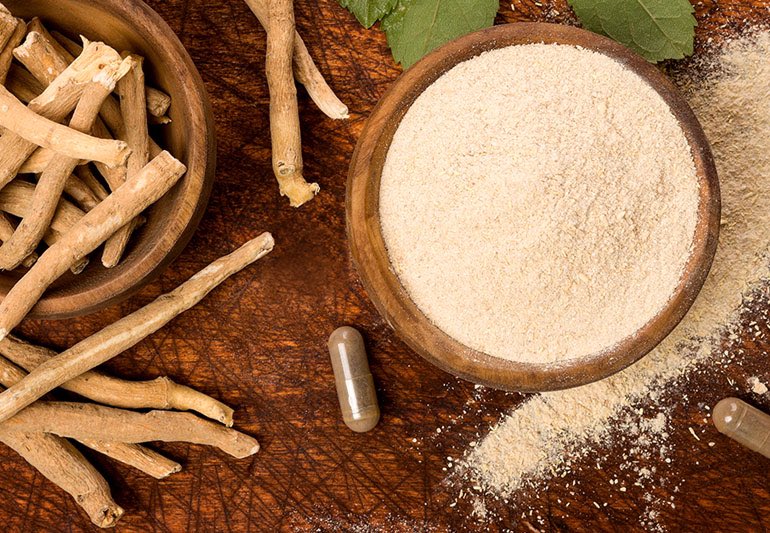
Ashwagandha has been shown to have various benefits, including:
• alleviates stress, anxiety & depression
• enhances sleep & improves insomnia
• lowers blood sugar, cholesterol & inflammation
• boosts immunity
• improves sports performance
• boosts memory & brain function
• alleviates stress, anxiety & depression
• enhances sleep & improves insomnia
• lowers blood sugar, cholesterol & inflammation
• boosts immunity
• improves sports performance
• boosts memory & brain function
• improves male fertility & boosts testosterone
• improves female sexual dysfunction
Let’s dig into the many benefits of ashwagandha 👇👇👇
• improves female sexual dysfunction
Let’s dig into the many benefits of ashwagandha 👇👇👇
1. STRESS, ANXIETY & DEPRESSION
Ashwagandha has been shown to help balance the relationship between the hypothalamus, pituitary & adrenal glands (HPA axis), which governs the body’s response to stress.
Stress causes the adrenals to release cortisol. If your body is constantly…
Ashwagandha has been shown to help balance the relationship between the hypothalamus, pituitary & adrenal glands (HPA axis), which governs the body’s response to stress.
Stress causes the adrenals to release cortisol. If your body is constantly…

Overreacting to everyday stress & releasing cortisol, it can have a material adverse impact on your long-term health.
Ashwagandha reduces the activity of the HPA axis so that your body doesn’t overreact to a stressful situation.
Studies show that taking Ash can reduce anxiety…
Ashwagandha reduces the activity of the HPA axis so that your body doesn’t overreact to a stressful situation.
Studies show that taking Ash can reduce anxiety…
Associated with chronic stress & anxiety disorders better than some prescription drugs. Human studies have found cortisol reductions of 14-28% in otherwise healthy individuals.
Some evidence also suggests ashwagandha may help reduce symptoms of depression.
Some evidence also suggests ashwagandha may help reduce symptoms of depression.
2. SLEEP
Studies suggest that ashwagandha can improve sleep quality, particularly in those with stress-related insomnia.
It has also been shown to improve mental alertness upon waking.
Studies suggest that ashwagandha can improve sleep quality, particularly in those with stress-related insomnia.
It has also been shown to improve mental alertness upon waking.

3. BLOOD SUGAR, CHOLESTEROL & INFLAMMATION
A review of 24 studies found that ashwagandha significantly reduced blood sugar, HbA1c, insulin, blood lipids & oxidative stress markers.
Studies also show promise in boosting immunity & lowering systemic inflammation.
A review of 24 studies found that ashwagandha significantly reduced blood sugar, HbA1c, insulin, blood lipids & oxidative stress markers.
Studies also show promise in boosting immunity & lowering systemic inflammation.
4. EXERCISE PERFORMANCE
Emerging evidence suggests that ashwagandha can improve athletic performance, including increased endurance, speed & strength by enhancing your body’s resilience to physical stress. Research also shows Ash can alleviate fatigue from exercise.
Emerging evidence suggests that ashwagandha can improve athletic performance, including increased endurance, speed & strength by enhancing your body’s resilience to physical stress. Research also shows Ash can alleviate fatigue from exercise.
5. BRAIN FUNCTION
Studies have shown that people who take ashwagandha score better on tests measuring mental fatigue. It has also been shown in numerous studies to enhance aspects of cognitive function, including reaction time, task performance, memory & attention.
Studies have shown that people who take ashwagandha score better on tests measuring mental fatigue. It has also been shown in numerous studies to enhance aspects of cognitive function, including reaction time, task performance, memory & attention.
6. SEXUAL FUNCTION
Ashwagandha is used in Ayurvedic medicine for sexual function & infertility. It has been shown to increase T levels in men by 15% & enhance sperm quality.
In women, studies have shown benefits including increased arousal & improved sexual satisfaction.
Ashwagandha is used in Ayurvedic medicine for sexual function & infertility. It has been shown to increase T levels in men by 15% & enhance sperm quality.
In women, studies have shown benefits including increased arousal & improved sexual satisfaction.

Ashwagandha contains more than 200 metabolites, with glycowithanolides being responsible for most of its medicinal properties. The main structures of ashwagandha include:
• Withanolide A— inhibits acetylcholinesterase & is immunostimulant & cortisol-suppressant
• Withanolide A— inhibits acetylcholinesterase & is immunostimulant & cortisol-suppressant
• Withanoside IV— reduces stress & anxiety & increases neurogenesis & length of axons
• Sominone— promotes neurogenesis & axon length
• Ashwagandhanolide— has inhibitory effects on certain types of cancer
• Withaferin A— is cytotoxic
• Sominone— promotes neurogenesis & axon length
• Ashwagandhanolide— has inhibitory effects on certain types of cancer
• Withaferin A— is cytotoxic
• Withanone— promotes cell apoptosis in breast cancer cells
Ashwagandha supplements use extracts from the leaves and roots. Leaf extracts often contain high levels of Withaferin A while root extracts contain low levels of Withaferin A.
Since Withaferin A is cytotoxic…
Ashwagandha supplements use extracts from the leaves and roots. Leaf extracts often contain high levels of Withaferin A while root extracts contain low levels of Withaferin A.
Since Withaferin A is cytotoxic…
You should generally avoid leaf extract unless they have independent analysis proving low Withaferin A concentration.
You should look for a 300-800mg dose with 2-5% withanolides concentration.
If your ashwagandha is higher in withanolides, it will have an extra calming effect.
You should look for a 300-800mg dose with 2-5% withanolides concentration.
If your ashwagandha is higher in withanolides, it will have an extra calming effect.
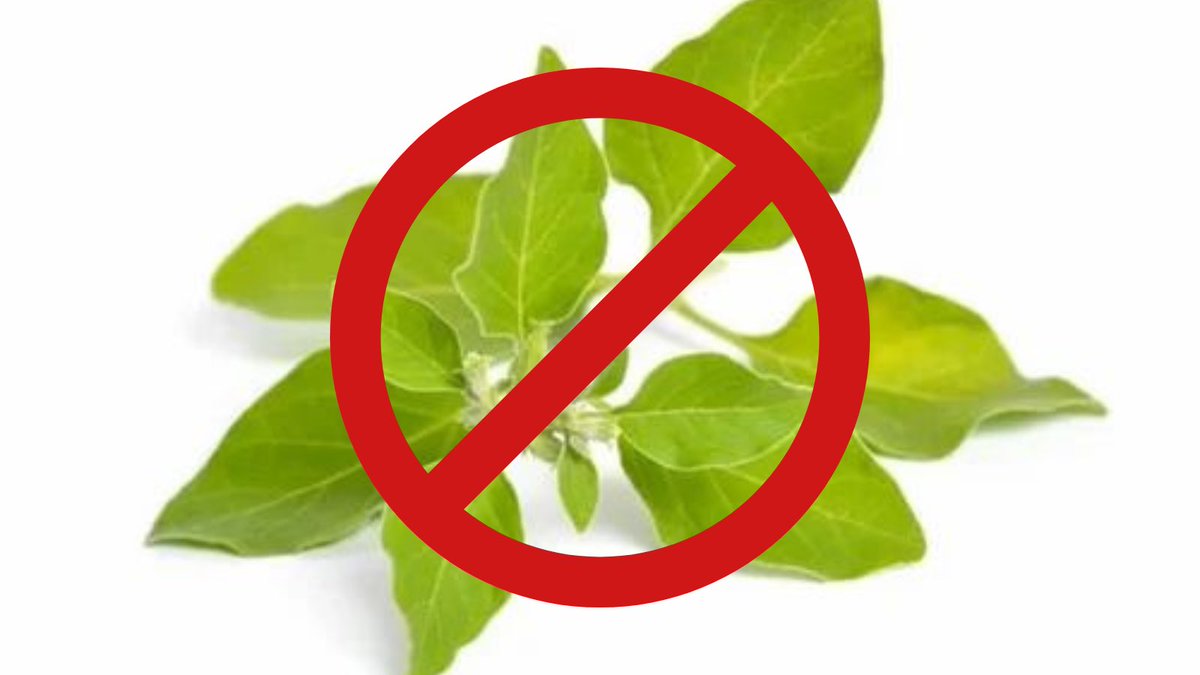
KSM-66 is a branded ashwagandha extract and is one of the best options.
KSM-66 is an Ash root extract that preserves the natural proportions of active ingredients found in the root.
It uses a milk extraction process that is consistent with traditional Ayurvedic methods.
KSM-66 is an Ash root extract that preserves the natural proportions of active ingredients found in the root.
It uses a milk extraction process that is consistent with traditional Ayurvedic methods.

Clinical studies of KSM-66 show that it promotes cognitive function, stress management, sleep, endurance & recovery.
It’s a very safe, low-toxicity form of ashwagandha with glycowithanolide concentrations of 5% & negligible concentrations of Withaferin A.
It’s a very safe, low-toxicity form of ashwagandha with glycowithanolide concentrations of 5% & negligible concentrations of Withaferin A.
People with autoimmune diseases should avoid ashwagandha. As an adaptogen, it upregulates the immune system, which can exacerbate these conditions.
It also stimulates the thyroid and can worsen an already overactive thyroid.
It also stimulates the thyroid and can worsen an already overactive thyroid.
Women with hormone imbalances should also avoid ashwagandha because it promotes testosterone. Particularly in PCOS, there are excess androgens, so Ash can make the problem worse.
If you’ve hung around this side of Twitter or Reddit, you’ve probably seen anecdotes about people becoming emotionless, a condition known as anhedonia, after long-term use of ashwagandha.
Ashwagandha is an adaptogen, and everyone responds differently to adaptogens.
Ashwagandha is an adaptogen, and everyone responds differently to adaptogens.

But numerous studies suggest that ashwagandha is generally safe for consumption without considerable side effects.
It’s more likely that some people feel like a “zombie” when taking ashwagandha because they are so used to redlining their cortisol & anxiety 24/7.
It’s more likely that some people feel like a “zombie” when taking ashwagandha because they are so used to redlining their cortisol & anxiety 24/7.
Or, people are taking insanely high doses of ashwagandha with huge withanolide concentrations.
Like, don’t take this one lol:
Like, don’t take this one lol:
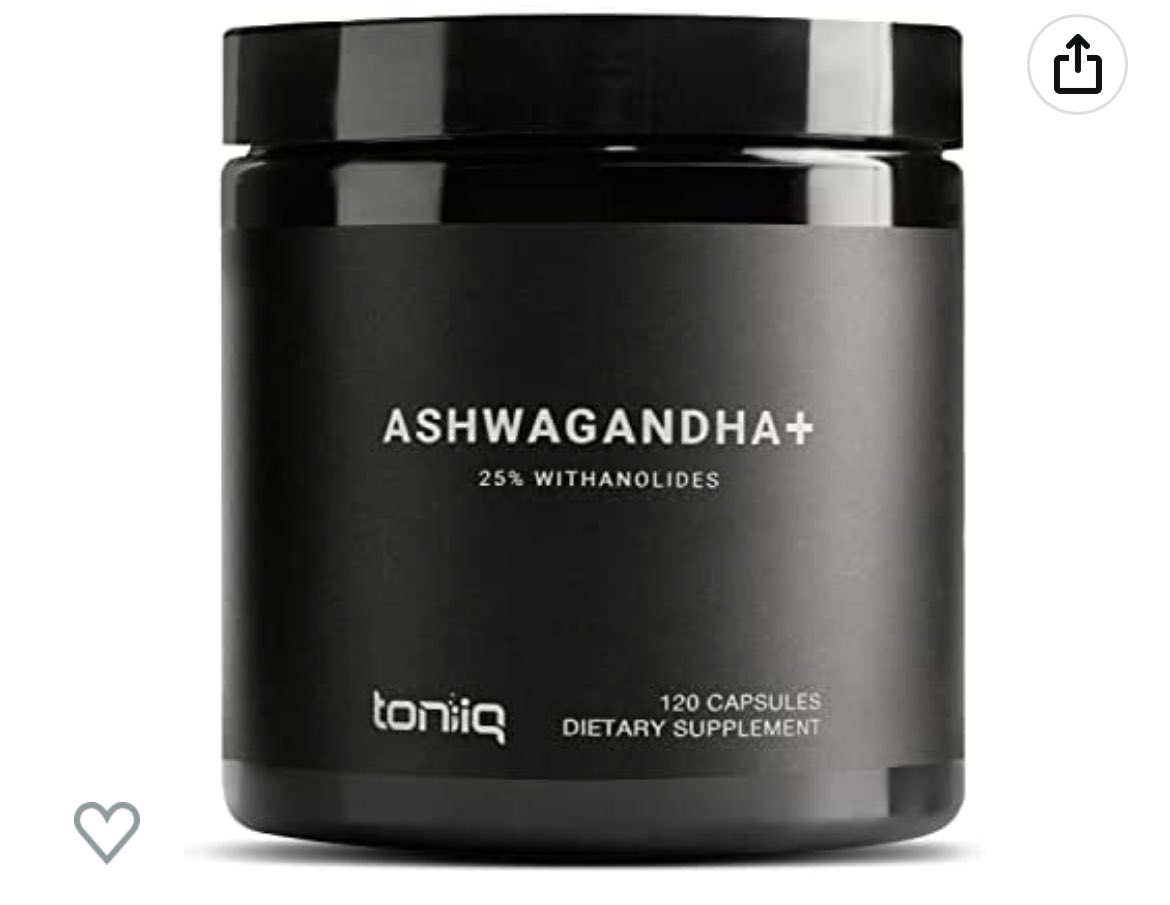
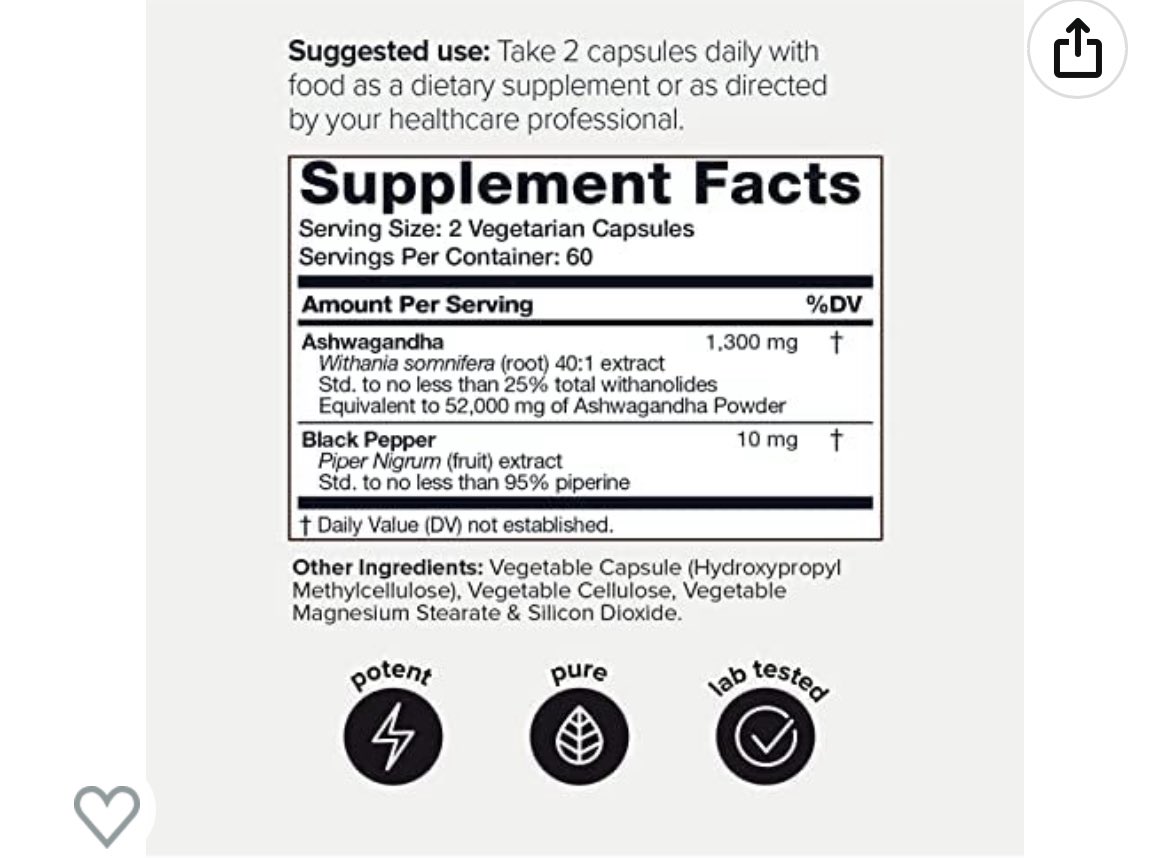
Some people claim that cycling ashwagandha could help combat the supposed risk of anhedonia, but thus far the literature doesn’t find any usefulness in cycling ashwagandha.
Anecdotally, I’ve been taking it for years without side effects.
Anecdotally, I’ve been taking it for years without side effects.
Meanwhile, some people are worried about a study that shows that ashwagandha supplementation increases the risk of liver toxicity & DNA damage.
But if you dig into the study you can see this is not actually a risk, as long as you are smart about your intake.
But if you dig into the study you can see this is not actually a risk, as long as you are smart about your intake.
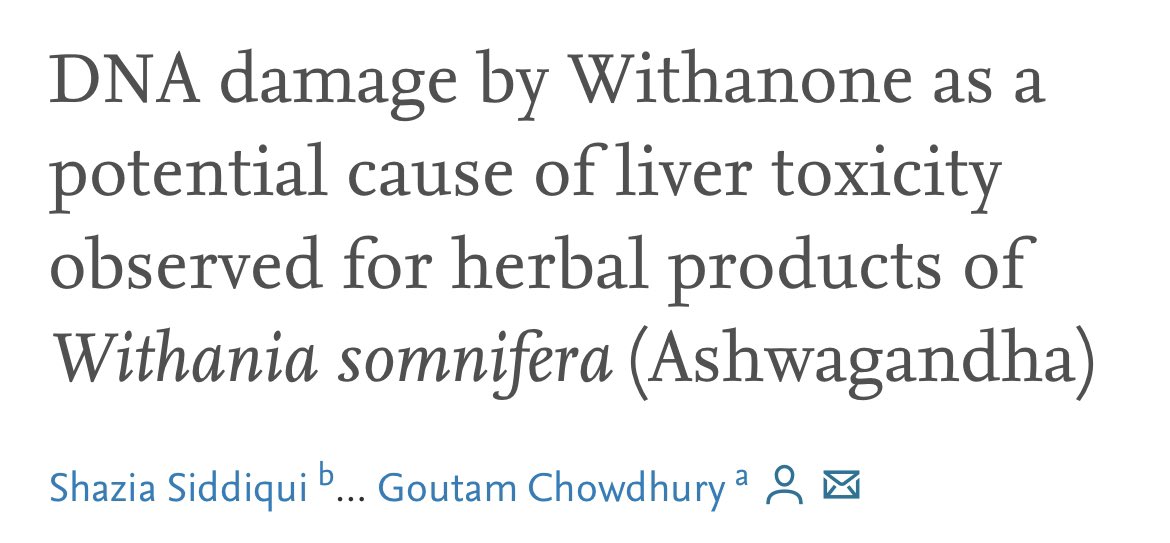
The study in question shows that Withianone (Win) causes liver & DNA damage IN HIGH DOSES.
But we see this with many vitamins, herbs, and pharmaceuticals.
“The dose makes the poison.”
But we see this with many vitamins, herbs, and pharmaceuticals.
“The dose makes the poison.”
Acetaminophen is also toxic to the liver in high doses. But if used at proper dosages, it is detoxified by glutathione.
The same can be said of Win.
Win is found in significantly higher amounts in leaves vs. roots (19 & 3 mg/g, respectively).
So just avoid leaf extracts.
The same can be said of Win.
Win is found in significantly higher amounts in leaves vs. roots (19 & 3 mg/g, respectively).
So just avoid leaf extracts.
Also make sure your glutathione stores are topped up to ensure proper detoxification by supplementing with vitamin C, NAC & selenium.
Oral glutathione supplements are not absorbed very well in the body.
Oral glutathione supplements are not absorbed very well in the body.
Don’t let people scare you away from ashwagandha.
This ancient herb has been used safely for thousands of years and can have a profound effect on your stress, mood, sleep, brain function, exercise performance & sexual health.
This ancient herb has been used safely for thousands of years and can have a profound effect on your stress, mood, sleep, brain function, exercise performance & sexual health.

If you found this thread helpful, please like and retweet the first tweet to help spread the word.
And don’t forget to smash that ‘follow’ button for more helpful tips on how to optimize your health!
And don’t forget to smash that ‘follow’ button for more helpful tips on how to optimize your health!
Loading suggestions...