

HOW ARTIFICIAL FOODS ACTUALLY DESTROY YOUR HEALTH
🧵A Thread🧵
🧵A Thread🧵
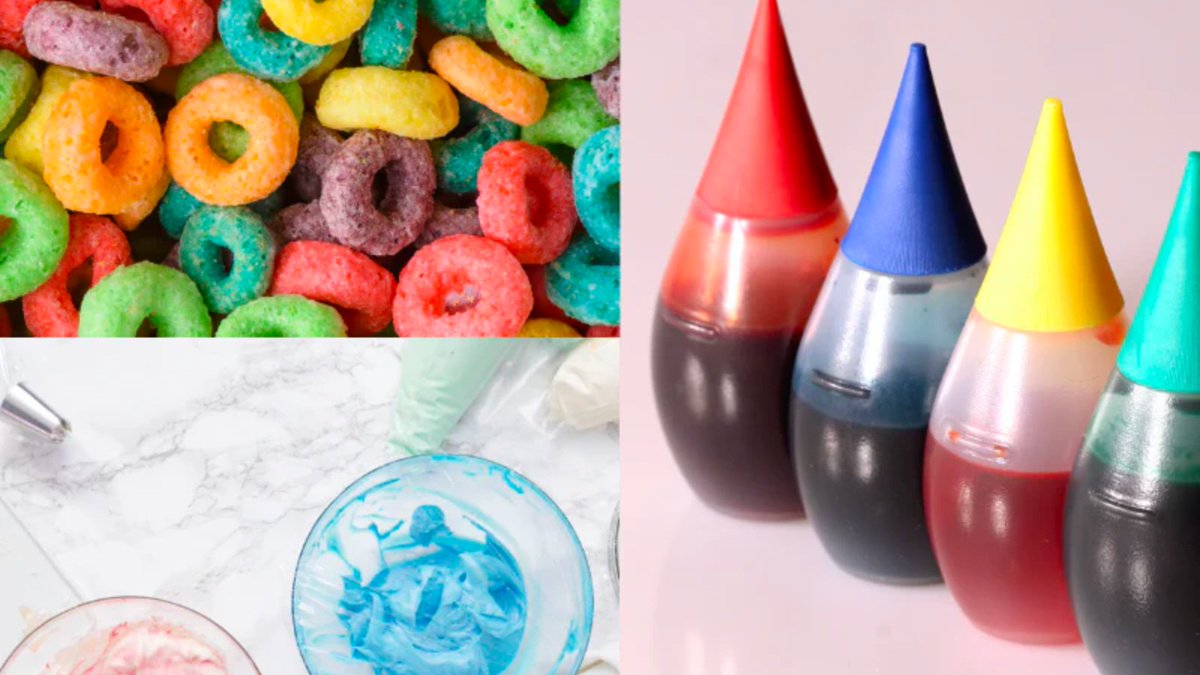
According to the FDA, dyes are used to confer color to food that has lost it and to improve the color or provide it to uncolored food to make it attractive...
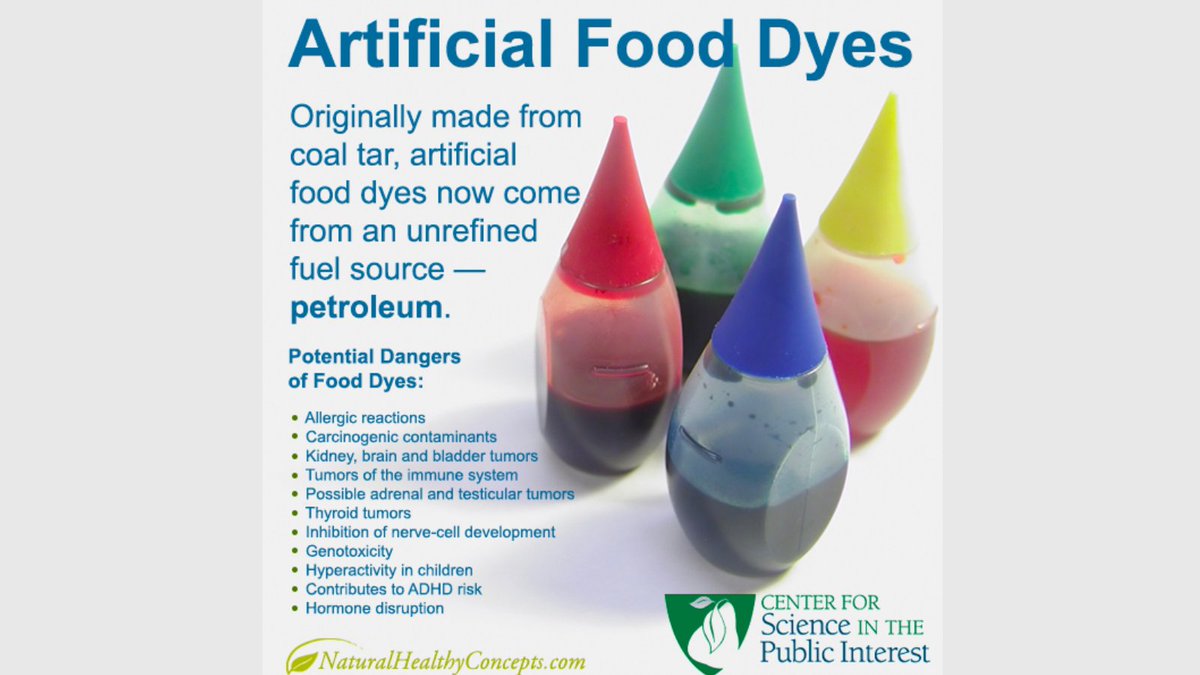
Artificial dyes derived from petroleum are found in thousands of foods.
Artificial dyes derived from petroleum are found in thousands of foods.
Breakfast cereals, candy, snacks, beverages, vitamins, and countless others are colored with dyes.
Even some fresh oranges are dipped in dye to brighten them and provide uniform color.
Generally, found in processed foods high in refined carbohydrates & of low nutritional value
Even some fresh oranges are dipped in dye to brighten them and provide uniform color.
Generally, found in processed foods high in refined carbohydrates & of low nutritional value

During the past 50 years, the amount of synthetic dye used in foods has increased by 500%.
The consuming public is largely unaware of the perilous truth behind the deceptive allure of artificial dyes...
The consuming public is largely unaware of the perilous truth behind the deceptive allure of artificial dyes...
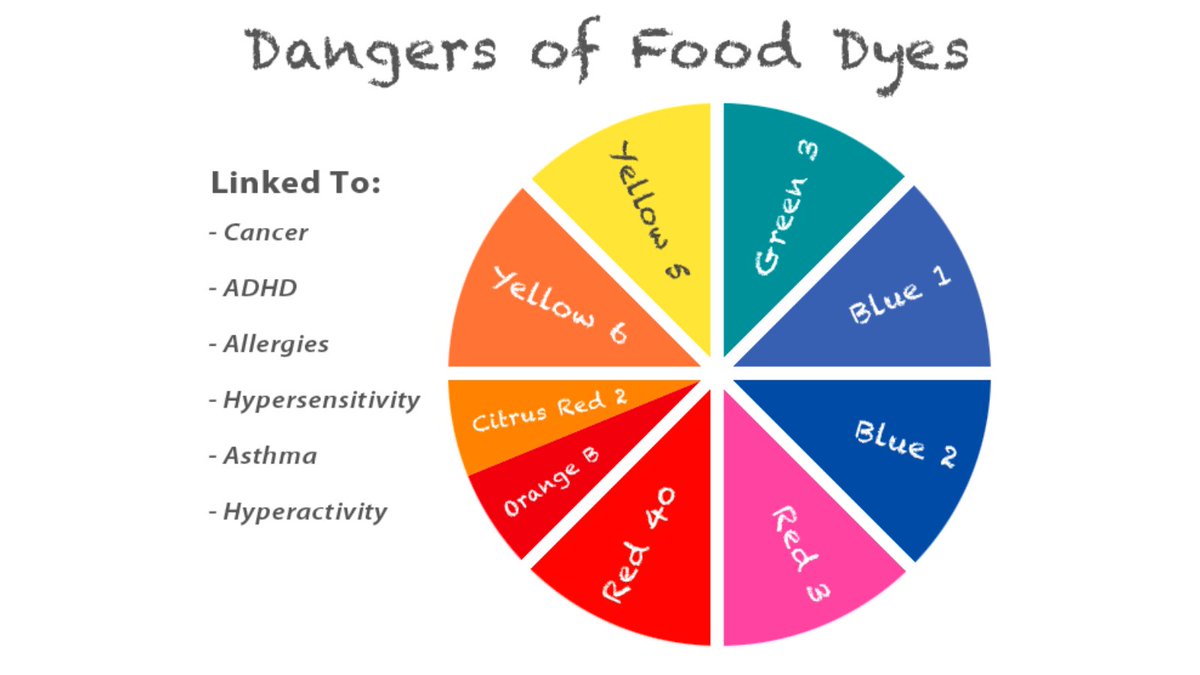
A few US-approved dyes raise health concerns:
- Red 3 causes cancer in animals
- Red 40, Yellow 5/6 have been found to be contaminated with benzidine/carcinogens
- Blue 1, Red 40, Yellow 5, and Yellow 6)cause hypersensitivity reactions
- Yellow 5 was positive for genotoxicity
- Red 3 causes cancer in animals
- Red 40, Yellow 5/6 have been found to be contaminated with benzidine/carcinogens
- Blue 1, Red 40, Yellow 5, and Yellow 6)cause hypersensitivity reactions
- Yellow 5 was positive for genotoxicity
Consumption of dyes, & their ability to bind with proteins, can have significant immunological consequences.
This can activate an inflammatory cascade, intestinal permeability to antigenic molecules, & lead to cross-reactivities, autoimmunities, & neurobehavioral disorders.
This can activate an inflammatory cascade, intestinal permeability to antigenic molecules, & lead to cross-reactivities, autoimmunities, & neurobehavioral disorders.
"Consumption of Red No. 3, which has estrogenlike growth stimulatory properties and may be genotoxic, could be a significant risk factor in human breast carcinogenesis."
pubmed.ncbi.nlm.nih.gov
pubmed.ncbi.nlm.nih.gov
"their buildup in the body can affect the testis by disrupting the normal state of its functional genes as well as tampering with the fertility hormone receptor genes, which may impair spermatogenesis, hence leading to infertility."
pubmed.ncbi.nlm.nih.gov
pubmed.ncbi.nlm.nih.gov
"Current evidence from studies in humans, largely from controlled exposure studies in children, supports a relationship between food dye exposure and adverse behavioral outcomes in children, both with and without pre-existing behavioral disorders."
ncbi.nlm.nih.gov
ncbi.nlm.nih.gov
And how much dye does each food actually contain?
"Five samples of juices and drinks showed levels of some artificial food color additives that exceeded the permitted level in India and GMP ranges in UK and USA."
"Five samples of juices and drinks showed levels of some artificial food color additives that exceeded the permitted level in India and GMP ranges in UK and USA."
Furthermore, infants and children eat more in proportion to their body weight and their nervous systems are rapidly developing, they are more vulnerable to pre- and postnatal chemical exposure compared with adults...
The single-day intake estimates for children < 2 years old also exceeded the U.S. FDA ADI.
Fruit juice drinks, soft drinks, frostings and icings, and ice cream cones were the major food categories contributing to children’s exposure to color additives.
ncbi.nlm.nih.gov
Fruit juice drinks, soft drinks, frostings and icings, and ice cream cones were the major food categories contributing to children’s exposure to color additives.
ncbi.nlm.nih.gov
Will limited exposure to food dyes kill you? Of course not.
But prolonged exposure from a variety of sources (food, meds, cosmetics, etc), inadequate testing & regulation, coupled with the fact that dyes do nothing to improve safety/nutritional value means that you should AVOID
But prolonged exposure from a variety of sources (food, meds, cosmetics, etc), inadequate testing & regulation, coupled with the fact that dyes do nothing to improve safety/nutritional value means that you should AVOID

If you want the full breakdown of the danger of these artificial food dyes, particularly the dangers of developing children, keep an eye out for this Sunday's newsletter.
rootcausehealth.substack.com
rootcausehealth.substack.com
Loading suggestions...