
"You can trace every sickness, every disease, and every ailment to a mineral deficiency."
-Linus Pauling
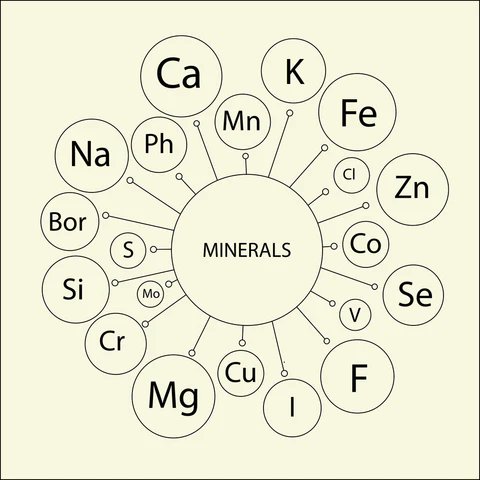
-Energy production
-Growth and development
-The proper utilization of nutrients
-Protein synthesis
-The health of our nervous system and thyroid
-Detoxification
-The functions of various enzymes
-Fighting viruses
-Hormonal health
and a lot more.
What we are going to do in this thread, is analyze the importance of each one of the main minerals and also see how we can achieve a proper balance in each one.
Magnesium is the fourth most abundant mineral in the human body and assists more than 300 enzymes (enzymes, not enzymatic reactions, these two are different things) to carry out various chemical reactions in the body such as building proteins, strong bones,
Magnesium also acts as an electrical conductor that contracts muscles and makes the heart beat steadily.
More than half of the magnesium in our body is stored in bones, and the remaining in
Magnesium also plays a role in the active transport of calcium and potassium ions across cell membranes.
Now before starting to pop magnesium supplements, make sure that you've addressed the factors that lead to the depletion of Mg first.
-nnEMF
-Phytic acid
-Stress
-Aluminum
-Alcohol
-Diuretics
The best sources of magnesium are:
-Mineral water
-H.metal free cacao
-Swimming in the clean ocean
-Some magnesium supplements that are not filled with toxic food additives
-Organic beef heart
Copper is an essential trace mineral found in higher concentrations in organs such as the liver, kidneys, brain and heart.
The mitochondria depend on copper for energy metabolism and copper plays a key role in functions within the body such as:
-Iron absorption.
-The regulation of heart rate and blood pressure.
-The development and maintenance of connective tissue.
-The production of SOD and ceruloplasmin.
-Bone health (when a person has enough enough boron and copper in his system
-Hormone production.
-Immune system maintenance and activation.
-Brain development.
-Oxygen metabolism.
-Formation of collagen.
In order to replenish copper, first make sure
-Inorganic iron
-Sodium fluoride
-Heavy metals (pinned tweet)
-Supplementing with large doses of zinc for a long period of time
-Too much stress
-Supplementing with large doses of vitamin C for a long period of time
-G.f organ meats
-Shellfish
-Heavy metal free cacao
-Glyphosate free bee pollen
-Maple syrup
IF, you are going to use a copper supplement, at least use Copper sulfate and start with a very very small dose (even 1 mg).
Zinc is a trace mineral necessary for almost 100 enzymes to carry out vital chemical reactions that play a key role in:
-The creation of DNA
-Growth of cells
-Building proteins
-Healing damaged tissue
-Supporting a healthy immune system
-Digestion
Zinc is also the primary factor in our ability to recycle vitamin C.
In order to replenish zinc, first make sure to avoid:
-Heavy metals
-Phytic acid
-Consuming too much magnesium
-Alcohol
The best sources of zinc are:
-Shellfish
-Beef
Cobalt is used in the body to help absorb and process vitamin B12, is a cofactor for the formation of thyroxine, it is necessary for the production of blood cells and is essential for the metabolism of carbohydrates (cobalt is part of the biotin-dependent Krebs cycle)
Cobalt can activate some of the enzymes that zinc and manganese activate.
In order to have enough cobalt just make sure to not be vegan or vegetarian and consume (don't over-consume) red meat.
You don't really have to worry about having too little phosphorus.
Having too much phosphorus in the body is actually more common than having too little.
Next to calcium, phosphorus is the most abundant mineral in the body and these 2 work closely together.
Phosphorus is needed for the growth, maintenance, and repair of all tissues and cells, and for the production of the genetic building blocks, DNA and RNA.
The best source of phosphorus is raw milk.
Calcium is a mineral needed for bone and teeth formation, nerve function, regulating heartbeat and helping muscles to contract.
About 99% of the body’s calcium is stored in bones and the remaining 1% is found in blood, muscle, and other tissues.
One is by eating foods that contain calcium and the other is by drawing from calcium in the body.
If one does not eat enough calcium-containing foods, the body will remove calcium from bones.
But this doesn’t always happen, and can’t always be accomplished just by eating more calcium if vitamin K2 and D levels are not optimal or the person eats large doses phytic acid.
Calcium also stimulates LH and is thus a crucial mineral for androgen health.
The best sources of calcium are:
-Raw dairy
-Bone broth/marrow
-Eggshells
Boron is a trace mineral that:
-Helps our bodies metabolize vitamins and minerals.
-Has a key role in bone health and brain health.
-Lowers excessive estrogen and SHBG.
-Boosts fee and total testosterone levels.
-Can also extend the half life of vitamin D.
-Helps the body retain and utilize other minerals such as magnesium and calcium.
-Improves muscle coordination and muscle glycogen.
-Improves sleep.
-Removes sodium fluoride.
The best dietary sources of boron are:
-Prunes
-Raisins
-Avocados
Selenium is a trace mineral which is an essential component of various enzymes and proteins, called selenoproteins that help to make DNA and protect against cell damage and infections.
These proteins are also involved in reproduction and the metabolism of thyroid
Most selenium in the body is stored in muscle tissue, although the thyroid gland holds the highest concentration of selenium due to various selenoproteins that assist with thyroid function.
In order to replenish selenium you must basically avoid heavy metals
The best sources of selenium are:
-Shellfish
-Fin fish
-Eggs
-Beef
-Turkey
-Chicken
Iodine is crucial in order to make antimicrobial peptides, the health of our thyroid, Leydig cells and the function of the immune system.
In order to replenish iodine, you need to make sure to avoid sodium fluoride.
Now the problem with iodine is that it forces
Well the solution to this is again, don't mindlessly consume supplements.
I suggest a weekly "dose" for lack of a better term of organic sea
And do not forget to use sea salt.
Sulfur is the third most abundant mineral in your body, it is crucial for the health of your skin, hair, nails, tendons, ligaments and helps the production of glutathione.
Dietary sources of sulfur include:
-Free range egss
-Raw dairy
-Galric/onion
11)Chromium
Chromium is an essential mineral and low levels of chromium will increase blood sugar (so triglycerides as well) and increase the risk for a number of conditions from diabetes all the way to heart disease.
-Organic organ meats
-Shellfish
-Potatoes (partly how the potato diet became so popular)
12)Manganese
Manganese is a trace mineral which is both essential and potentially toxic (as with any other mineral).
Manganese for example helps the
-Connective tissue
-Bones
-Blood clotting factors
-Sex hormones
-Plays a role in fat and carbohydrate metabolism
-Calcium absorption
-Blood sugar regulation
-Supports fertility
Manganese is a component of the antioxidant enzyme superoxide dismutase which helps fight
13/14)Sodium/Potassium
Sodium is one of the body's electrolytes (minerals that the body needs in relatively large amounts and carry an electric charge when dissolved in body fluids such as blood).
The human body requires sodium to conduct nerve impulses, contract and relax muscles, and maintain the proper balance of water and minerals.
Without enough sodium in your diet you will experience
Obviously do not go all the way to consuming 20 grams of sodium a day.
Just do not drink too much water and salt your foods since the best source of sodium is of course sea salt.
Potassium is an essential mineral that is needed by all tissues in the body.
Its main role in the body is to help maintain normal levels of fluid inside our cells(*).
Potassium also helps muscles to contract and supports normal
Potassium is the third most abundant mineral in the body.
(*)Potassium is the main electrolyte in the ICF, and it determines the amount of water inside the cells.
The best sources of potassium are:
-Avocados
-Bananas
-Winter squash
-Potatoes
-Coconut water
If you liked this thread and learned something from it, make sure to like/RT the first tweet.
More from this author
Master thread on thyroid health. Hypothyroidism is on the rise and here's what you can do to prevent it. https://t.co/adHXONgEMM
How to naturally stop and even reverse hair loss. A thread. https://t.co/HyhClQ0NrM
How to tackle pathogen-related gut issues once and for all. Thread🧵 *Not a small one (15K words)* https://t.co/il01erqfPK
How to effortlessly get lean. It’s really not that hard. Disclaimer: Getting lean effortlessly, is referring all the way down to 9%, any percent lowe...
Recent Threads
I’ve recently seen a lot of people criticizing smaller indie projects for releasing merchandise or doing kickstarter funding to fund their projects. T...

I compiled all the specific references I noticed in May's moveset! #イニブ #g_bd #g_bdr #GBDR https://t.co/PvNHzH6yj6

taekook taguan ng anak au wherein jk received a surprising gift from their xmas party… [ christmas special 🎄] https://t.co/WY3C450KpV

@HitWithAHeart I hear him before I see him. The weight of his steps on the stairs. Slower than usual. Measured. Like he’s already bracing for whatev...

(1/7) I'm not going to do a full trailer breakdown for Zach Cregger's Resident Evil film, since we have an early form of the script you can place a lo...

Nikola Jokic is 0-6 against 50+ win teams in the playoffs. https://t.co/l5hCeVCoUj

Popular Threads
These are the 41 most powerful tenants of Tateism for a man to live by. Wether you are Christian, Muslim; It doesn’t matter if you are strong, weak...
The ICT Mentorship Core Content Month 1 Summarized: https://t.co/6tXJxPMDhm

Here's 40 TikTok hooks that could make you go viral. (Not in any particular order) //THREAD//

ICT’s 2022 Mentorship Summarized: https://t.co/zFJCgIfDAR
Top 20 Players with the most goals + assists in football history, only players with assists available (following the Opta criteria for assists) Seaso...

Top-40 Footballers with Most Goal Contributions (Goals + Assists) in history. [ A MEGA THREAD ] https://t.co/gAb3QcqdYQ