

THE GUT AND SKIN CONNECTION
How your gut health is linked to skin disorders & the quality of your skin
(Thread)
How your gut health is linked to skin disorders & the quality of your skin
(Thread)
In the world of quick fixes, people rush to find a product they can lather on when they are experiencing skin issues
*Most* dermatologists are no better; prescribing creams that at best don’t treat the root cause, and at worst are toxic chemicals that can cause lasting damage
*Most* dermatologists are no better; prescribing creams that at best don’t treat the root cause, and at worst are toxic chemicals that can cause lasting damage
The truth is, like most health issues, the answer comes from within. If you don’t address the root cause, you’ll rarely get lasting results.
So, what is the root cause? More times than not, the gut.
So, what is the root cause? More times than not, the gut.
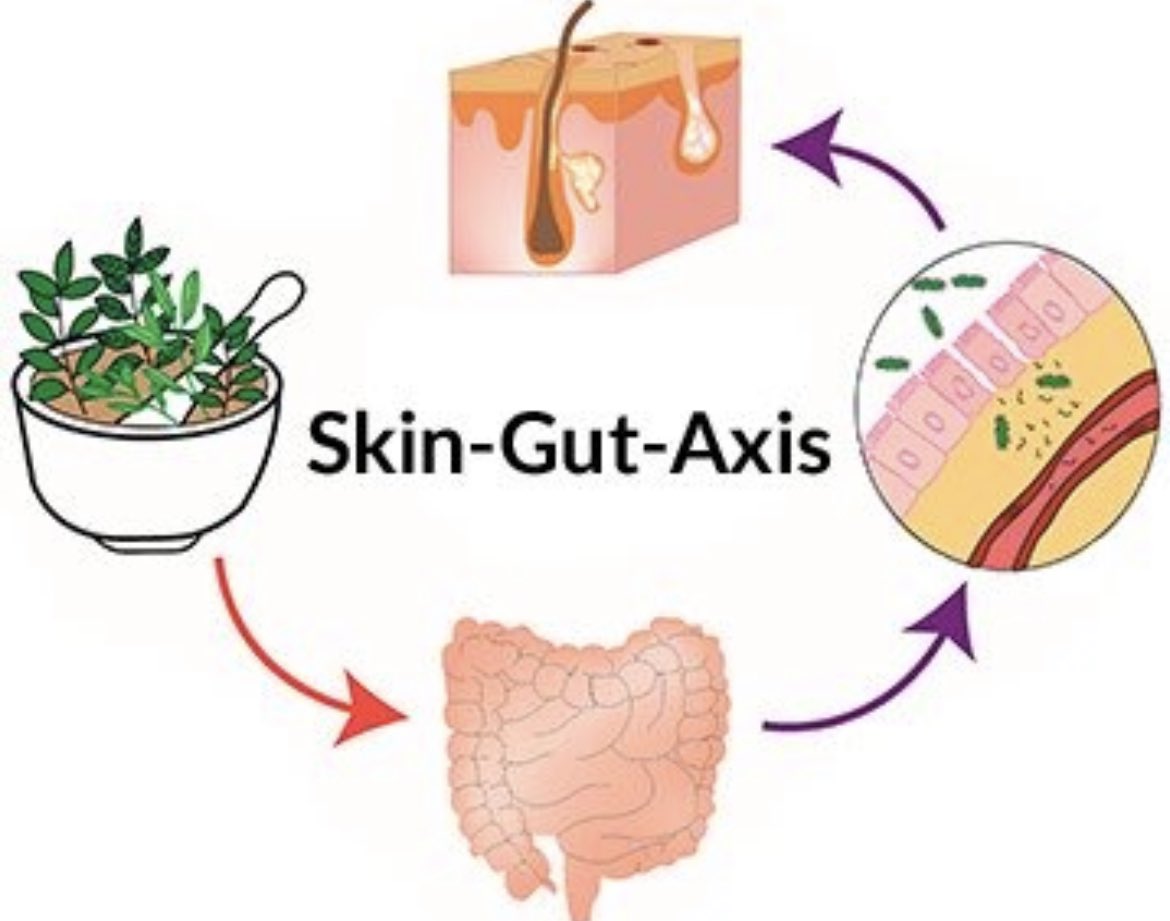
Similar to the gut-brain axis-where our gut and brain are in constant communication-our gut and skin are also in constant communication by what is known as the gut-skin axis.
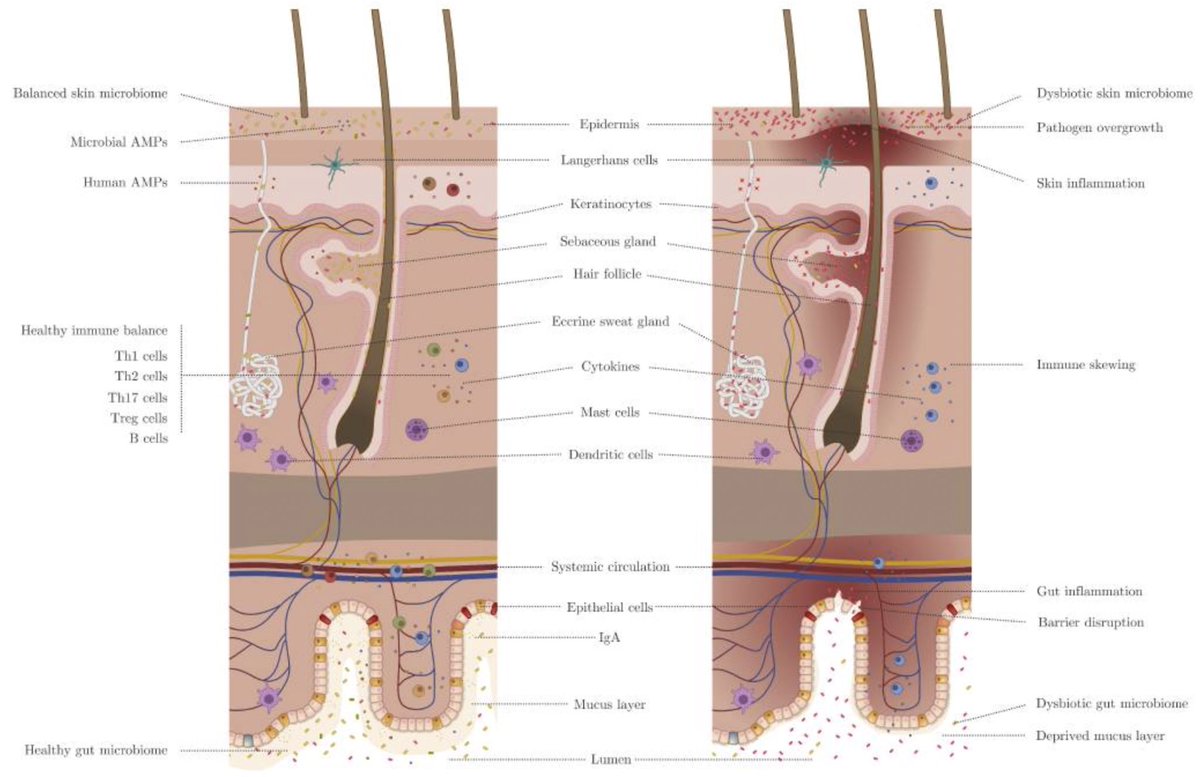
Where there is gut inflammation, there is almost always skin inflammation, caused by gut dysbiosis.
Where there is gut inflammation, there is almost always skin inflammation, caused by gut dysbiosis.
70-80% of our immune system lies in the gut, but the skin, our largest organ, is the first line of defense.
The skin, similar to the gut, also has a diverse community of beneficial bacteria, known as the skin microbiota.
Read more about the gut and immune system here:
The skin, similar to the gut, also has a diverse community of beneficial bacteria, known as the skin microbiota.
Read more about the gut and immune system here:
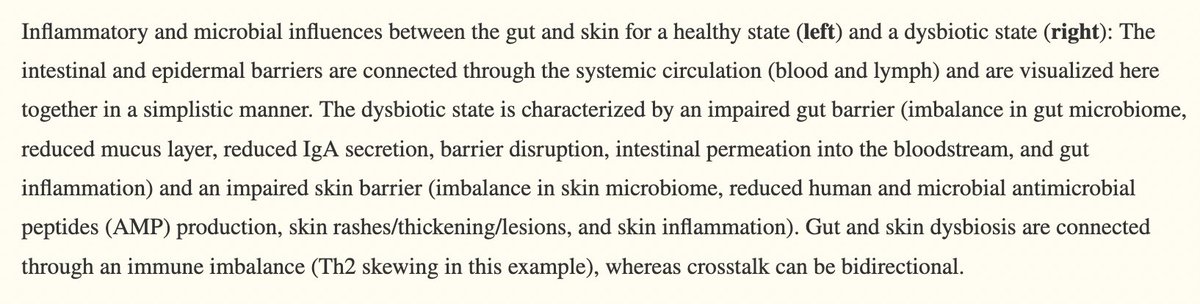
Now it is no surprise that dysbiosis in the skin and/or gut microbiota causes an immune response, as well as inflammation, resulting in skin conditions including acne, psoriasis, eczema, dermatitis, dandruff and even skin cancer.
Leaky gut, caused by damage to your intestinal barrier, allows toxins to “leak” into your bloodstream, causing an immune response and systemic inflammation.
This, in turn, can result in skin disorders.
This, in turn, can result in skin disorders.
Furthermore, there is evidence that up to 40% of people with acne have hypochlorhydria (low stomach acid production), which can cause intestinal permeability and SIBO.
One study showed SIBO is 10 times more prevalent in acne and rosacea patients.
One study showed SIBO is 10 times more prevalent in acne and rosacea patients.
Another important point is that if we are suffering from gut dysbiosis, we’re also not absorbing all of the key nutrients from our food that is needed for healthy, glowing skin.
Some of the most important nutrients for healthy skin:
Some of the most important nutrients for healthy skin:
Acne, the most common skin condition, is caused by your skin producing too much sebum, which clogs pores.
Your gut influences sebum production as well as the fatty acid composition of the sebum. In fact, this study found that 54 percent of people with acne have significant changes to their gut bacteria. pubmed.ncbi.nlm.nih.gov
The list goes on, and there are many links to the gut including eczema, psoriasis, dandruff, rosacea, wound healing and even skin cancer.
Here is an interesting diagram showing the connection between the gut and skin
ncbi.nlm.nih.gov
ncbi.nlm.nih.gov
Despite being a somewhat new topic, the evidence of the gut-skin connection is undeniable. Luckily, the link is starting to pick up more steam in research and in the field of dermatology.
One thing is for sure, if you're dealing with skin issues it can't hurt to address the gut
One thing is for sure, if you're dealing with skin issues it can't hurt to address the gut
Gut health is a very nuanced topic and each person may require a different course of action. Generally speaking, some things that may be helpful to start are:
-Remove all dietary triggers, including gluten, corn, soy, seed oils & commercial dairy
-Bone broth & glutamine on an empty stomach to help restore the intestinal barrier
-Populate the gut with good bacteria from kefir, sauerkraut, kimchi and other ferments
-Consume prebiotics
-Bone broth & glutamine on an empty stomach to help restore the intestinal barrier
-Populate the gut with good bacteria from kefir, sauerkraut, kimchi and other ferments
-Consume prebiotics
“With intentional modulation of the microbiome, probiotics, prebiotics, and synbiotics have proven beneficial in the prevention and/or treatment of inflammatory skin diseases including acne vulgaris, AD, and psoriasis.”
ncbi.nlm.nih.gov
ncbi.nlm.nih.gov
I also want to be very clear:
Not ALL dermatologists ignore the gut and this doesn’t mean there are zero topical treatments that are effective
Not ALL dermatologists ignore the gut and this doesn’t mean there are zero topical treatments that are effective
Like this thread? RT the original tweet to help spread awareness!
Have skin issues? Here’s the deal:
You buy a meal plan, designed specifically to address the gut and skin, 100% customized to you
If after 3 months your skin does not drastically improve, I give you a refund no questions asked
Simple🤷🏻♂️ chriscooks.gumroad.com
You buy a meal plan, designed specifically to address the gut and skin, 100% customized to you
If after 3 months your skin does not drastically improve, I give you a refund no questions asked
Simple🤷🏻♂️ chriscooks.gumroad.com
“Healed my digestive issues in just a few weeks”
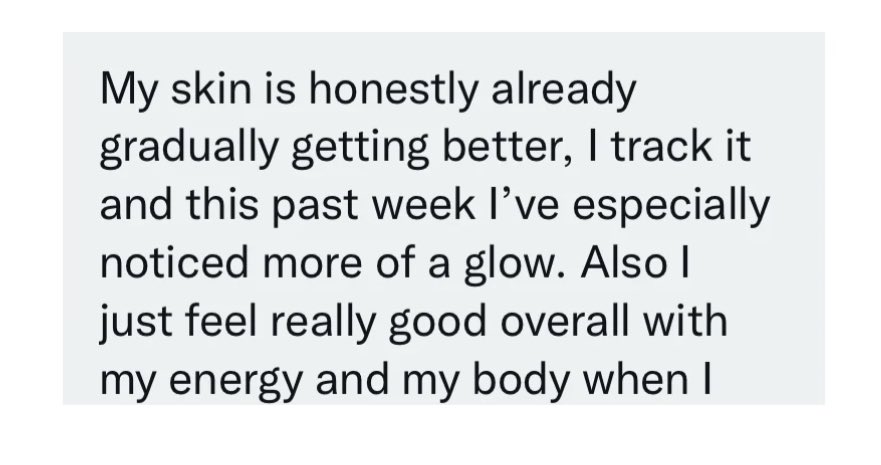
“My skin is already getting better”
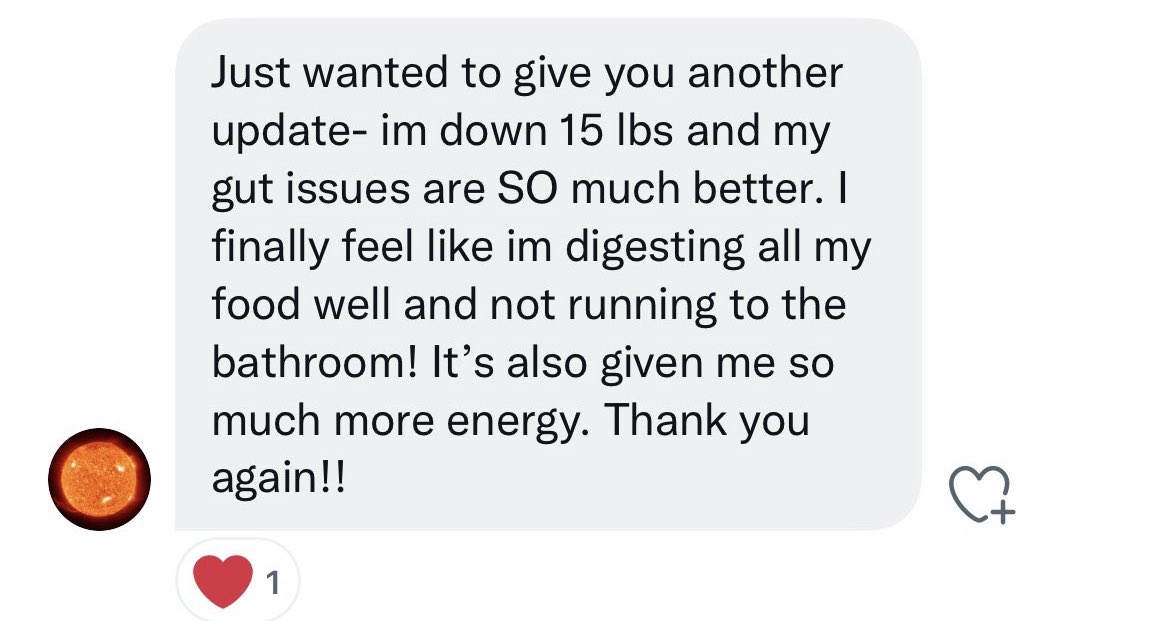
“Gut issues are SO much better”
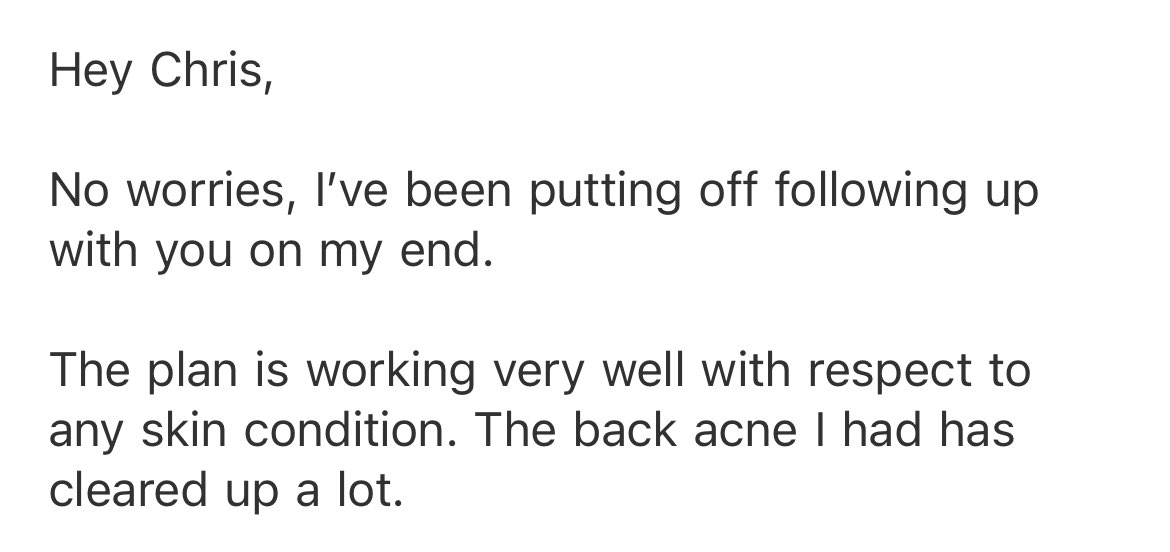
“Back acne has cleared up a lot”
“My skin is already getting better”
“Gut issues are SO much better”
“Back acne has cleared up a lot”
Loading suggestions...