

My most valuable skill that I was never taught in school:
Negotiation.
7 steps to help you MASTER it faster than anyone else:
Negotiation.
7 steps to help you MASTER it faster than anyone else:
1. Build Indebtedness
The worst feeling in the world is being in debt to someone else.
Pro negotiators:
• Build indebtedness via personalized/meaningful gifts
• Leverage discomfort
• Mask a disproportionately large ask
The worst feeling in the world is being in debt to someone else.
Pro negotiators:
• Build indebtedness via personalized/meaningful gifts
• Leverage discomfort
• Mask a disproportionately large ask
Example:
Sam Blond sent 300 bottles of Veuve Clicquot champagne and a handwritten note to 300 Seed to Series B startups.
The follow-up email campaign after this had a 57% conversion to new paying customers.
~$19k for 169 new paying customers.
Sam Blond sent 300 bottles of Veuve Clicquot champagne and a handwritten note to 300 Seed to Series B startups.
The follow-up email campaign after this had a 57% conversion to new paying customers.
~$19k for 169 new paying customers.
2. Hammer in on loss aversion
Humans are more motivated by loss than gain.
Focus on the downsides of NOT closing the deal:
• The opportunities missed
• The timing would have been perfect
Focusing on what’s lost increases your odds of getting to the finish line.
Humans are more motivated by loss than gain.
Focus on the downsides of NOT closing the deal:
• The opportunities missed
• The timing would have been perfect
Focusing on what’s lost increases your odds of getting to the finish line.
Example:
Use past experiences of loss to hammer home that inaction may be costly.
"Last time someone delayed, interest rates rose and the value of the business went down 40%"
Use past experiences of loss to hammer home that inaction may be costly.
"Last time someone delayed, interest rates rose and the value of the business went down 40%"
3. Leverage Recency Bias
Recency bias says we have a tendency to overemphasize what happened LAST.
Even if the deal doesn’t get done, end with some sort of positive momentum.
Just because a deal didn’t get done now doesn’t mean it can’t 3 months or 3 years down the line.
Recency bias says we have a tendency to overemphasize what happened LAST.
Even if the deal doesn’t get done, end with some sort of positive momentum.
Just because a deal didn’t get done now doesn’t mean it can’t 3 months or 3 years down the line.
4. The Squeaky Wheel Phenomenon
Realize this:
You WILL NOT GET ANYTHING if you don’t ask.
A “no” is better than no answer at all.
Because you can only get to “yes” if you’re willing to ask.
Realize this:
You WILL NOT GET ANYTHING if you don’t ask.
A “no” is better than no answer at all.
Because you can only get to “yes” if you’re willing to ask.
5. Separate People from the Problem
Ask 3 main questions:
• Emotion: How does each side feel?
• Perception: What is the other parties position?
• Communication: Do I fully know what they want, and vice versa?
Realize the other party is a human, too.
Ask 3 main questions:
• Emotion: How does each side feel?
• Perception: What is the other parties position?
• Communication: Do I fully know what they want, and vice versa?
Realize the other party is a human, too.
6. Be specific
“Perceived knowledge,” says specific data suggests a deep understanding of a subject.
Have numbers and statistics ready for every deal.
They aren’t as important as storytelling, BUT providing them shows you’re prepared and know what you’re doing.
“Perceived knowledge,” says specific data suggests a deep understanding of a subject.
Have numbers and statistics ready for every deal.
They aren’t as important as storytelling, BUT providing them shows you’re prepared and know what you’re doing.
Example:
'I have increased our client's average monthly spend by $5,000/month by doing x, and if I do y can increase sales by $5,000 thus I'd like a $1,000 raise.'
'I have increased our client's average monthly spend by $5,000/month by doing x, and if I do y can increase sales by $5,000 thus I'd like a $1,000 raise.'
7. Humans are simple.
Don't overcomplicate negotiation.
Ask 3 questions:
• What do they want?
• Why do they want it?
• What can I do to help them, while still “winning” myself?
By seeing both starting points, it becomes easier to find a happy medium
Don't overcomplicate negotiation.
Ask 3 questions:
• What do they want?
• Why do they want it?
• What can I do to help them, while still “winning” myself?
By seeing both starting points, it becomes easier to find a happy medium
Looking for more tactical advice on how to negotiate and do deals?
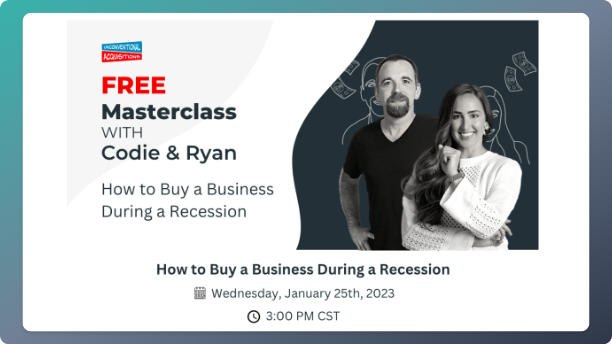
We're hosting a FREE 60-minute masterclass on January 25th (3pm CST):
unconventionalacquisitions.biz
Plus...
One lucky participant is getting a $1,000 startup grant to help jumpstart their biz.
We're hosting a FREE 60-minute masterclass on January 25th (3pm CST):
unconventionalacquisitions.biz
Plus...
One lucky participant is getting a $1,000 startup grant to help jumpstart their biz.
Loading suggestions...