

The cure for most cases of type 2 diabetes (T2DM) requires fat loss. This thread will discuss research showing restoration of carbohydrate tolerance in those with T2DM through addressing the underlying pathology (ectopic fat) rather than just focusing on symptom management.
I previously talked about the cause of T2DM being the accumulation of ectopic fat within the liver and pancreas (twin-cycle hypothesis), which most often occurs when someone surpasses their personal fat threshold (PFT).
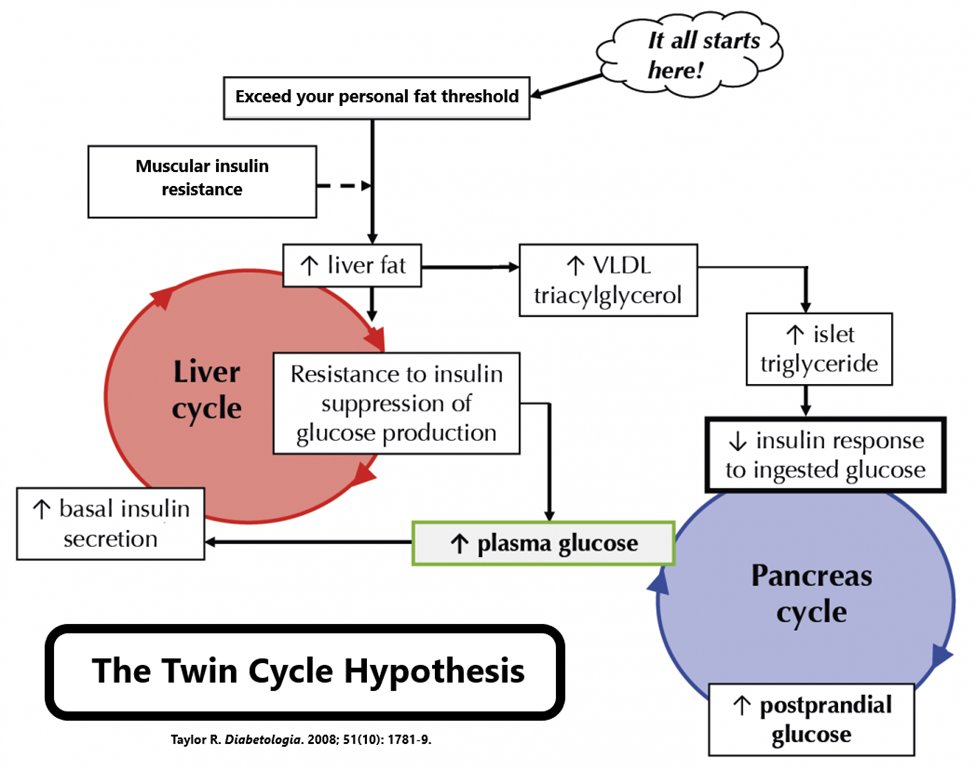
There have been numerous clinical trials conducted over the last decade showing that diet alone can reverse T2DM provided you lose a sufficient amount of body fat.
Roy Taylor, the man who first developed the PFT concept, has been spearheading these investigations.
Roy Taylor, the man who first developed the PFT concept, has been spearheading these investigations.
It all started in 2011 with his proof-of-concept Counterpoint study. He recruited a small group of overweight and obese adults with T2DM for less than 4 years and fed them a 600-calorie liquid diet for 8 weeks while stopping all diabetes medications.
pubmed.ncbi.nlm.nih.gov
pubmed.ncbi.nlm.nih.gov
The results were outstanding. I summarized them graphically in the attached image and will describe them in the next several tweets.
The participants lost an average of 34 lbs, or ~15% of starting body weight, with 83% coming from body fat.
The participants lost an average of 34 lbs, or ~15% of starting body weight, with 83% coming from body fat.
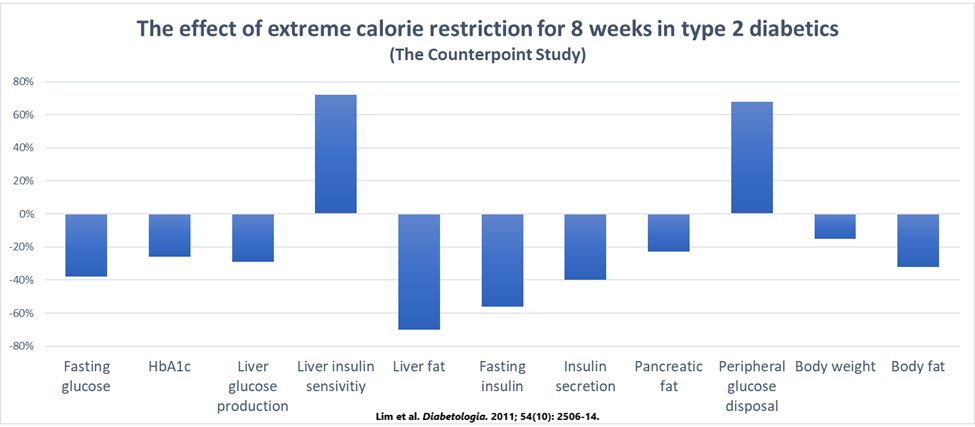
Skeletal muscle insulin sensitivity and ability to uptake glucose from the bloodstream was increased by 68%.
Pancreatic fat dropped by 23%, leading to a normalization of the insulin response when eating carbohydrates.
Pancreatic fat dropped by 23%, leading to a normalization of the insulin response when eating carbohydrates.
Liver fat declined by 70%, completely resolving these people of their fatty liver diagnosis when the study began. This was accompanied by a 72% increase in the liver’s insulin sensitivity and a 34% reduction in the liver’s glucose output.
Fasting glucose levels fell by 40%, fasting insulin was cut in half, and HbA1c was reduced from 7.4% to 6%.
In other words, 8 weeks of extreme dieting resolved these participants' diagnosis of T2DM, all thanks to causing a reduction in body, liver, and pancreatic fat stores.
In other words, 8 weeks of extreme dieting resolved these participants' diagnosis of T2DM, all thanks to causing a reduction in body, liver, and pancreatic fat stores.
While these initial findings were promising, they left Taylor with two important questions:
(1) Are the benefits sustainable once the participants start eating normally?
(2) Can anyone with T2DM cure their condition with fat loss, or are there limitations to its effectiveness?
(1) Are the benefits sustainable once the participants start eating normally?
(2) Can anyone with T2DM cure their condition with fat loss, or are there limitations to its effectiveness?
To answer these questions, Taylor launched the Counterbalance study, in which he one again fed a group of individuals with type 2 diabetes a 600-Calorie liquid diet for 8 weeks, but made two important changes.
pubmed.ncbi.nlm.nih.gov
pubmed.ncbi.nlm.nih.gov
First, he followed the weight loss phase with a stepwise reintroduction of regular food over the course of 6 months.
Second, he recruited people who had been living with type 2 diabetes for as little as less than a year to as long as 23 years.
Second, he recruited people who had been living with type 2 diabetes for as little as less than a year to as long as 23 years.
Taylor found that, much to the joy of those who had once had diabetes, reversal persisted after they lost weight so long as they kept the weight off. These individuals ate more calories and carbohydrates without any problems.
But, not everyone had reversed their diabetes despite losing significant amounts of weight. While 87% of those who had type 2 diabetes for less than 4 years responded well to the fat loss intervention, only 50% of those who had diabetes for longer than 4 years were successful.
It turns out that only those individuals who were able to restore pancreatic function were able to reverse their diabetes. And pancreatic damage is more likely to occur the longer you live with diabetes.
The health of both responders and non-responders improved similarly — same weight loss; same restoration of insulin sensitivity; same normalization of liver fat and function. Non-responders didn't cure their T2DM with fat loss because they had too much pancreatic fat and damage.
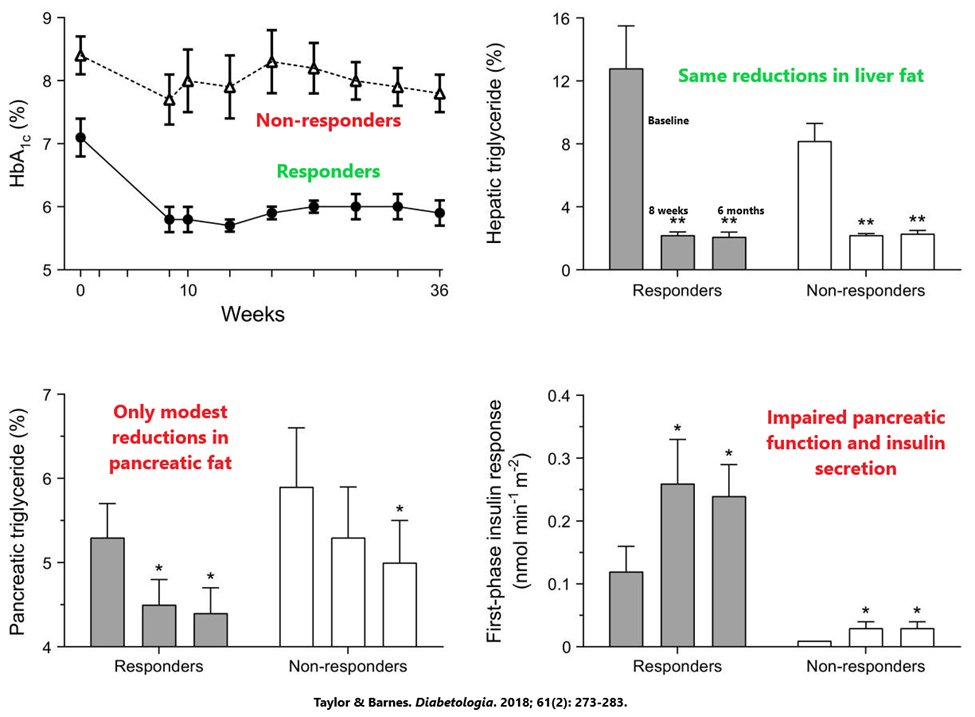
This is critically important to understand. Embarking on a fat loss journey could very well cure your T2DM, but there is a chance it won’t based on your personal circumstances and extent of diabetes-related damage.
As a quick aside, the pancreas does appear to have some inborn repair ability. Evidence from humans and animals has demonstrated that the pancreas has a multi-layered response to damage depending on the extent of repair necessary.
pubmed.ncbi.nlm.nih.gov
pubmed.ncbi.nlm.nih.gov
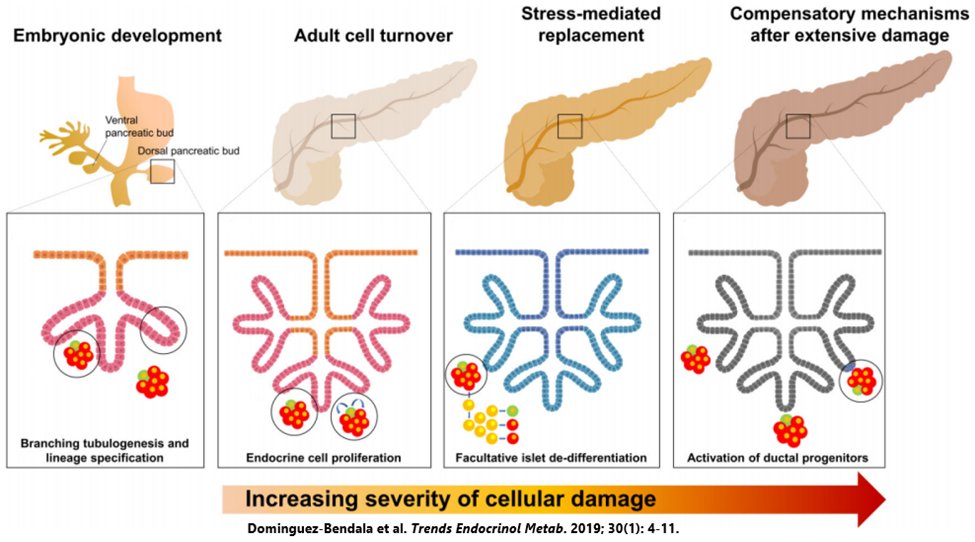
Pancreatic regeneration in animals seems to be stimulated through high states of catabolism that shift the body into a repair and clean-up mode dominated by autophagy.
pubmed.ncbi.nlm.nih.gov
pubmed.ncbi.nlm.nih.gov
In animals, weight loss achieved through forms of intermittent fasting have been shown to successfully increase autophagy and stimulate pancreatic regeneration.
pubmed.ncbi.nlm.nih.gov
pubmed.ncbi.nlm.nih.gov
pubmed.ncbi.nlm.nih.gov
pubmed.ncbi.nlm.nih.gov
Basically, if you lose weight and then maintain those weight loss habits, there is a chance that you can slowly restore pancreatic function in due time. You just need to be patient and diligent. This, of course, remains optimistic speculation on my part, at least for now.
Moving on, the final study I want to mention is Roy Taylor’s most recent: the year-long DiRECT study. This was the largest intervention by far, involving nearly 300 adults with T2DM from 49 separate primary care practices.
pubmed.ncbi.nlm.nih.gov
pubmed.ncbi.nlm.nih.gov
It showed once again that curing T2DM requires enough fat loss to drastically lower both liver and pancreatic fat. The chances of that occurring increases with greater weight loss — reversal was achieved by just 7% of those who lost <12 lbs, and by 86% of those who lost >33 lbs.
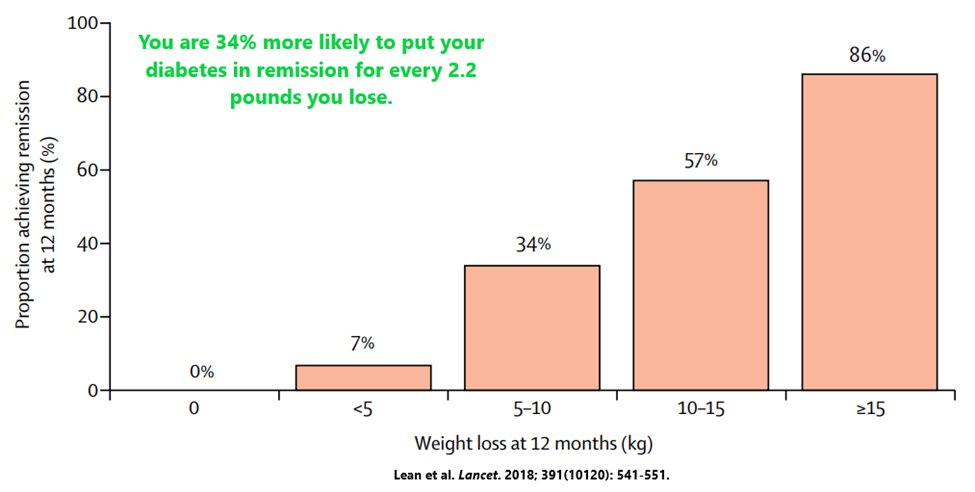
Importantly, a secondary analysis of the DiRECT trial found, once again, that T2DM reversal will occur in only those whose pancreas is able to resume normal functionality and insulin secretion ability.
pubmed.ncbi.nlm.nih.gov
pubmed.ncbi.nlm.nih.gov
Most importantly, the T2DM remained cured two years after the original DiRECT intervention happened, despite the participants eating a diet that was not low in carbohydrates. The caveat was that this sustained reversal required maintained weight loss.
pubmed.ncbi.nlm.nih.gov
pubmed.ncbi.nlm.nih.gov
And Roy Taylor isn’t the only researcher showing this. His work has spurred other research labs to start conducting their own intensive fat loss studies in people with T2DM, and the results have been the same.
In all cases, having individuals with type 2 diabetes eat 600–900 calories per day leads to rapid improvements in metabolic health, substantial weight loss, and diabetes reversal.
One study has even used 1,200–1,500 calories per day with success, which supports the notion that fat loss per se is driving most of the benefits, as opposed to the speed of fat loss or extent of calorie deficit.
pubmed.ncbi.nlm.nih.gov
pubmed.ncbi.nlm.nih.gov
At least one other study has used fat loss to successfully reverse T2DM in children too.
pubmed.ncbi.nlm.nih.gov
pubmed.ncbi.nlm.nih.gov
To reiterate the point I’m trying to make with this this thread: T2DM is completely reversible in those who don’t have severe pancreatic dysfunction if you lose enough fat to get below your personal fat threshold.
Loading suggestions...