

Pine needle tea, useful anti-spike supplement or scam?
And is vax-shedding a real thing?
A THREAD.
🧵
And is vax-shedding a real thing?
A THREAD.
🧵
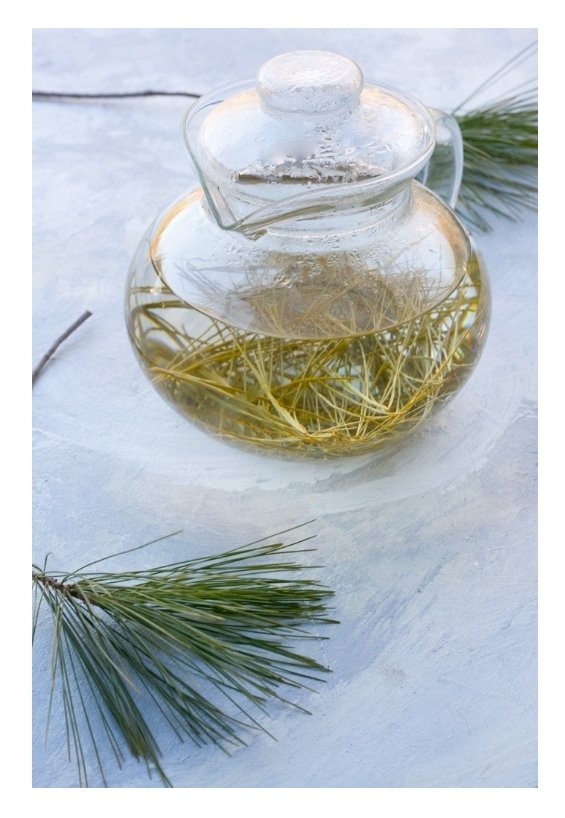
Pine-needle tea is an herbal tea made from pine needles. It gained popular attention throughoug the pandemic as it was claimed that “White pine tea contained suramin and shikimic acid, which could prevent COVID-19 vaccinated people from “shedding” the spike protein.”
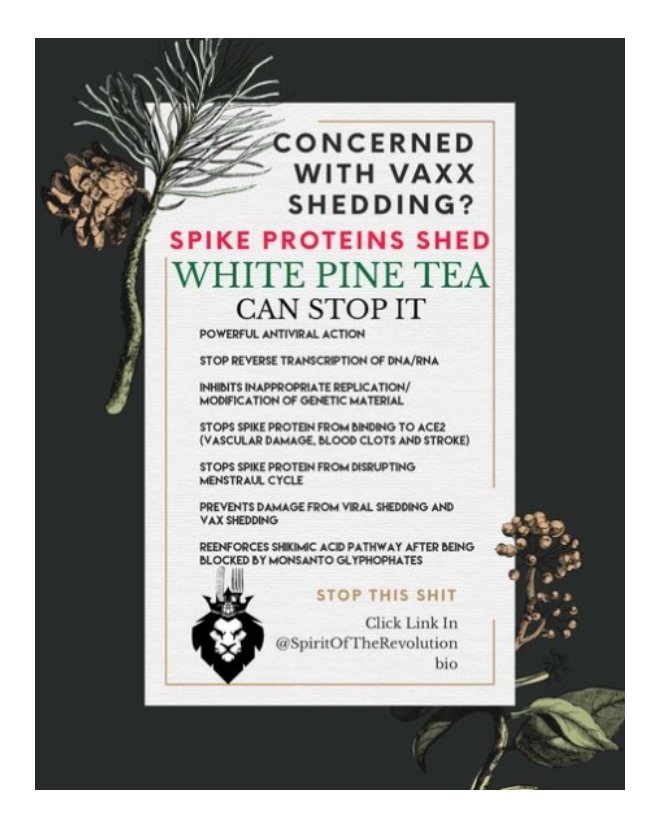
Firstly, is shedding a real thing?
Well, I think that jab shedding is a phenomenon that likely happens. Spike proteins have been found to be released from cells via the creation of exosomes for up to four months.
jimmunol.org
jimmunol.org
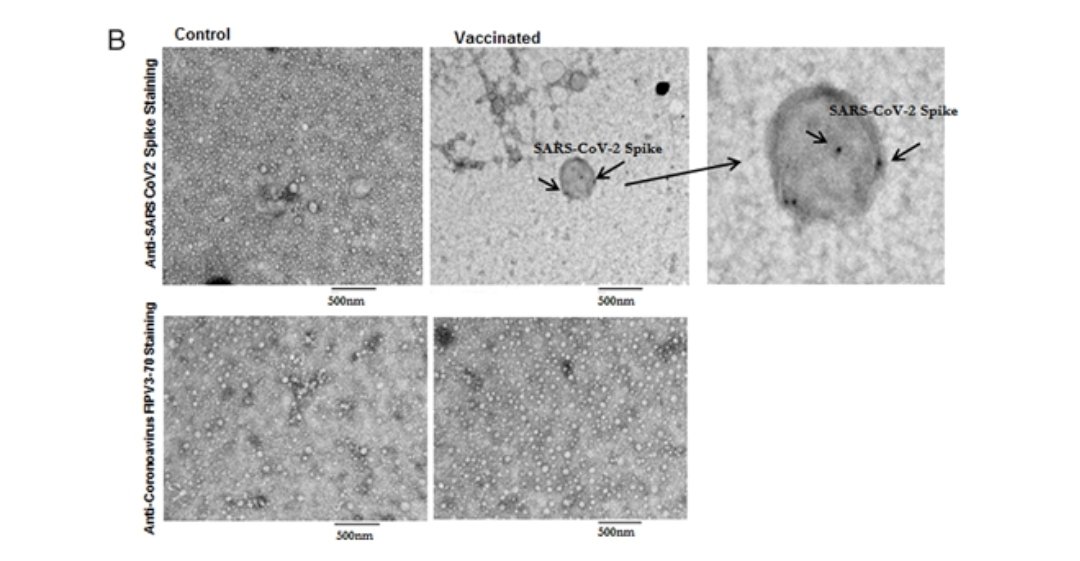
Combine this with the fact that exosomes can be exhaled out, then theoretically adding two together would mean that there is a likelihood that shedding in those who are jabbed could occur.
pubmed.ncbi.nlm.nih.gov
pubmed.ncbi.nlm.nih.gov
Shedding is known to occur in patients with mild/moderate C-19, and understaning that those who have taken the shot are more likely to contract C-19, then one could argue that over a long enough time, those who have taken the shot will in fact shed.
pubmed.ncbi.nlm.nih.gov
pubmed.ncbi.nlm.nih.gov
Plus, one recent study showed aerosol transfer of antibodies between immune and non-immune hosts was possible.
What's stopping spike proteins from being transferred?
medrxiv.org
What's stopping spike proteins from being transferred?
medrxiv.org
What about pine needle tea?
Let’s have a look at suramin.
Let’s have a look at suramin.
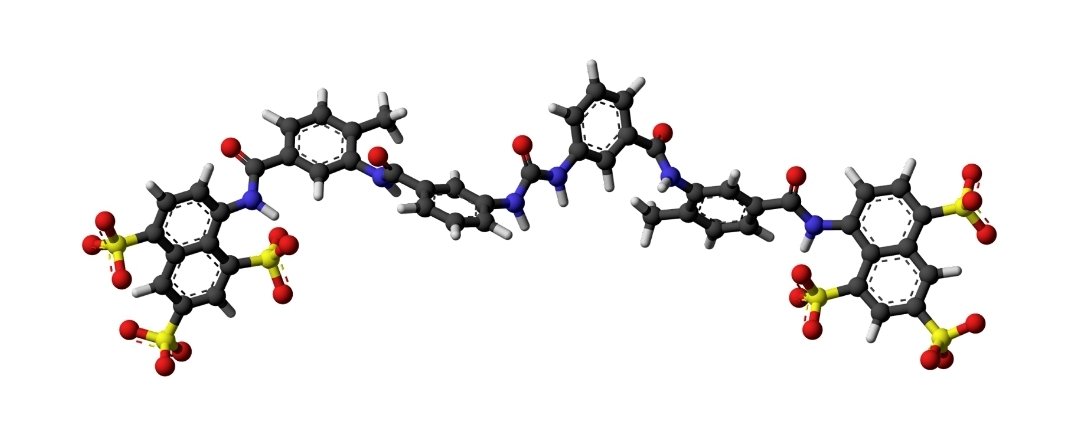
Well firstly, I could NOT find evidence stated in scientific journals confirming that suramin came from pine needles. (I am happy to be disproven).
Surmain is in fact one of the first anti-infective agents that had been developed in a modern medicine, synthesised in 1916 with the help of Bayer from the dye trypan blue.
There are websites online stating that suramin can be naturally sourced from pine needles, but these claims don't seem to be backed by scientific evidence or references.
Since its discovery, suramin has been used as an antiparasitic to primarily treat African sleeping sickness caused by the single-celled parasite Trypanosomiasis.
Other than this, suramin was used to treat river blindness, caused by the parasite Onchocerca volvulus, but it was subsequently replaced by the less toxic and more bioavailable IVERMECTIN.
Suramin has been studied as an anti-cancer agent with mixed results; initial clinical tests did not warrant the further development of suramin as an anti-cancer monotherapy, but suramin does seem to potentiate other chemotherapeutics and has shown some success in this regard.
Suramin has also shown the ability to block a variety of inflammatory proteins, like phospholipase A2, as well as gene sequences from snake and bee venom, suggesting that it can act as an antidote.
pubmed.ncbi.nlm.nih.gov
pubmed.ncbi.nlm.nih.gov
The venom from some snakes also contains toxins that mimic thrombin, a protein involved in clotting that has the role of converting fibrinogen into insoluble strands of fibrin.
Spike protein can also cause an abnormal increase in thrombin activity.
ncbi.nlm.nih.gov
Spike protein can also cause an abnormal increase in thrombin activity.
ncbi.nlm.nih.gov
Suramin not only inhibits thrombin itself, but also the thrombin-like proteases of snake venom, and was therefore proposed as an antidote for snakebite.
Other than venom, due to its large molecular size and unique shape, suramin has been shown to bind to and thereby inhibit various proteins.
For example, suramin has been shown to decrease the activities of a large number of enzymes involved in DNA and RNA synthesis and modification, as well as enzymes involved in the winding and unwinding of DNA.
🤔
pubmed.ncbi.nlm.nih.gov
🤔
pubmed.ncbi.nlm.nih.gov
With regards to COVID-19, suramin was shown to be a potent inhibitor of SARS-CoV-2 RNA-dependent RNA polymerase, an enzyme that helps with viral replication.
nature.com
nature.com
More specifically, suramin was shown to act by blocking the binding of RNA to the enzyme, an activity shown in biochemical assays to be at least 20-fold more potent than REMDESIVIR, the currently approved nucleotide drug for treatment of COVID-19.
nature.com
nature.com
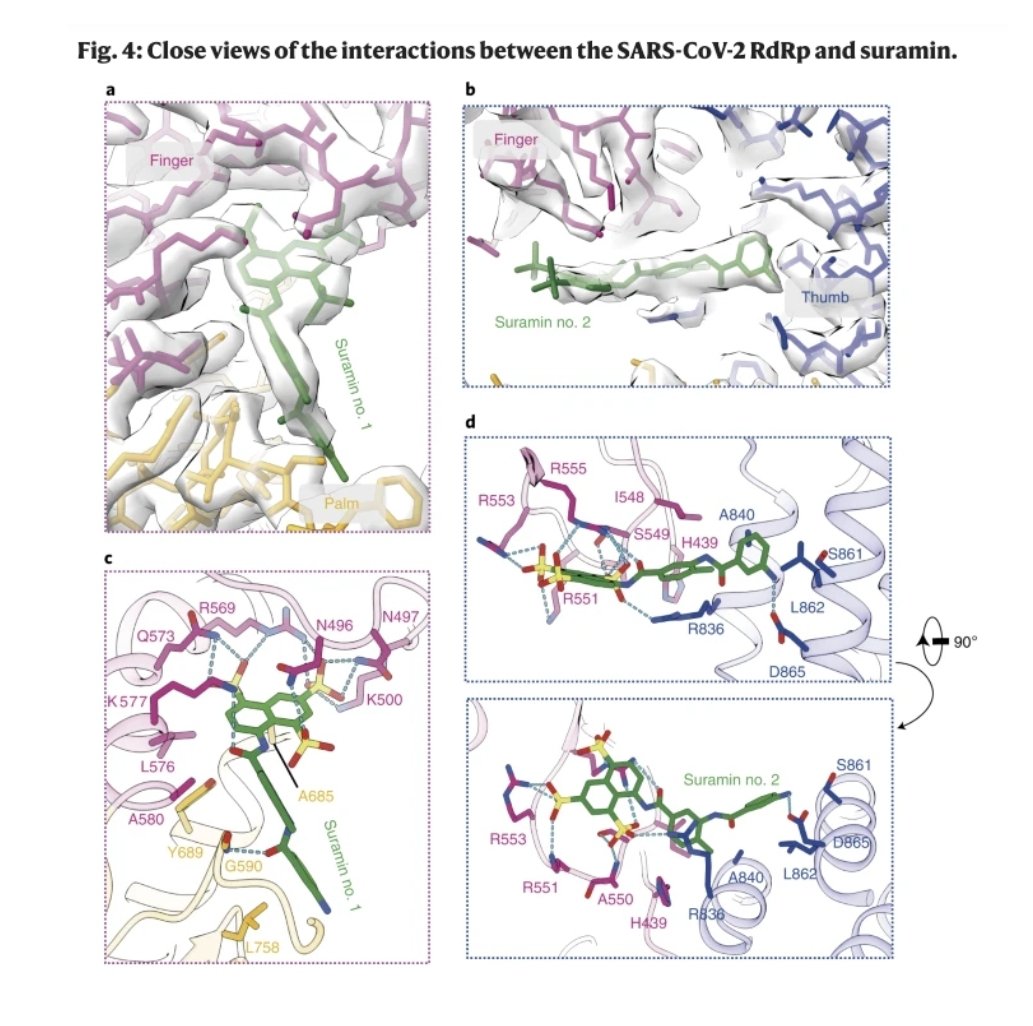
In another study it was shown that it had the ability to inhibit SARS-CoV-2 replication and decrease viral load in cell culture, and had potent antiviral efficacy against in a primary human epithelial airway cell infection model.
immunology.ox.ac.uk
immunology.ox.ac.uk
This should not come as a surprise, as suramin’s antiviral activities have been known since the mid-20th century.
pubmed.ncbi.nlm.nih.gov
pubmed.ncbi.nlm.nih.gov
Though useful, suramin is not totally safe. There are many side effects of using suramin including nephrotoxicity, hypersensitivity reactions, dermatitis, anaemia, peripheral neuropathy, and bone marrow toxicity.
But the dose makes the poison.
But the dose makes the poison.
Concerns about the toxicity of high-dose suramin arose when the cumulative antiparasitic dose was increased five times or more over several months to treat AIDS or kill cancer cells during chemotherapy.
In a recent study where low-dose suramin (given intravenously to achieve blood levels of 1.5–15 μmol/L for 6 weeks) was given to children with ASD, the only side effect noted was a self-limited asymptomatic rash.
ncbi.nlm.nih.gov
ncbi.nlm.nih.gov
What about shikimic acid?
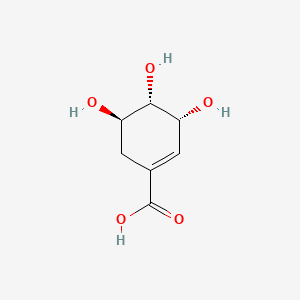
Unlike suramin, shikimic acid HAS been confirmed in the scientific literature to be found in pine needles.
pubmed.ncbi.nlm.nih.gov
pubmed.ncbi.nlm.nih.gov
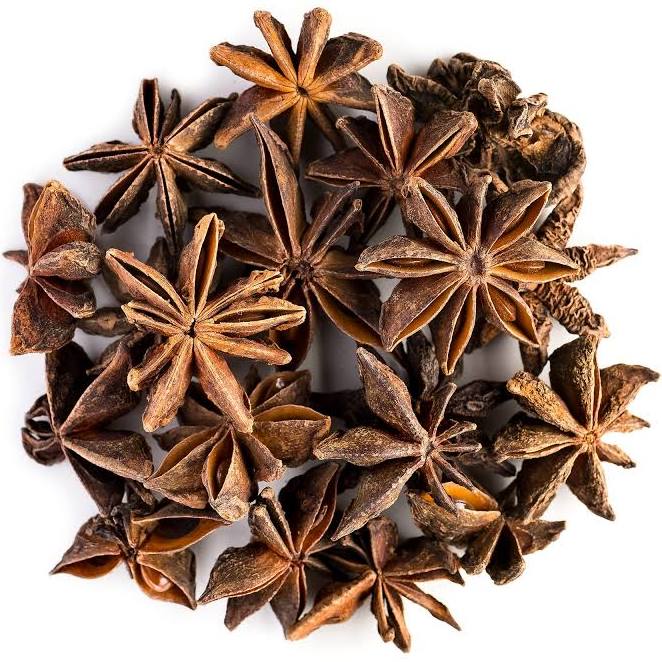
It is also found in star anise, as well as being the key ingredient in the formulation of the drug Oseltamivir phosphate (also known as Tamiflu) for the treatment of swine or avian flu.
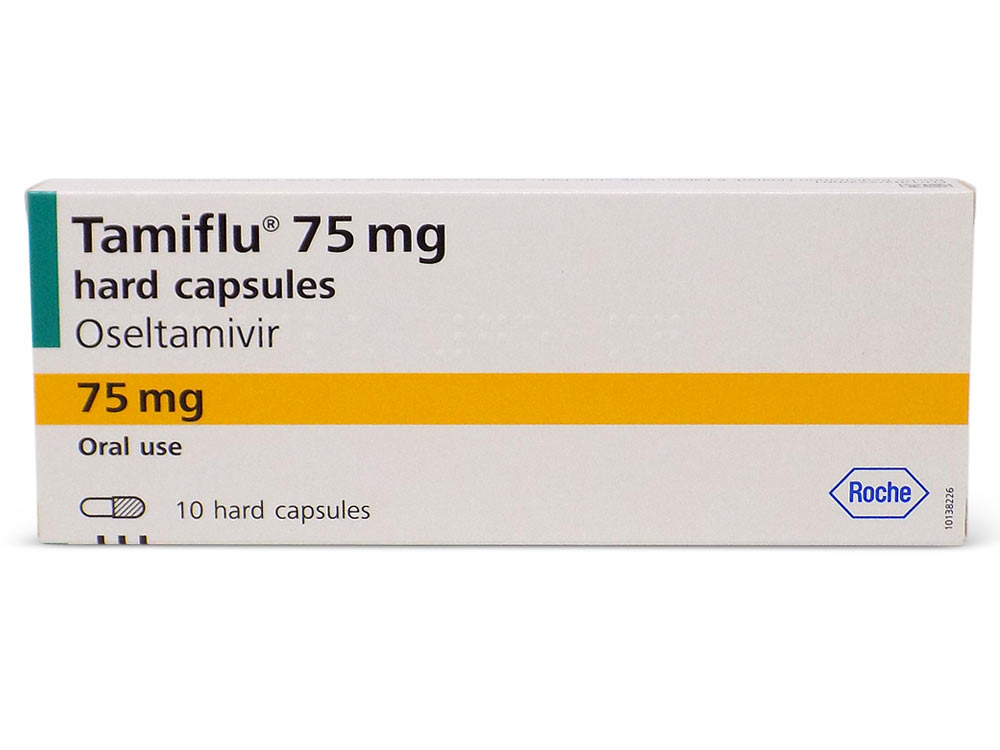
Tamifu works by inhibiting the action of the viral neuraminidase enzyme on sialic acid. Sialic acid is a carbohydrate occurring on the surfaces of cells in humans.
By hindering the relationship between the neuraminidase enzyme and sialic acid, Tamiflu stops new viral particles from being formed in infected cells.
Given that SARS-CoV-2 does not encode any neuraminidase proteins, neuraminidase inhibitors such as oseltamivir and others were not thought to be effective for treating patients with COVID-19.
magonlinelibrary.com
magonlinelibrary.com
Interestingly, though, a recent retrospective analysis showed that neuraminidase inhibitor treatment was associated with decreased mortality in COVID-19 patients.
ncbi.nlm.nih.gov
ncbi.nlm.nih.gov
The study also found that the use of neuraminidase inhibitors led to a decreased incidence of acute heart injury but not liver or kidney injury in patients.
Other research has indicated that neuraminidase inhibitor treatment has a beneficial effect on MYOCARDITIS to prevent cardiac damage and cytokine storm by the released neuraminidase.
ncbi.nlm.nih.gov
ncbi.nlm.nih.gov
The effect of shikimic acid on SARS-CoV-2 has yet to be studied.
Shikimic acid has shown other biological properties such as antibacterial, antifungal, anti-inflammatory, anti-aging, anti-dandruff, deodorising, anti-acne, and stimulating hair growth.
Shikimic acid has shown other biological properties such as antibacterial, antifungal, anti-inflammatory, anti-aging, anti-dandruff, deodorising, anti-acne, and stimulating hair growth.
So will pine needle tea help with spike shedding?
We don’t know.
What we do know is that there is no scientific evidence confirming sauramin exists in pine needles, but shikimic acid has been found in them.
We don’t know.
What we do know is that there is no scientific evidence confirming sauramin exists in pine needles, but shikimic acid has been found in them.
Independently some possible benefits of suramin and shikimic acid include: anti-inflammation, anti-bacterial, anti-viral, anti-cancer, anti-venom, cardioprotection, and potentially anti-COVID-19 and anti-spike protein.
For more information about pine needle tea and a lot more visit:
callingouttheshots.xyz
callingouttheshots.xyz
Loading suggestions...