

Use heat to heal.
Saunas, an underrated longevity and mood-boosting therapeutic.
A THREAD 🧵
Saunas, an underrated longevity and mood-boosting therapeutic.
A THREAD 🧵

Sauna bathing is a form of whole-body thermotherapy that has been used in various forms and in various cultures across thousands of years for hygiene, health, social, and spiritual purposes.
Generally speaking, there are two main types of saunas: wet saunas and dry saunas. Wet saunas/steam room (70-100 °C; humidity 50%) are specifically designed to raise an individual's thermal load by maintaining a high internal humidity to reduce evaporative cooling.
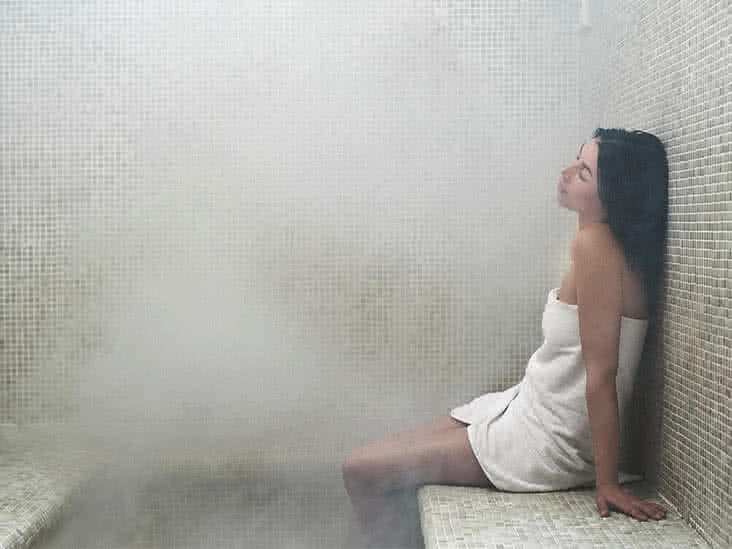
Whereas dry saunas (temperature = 80-90 °C; humidity = 10-20%) are often built of wood and heated by an electric heater and are the focus of the majority of clinical research.

Traditional Finnish saunas are the most popular example of dry saunas and are the most researched.
They involve short (5–20 minute) exposures in dry air (relative humidity of 10%–20%) interspersed with intervals of high humidity caused by the throwing of water over heated rocks.
They involve short (5–20 minute) exposures in dry air (relative humidity of 10%–20%) interspersed with intervals of high humidity caused by the throwing of water over heated rocks.

Infrared sauna cabins have become increasingly popular of late. These saunas use infrared emitters of various wavelengths without the use of water or additional humidity and generally operate at lower temperatures (45–60 °C) than Finnish saunas with comparable exposure times.

Sauna use has profound physiological effects.
Short-term heat exposure elevates skin and core body temperatures, which in turn activates thermoregulatory pathways leading to the activation of the autonomic nervous system.
pubmed.ncbi.nlm.nih.gov
Short-term heat exposure elevates skin and core body temperatures, which in turn activates thermoregulatory pathways leading to the activation of the autonomic nervous system.
pubmed.ncbi.nlm.nih.gov
This, along with the activation of other hormonal systems, leads to well-documented cardiovascular effects with increased heart rate, skin blood flow, cardiac output, and sweating.
pubmed.ncbi.nlm.nih.gov
pubmed.ncbi.nlm.nih.gov

Heat also activates other desirable physiological processes, one of which is the activation of heat shock proteins (HSPs).
HSPs are a group of proteins that cells create in response to stressful situations
HSPs are a group of proteins that cells create in response to stressful situations
hey were first described in relation to heat shock, hence their name, but are now known to be expressed during other stresses such as cold exposure, UV light exposure, and wound healing.
doi.org
doi.org

Many members of this group serve as chaperones, either by stabilising proteins to ensure proper folding or by assisting in the refolding of proteins damaged by cell stress.
HSPs also aim to remove abnormal proteins, dissociate protein aggregates, stabilise misfolded proteins, and help sequester misfolded proteins in a way that prevents harmful interactions with the rest of the cellular environment, and so keeping proteins like prions in check

It has been noted that people who suffer from diabetes and/or obesity have an increased risk of a severe outcome from COVID-19, and one explanation put forward for this observation is that these conditions disrupt the heat shock response (HSR).
authorea.com
authorea.com
This response is a natural response to a fever that normally leads to resolution of the inflammatory response.
Thus, HSP activation may aid these individuals too.
Thus, HSP activation may aid these individuals too.
Before you go further, I'd like to let you know that if you're interested in learning more about the science behind saunas and various other potential therapeutics that I cover in my threads, then it's all in the book. All in one place.
callingouttheshots.xyz
callingouttheshots.xyz

Other than activating HSPs, sauna use increases NO bioavailability, increases insulin sensitivity, improves endothelial health, improves cardiac function markers, reduces epinephrine and/or norepinephrine, improves cholesterol markers, and decreases fasting blood glucose levels.

NO, is nitric oxide, and key in maintaining good vessel health.
ncbi.nlm.nih.gov
ncbi.nlm.nih.gov

Here's some research showing the benefits of sauna on the cardiovascular system.
pubmed.ncbi.nlm.nih.gov
pubmed.ncbi.nlm.nih.gov

Hormesis is defined as an adaptive response of cells and organisms to a moderate (usually intermittent) stress.
Sauna bathing may induce a general stress-adaptation response that leads to “hormetic adaptation," inducing adaptive hormesis mechanisms similar to exercise.
Sauna bathing may induce a general stress-adaptation response that leads to “hormetic adaptation," inducing adaptive hormesis mechanisms similar to exercise.

The ability for saunas to provide a "good type of stress," was demonstrated by analysis methods that showed sauna bathing increasing the generation of free radicals and ROS along with enhanced antioxidant activities and upregulated specific HSPs in semen.
pubmed.ncbi.nlm.nih.gov
pubmed.ncbi.nlm.nih.gov

This sauna stress also works physiologically.
Dynorphin is an opioid that is commonly associated with a psychological sense of uneasiness or discomfort.
Dynorphin is an opioid that is commonly associated with a psychological sense of uneasiness or discomfort.

Dynorphin may also serve to moderate the body's response to heat, allowing it to cool down.
Heat activates dynorphin-expressing neurons in the brain.
Heat activates dynorphin-expressing neurons in the brain.
When this thermosensory pathway is activated, it causes heat-defence responses in which the binding of dynorphin to kappa opioid receptors causes cellular processes that enhance discomfort and misery.

Heat stress from sauna use may boost dynorphin release, which may be responsible for the general feeling of discomfort during heat exposure.
But, once dynorphin attaches to the kappa-opioid receptor, other opioid receptors that are linked to euphoria (mu) become more sensitive to beta-endorphins in a biological feedback reaction, meaning that the discomfort felt in the sauna can help improve one’s mood afterwards.
Saunas also make you sweat. Many industrial poisons, heavy metals, hormone disruptors, and immunotoxins may be excreted in sweat, leading to an enhancement of metabolic pathways and processes that these toxic agents inhibit.
pubmed.ncbi.nlm.nih.gov
pubmed.ncbi.nlm.nih.gov

The loss of toxic metals such as arsenic, cadmium, lead, and mercury via sweat has been reported with rates of excretion matching or exceeding urinary routes.
ncbi.nlm.nih.gov
ncbi.nlm.nih.gov

Plus, there is evidence that organochlorine pesticides, BPA, and phthalates may be excreted via induced sweating at rates that exceed urinary excretion.
pubmed.ncbi.nlm.nih.gov
pubmed.ncbi.nlm.nih.gov

Most of the human research on saunas has focused on cardiometabolic outcomes. According to one study, increased duration and frequency of sauna bathing decreased the risk of fatal cardiovascular disease incidences.
pubmed.ncbi.nlm.nih.gov
pubmed.ncbi.nlm.nih.gov
In another study, it was found that men who attended a sauna bathing session two–three times per week reduced their cardiovascular mortality rates by ~30% and men who attended a sauna session four or more times per week reduced their risk by ~50%
pubmed.ncbi.nlm.nih.gov
pubmed.ncbi.nlm.nih.gov
In the largest and most recent prospective multicenter randomised controlled trial involving 149 patients with advanced heart failure, sauna use was linked with 6-minute walking distances and beneficially reduced heart size.
pubmed.ncbi.nlm.nih.gov
pubmed.ncbi.nlm.nih.gov

The use of sauna bathing for 5 minutes daily for 4 weeks demonstrated improved cardiac structure in 12 infants with ventricular septal defects, which averted the need for surgical repair in 9 infants.
pubmed.ncbi.nlm.nih.gov
pubmed.ncbi.nlm.nih.gov

And a randomised controlled trial noted a reduction of premature ventricular arrhythmias after 2 weeks of repeated sauna sessions.
pubmed.ncbi.nlm.nih.gov
pubmed.ncbi.nlm.nih.gov
And it’s not just the heart. Studies of patients diagnosed with chronic fatigue syndrome or myalgic encephalomyelitis reported subjective improvements after repeated sauna sessions, with improvements in mood and fatigue levels being noted.
pubmed.ncbi.nlm.nih.gov
pubmed.ncbi.nlm.nih.gov

And Finnish studies have noted that after adjusting for various confounding factors (such as blood pressure, resting heart rate, smoking status, Type 2 diabetes, previous myocardial infarction, LDL levels, and alcohol consumption)...
, those who frequently sauna bathed had a 66% reduction in the risk of dementia, a 65% reduction in the risk of Alzheimer's disease, a 63% reduction in the risk of sudden cardiac death, and a 40% reduction in the risk of all-cause mortality.
pubmed.ncbi.nlm.nih.gov
pubmed.ncbi.nlm.nih.gov
Though seemingly greatly beneficial for various biological processes, like all things, regular sauna use does come with safety warnings.
Firstly, although observational data have found a negligible association between sauna use and birth defects, in pregnant women, heat exposure has been found to induce some birth defects in the foetus, such as spina bifida.
pubmed.ncbi.nlm.nih.gov
pubmed.ncbi.nlm.nih.gov
Heat exposure and repeated sauna use in men have been linked to reduced sperm counts, fewer motile sperm, and abnormal sperm parameters.
pubmed.ncbi.nlm.nih.gov
pubmed.ncbi.nlm.nih.gov
However, 6 months after quitting sauna practice, all indicated abnormalities returned to normal, and no significant changes in plasma sex hormones from baseline were identified immediately after sauna or after 3 or 6 months.
Alcohol should be avoided whenever possible when using a sauna, and anyone on medication should consult with their main physician before introducing sauna bathing into their regular regimen.
With regards to frequency, one 2021 review on sauna use noted:
“Observational data suggest sessions initially lasting at least 10 min that should be prolonged to 15 min two–three times a week, to induce the process of acclimation and begin seeing benefits such as a reduced risk
“Observational data suggest sessions initially lasting at least 10 min that should be prolonged to 15 min two–three times a week, to induce the process of acclimation and begin seeing benefits such as a reduced risk
of sudden cardiac death, lowered blood pressure and resting heart rate, and an improvement of arterial compliance.
Following six–seven sauna bathing sessions, the duration of each session can increase in increments of 5 min every 2–3 days, until a timeframe of 45 min is reached"
Following six–seven sauna bathing sessions, the duration of each session can increase in increments of 5 min every 2–3 days, until a timeframe of 45 min is reached"
The American College of Sports Medicine recommends a temperature range between 70 and 77 °C to achieve the cardiometabolic benefits of sauna bathing.
It is assumed that temperatures less than 70 °C may not be sufficient to induce a hormetic effect.
It is assumed that temperatures less than 70 °C may not be sufficient to induce a hormetic effect.
While temperatures greater than 100 °C would likely cause cellular damage and premature protein denaturation.
Loading suggestions...