

Golfers complain that they practice and never see results.
That's because they're doing it all wrong!
Here are 7 practice methods that have been instrumental in getting my handicap down to a +2 👇
That's because they're doing it all wrong!
Here are 7 practice methods that have been instrumental in getting my handicap down to a +2 👇
Successful practice essentially boils down to one thing...
Intent
You can't show up at the range, mindlessly rifle through a bunch of balls, and expect results.
You need a plan.
And you need to be properly engaged.
These methods can help...
Intent
You can't show up at the range, mindlessly rifle through a bunch of balls, and expect results.
You need a plan.
And you need to be properly engaged.
These methods can help...
1. Random Practice
Introduce some change on each shot.
Most common is picking a different club or target.
I find this works best on wedge play and putting but can be done with any club.
It will also challenge your skill more and help increase engagement on each shot.
Introduce some change on each shot.
Most common is picking a different club or target.
I find this works best on wedge play and putting but can be done with any club.
It will also challenge your skill more and help increase engagement on each shot.
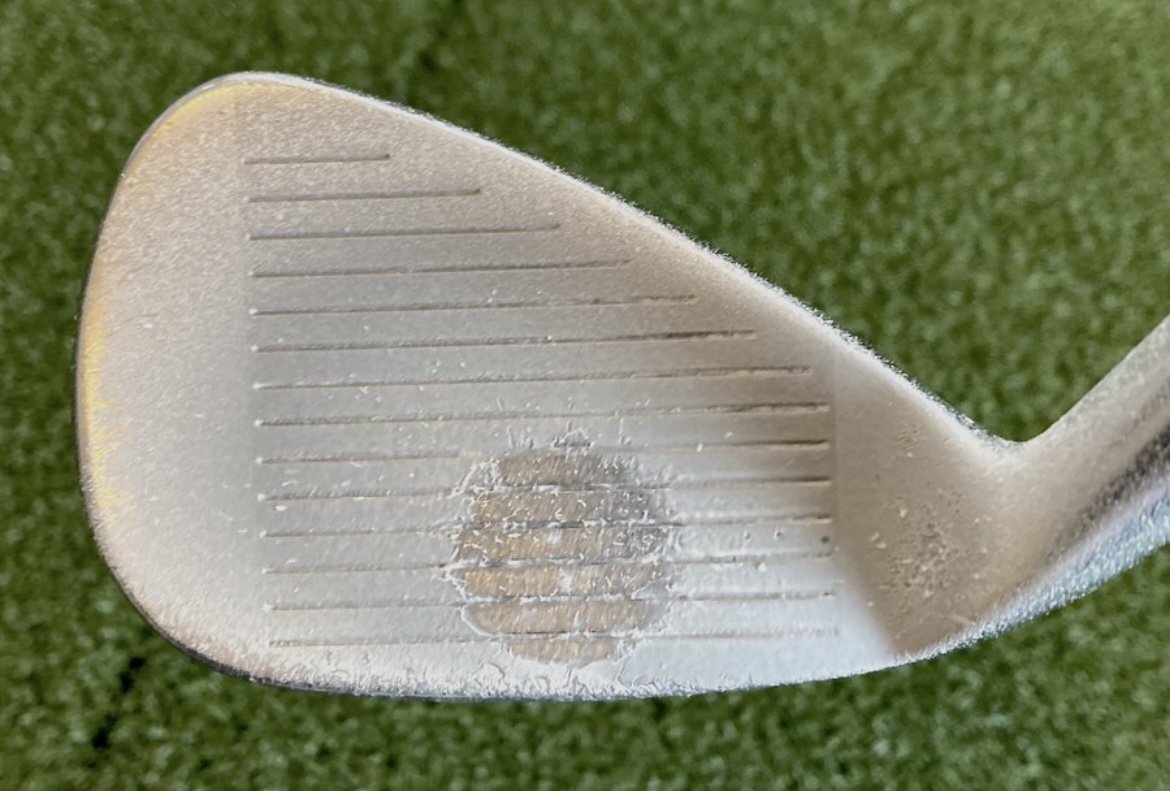
2. Impact Training
Accessing the center of the clubface is arguably the most critical skill.
Spray your clubs with Dr. Scholls:
• Diagnose your tendencies (heel/toe bias, etc.)
• Challenge yourself to move strike location around the clubface
Watch your scores plummet 😉
Accessing the center of the clubface is arguably the most critical skill.
Spray your clubs with Dr. Scholls:
• Diagnose your tendencies (heel/toe bias, etc.)
• Challenge yourself to move strike location around the clubface
Watch your scores plummet 😉
3) My "Fight Fire With Fire" Method
If you are fighting any extreme - slice, hook, fat shots, toe strikes, etc.
Do the exact opposite.
This helps neutralize the core issue.
For years I battled a hook but straightened it.
Mostly by just trying to fade it 🤷♂️
If you are fighting any extreme - slice, hook, fat shots, toe strikes, etc.
Do the exact opposite.
This helps neutralize the core issue.
For years I battled a hook but straightened it.
Mostly by just trying to fade it 🤷♂️
4. Experimental Practice
This is where you get "out of the box."
Start hitting shots you would never try on the course.
Play like a child.
The goal is not to bring these shots on the course; it's to expand your skill and build more "reference points" in your swing.
This is where you get "out of the box."
Start hitting shots you would never try on the course.
Play like a child.
The goal is not to bring these shots on the course; it's to expand your skill and build more "reference points" in your swing.
Some examples:
• Hit 5 different clubs to the same target
• Try to alter shot shape and trajectory
• Go full Seve on with your wedges in an open field or your backyard
• Hit 5 different clubs to the same target
• Try to alter shot shape and trajectory
• Go full Seve on with your wedges in an open field or your backyard
5. Performance Games
Practice can get boring and repetitive.
Performance games can fix this by challenging your skills, increasing engagement, and harnessing your competitive side.
There are TONS available.
Practice can get boring and repetitive.
Performance games can fix this by challenging your skills, increasing engagement, and harnessing your competitive side.
There are TONS available.
6. Swing Speed Training
Your swing speed is a skill, just like wedge play or putting.
Increase your speed, and you will have more *potential* to shoot lower scores.
Golfers of all levels & ages can take reasonable steps.
Often there are low-hanging fruit and quick gains.
Your swing speed is a skill, just like wedge play or putting.
Increase your speed, and you will have more *potential* to shoot lower scores.
Golfers of all levels & ages can take reasonable steps.
Often there are low-hanging fruit and quick gains.
Two options (doing a blend of both is best):
1. Overspeed training with a system like The Stack or SuperSpeed Golf
2. Physical training - increase your strength, mobility, and power.
@Fit_For_Golf program is my top recommendation.
You follow those, and you will see results!
1. Overspeed training with a system like The Stack or SuperSpeed Golf
2. Physical training - increase your strength, mobility, and power.
@Fit_For_Golf program is my top recommendation.
You follow those, and you will see results!
7. Tempo Training
People say "swing smoothly" or "good tempo," but what does that even mean?
There are finite ways to train your tempo and measure.
I've found it's one of the most fruitful and unused practice methods.
Read this article for more:
practical-golf.com
People say "swing smoothly" or "good tempo," but what does that even mean?
There are finite ways to train your tempo and measure.
I've found it's one of the most fruitful and unused practice methods.
Read this article for more:
practical-golf.com

No matter what form of practice you do, pay attention to all this feedback:
• Impact location
• Ground contact
• Start direction
• Where did the shot finish in relation to the target?
• Trajectory/curvature
Learn to read all of those, and make adjustments & you are golden
• Impact location
• Ground contact
• Start direction
• Where did the shot finish in relation to the target?
• Trajectory/curvature
Learn to read all of those, and make adjustments & you are golden
This is especially important if you are doing blocked (repetitive) practice or working on swing technique.
Those methods are valuable, but so many golfers defer to “zombie range sessions” where they just rifle through the bucket.
Pay attention!
Those methods are valuable, but so many golfers defer to “zombie range sessions” where they just rifle through the bucket.
Pay attention!
My new video course, The Four Foundations of Golf Masterclass, will go into way more depth on each of these practice methods (& many more).
You can learn more here:
fourfoundationsofgolf.com
You can learn more here:
fourfoundationsofgolf.com

If you found this helpful:
• Follow @practicalgolf for more advice
• Read 400+ articles on my website: practical-golf.com
• Sign up for my newsletter: eepurl.com
• Listen to our podcast: podcasts.apple.com
• RT the first tweet in this thread
• Follow @practicalgolf for more advice
• Read 400+ articles on my website: practical-golf.com
• Sign up for my newsletter: eepurl.com
• Listen to our podcast: podcasts.apple.com
• RT the first tweet in this thread


Loading suggestions...