

1/13
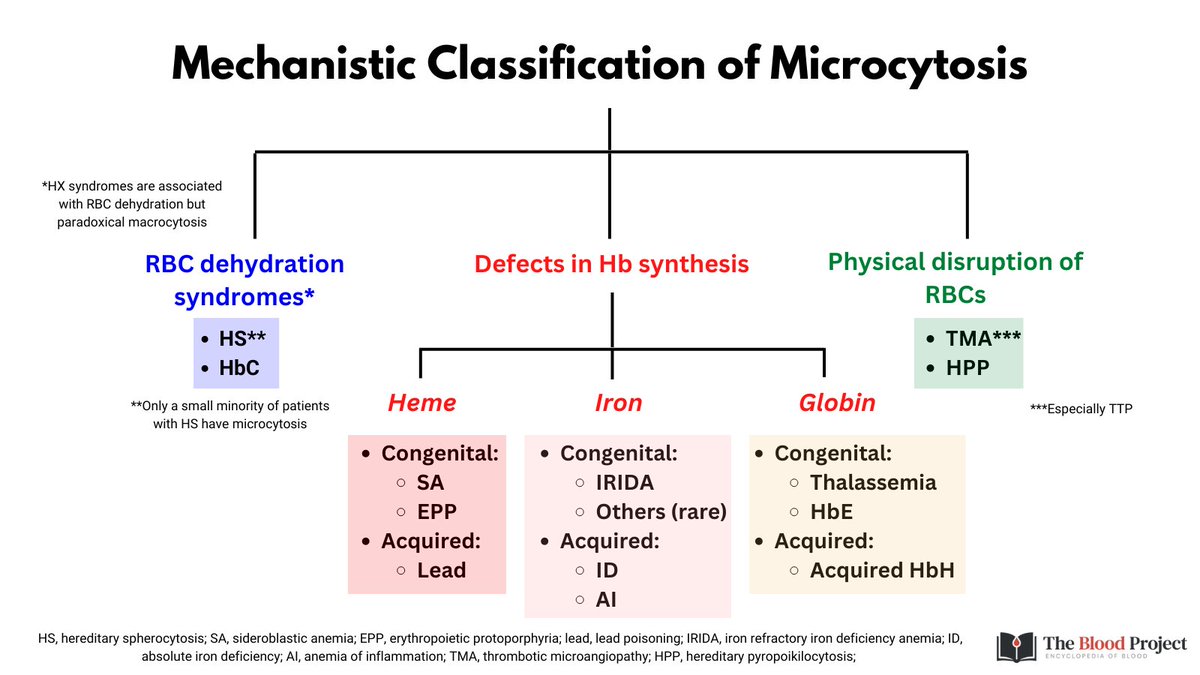
MECHANISTIC APPROACH TO MICROCYTOSIS
I apologize for yet another thread on microcytosis. I confess that whenever I start a topic, I tend to obsess, perseverate, and turn things around and around until I am satisfied. Then I burden you with my OCD😀
MECHANISTIC APPROACH TO MICROCYTOSIS
I apologize for yet another thread on microcytosis. I confess that whenever I start a topic, I tend to obsess, perseverate, and turn things around and around until I am satisfied. Then I burden you with my OCD😀
2/13
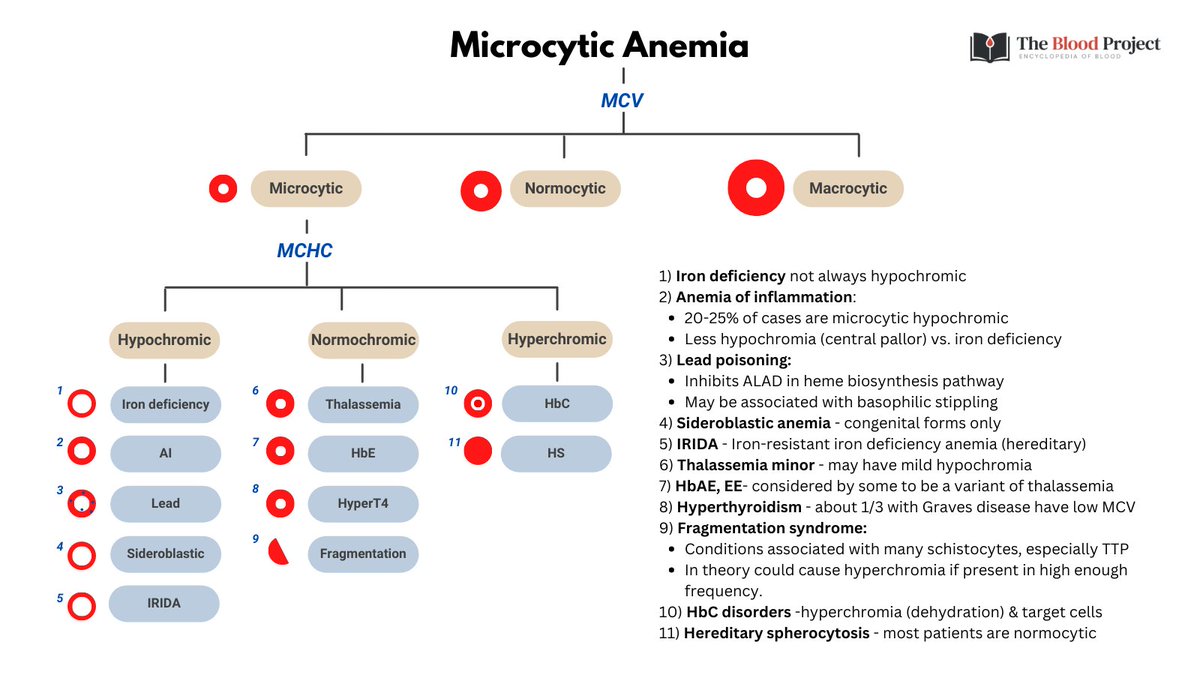
I tweeted lately on the morphological classification of microcytic anemia. It is a helpful exercise but few conditions fit neatly into one morphological category (e.g, AI and HS are typically normocytic, not microcytic; thal minor may be slightly hypochromic).
I tweeted lately on the morphological classification of microcytic anemia. It is a helpful exercise but few conditions fit neatly into one morphological category (e.g, AI and HS are typically normocytic, not microcytic; thal minor may be slightly hypochromic).
3/13
Another way to think about microcytic anemia is from a mechanistic perspective:
1. Defect in Hb synthesis
2. RBC dehydration
3. Physical disruption of RBCs (fragmentation syndromes)
Another way to think about microcytic anemia is from a mechanistic perspective:
1. Defect in Hb synthesis
2. RBC dehydration
3. Physical disruption of RBCs (fragmentation syndromes)
4/13
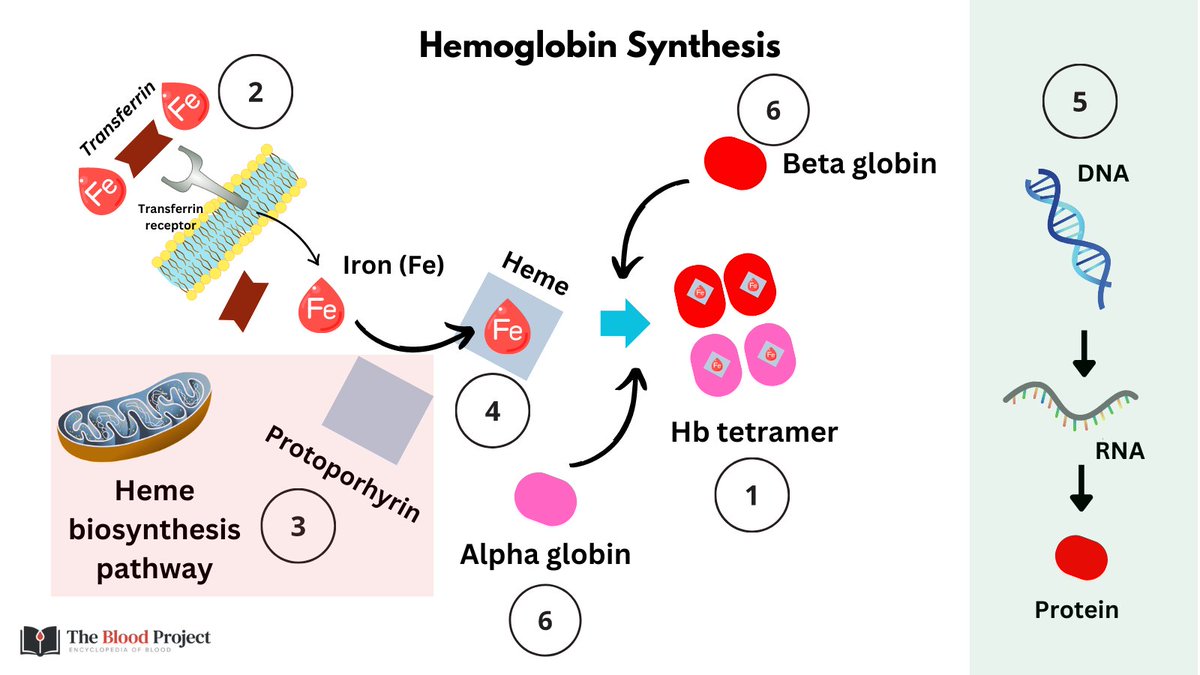
Defects in Hb synthesis are responsible for the majority of cases of microcytosis. In mammals Hb is composed of a tetramer of four globin chains (2 are designated alpha, 2 are beta) and an iron-containing heme moiety (#1, graphic).
Defects in Hb synthesis are responsible for the majority of cases of microcytosis. In mammals Hb is composed of a tetramer of four globin chains (2 are designated alpha, 2 are beta) and an iron-containing heme moiety (#1, graphic).
5/13
To build the heme moiety:
#2) Iron is transported into developing red cells via the transferrin receptor.
# 3) Protoporphyrin is generated through a series of enzymatic reactions (the heme biosynthesis pathway), some of which occur in the mitochondria.
To build the heme moiety:
#2) Iron is transported into developing red cells via the transferrin receptor.
# 3) Protoporphyrin is generated through a series of enzymatic reactions (the heme biosynthesis pathway), some of which occur in the mitochondria.
6/13
# 4) In the last step of heme biosynthesis, Fe is incorporated into protoporphyrin, resulting in iron protoporphyrin (also called simply heme).
# 4) In the last step of heme biosynthesis, Fe is incorporated into protoporphyrin, resulting in iron protoporphyrin (also called simply heme).
7/13
To generate the globin chains required for Hb:
#5) Gene transcription of globin gene clusters (DNA) lead to formation of RNA, which is then translated into the globin chain proteins.
#6) Globin chain proteins, once formed, bind heme and assemble into tetrameric Hb.
To generate the globin chains required for Hb:
#5) Gene transcription of globin gene clusters (DNA) lead to formation of RNA, which is then translated into the globin chain proteins.
#6) Globin chain proteins, once formed, bind heme and assemble into tetrameric Hb.
8/13
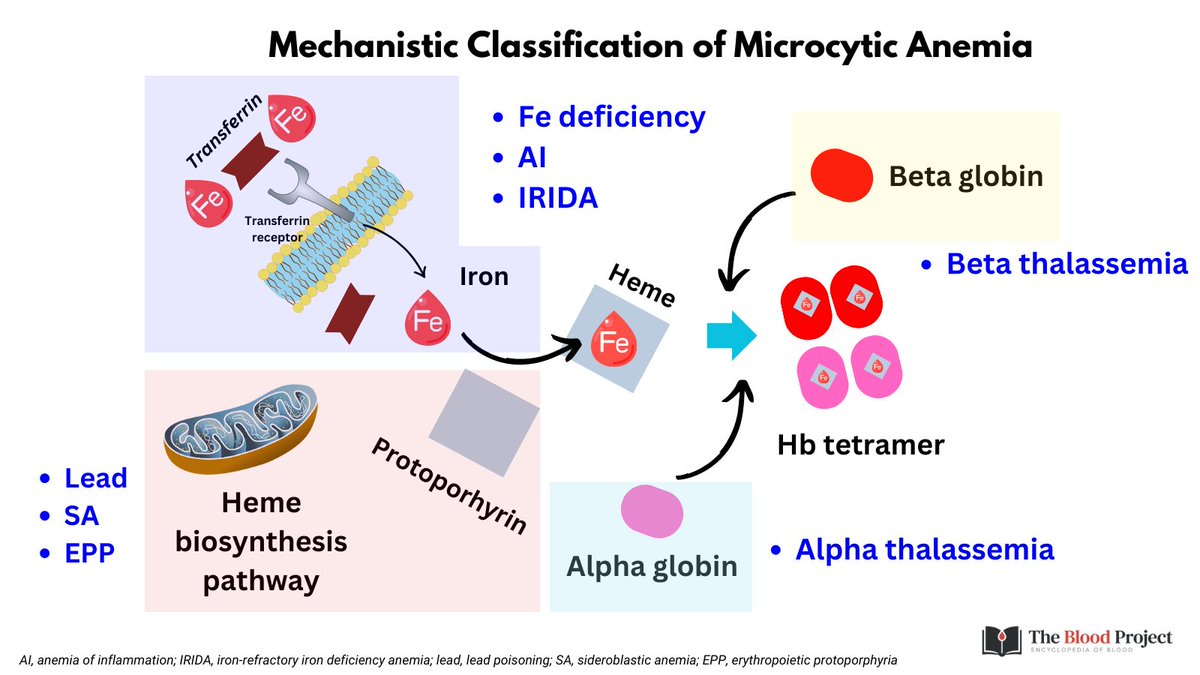
The various disorders causing microcytosis from defects in Hb synthesis can now be incorporated into our scheme (see graphic).
The various disorders causing microcytosis from defects in Hb synthesis can now be incorporated into our scheme (see graphic).
9/13
We can then zoom on any of these compartments (Fe, heme, globin). For example, the graphic below shows the various defects in the heme synthesis pathway that cause microcytosis (NOTE: some other types of SA are associated with normal or elevated MCV).
We can then zoom on any of these compartments (Fe, heme, globin). For example, the graphic below shows the various defects in the heme synthesis pathway that cause microcytosis (NOTE: some other types of SA are associated with normal or elevated MCV).

10/13
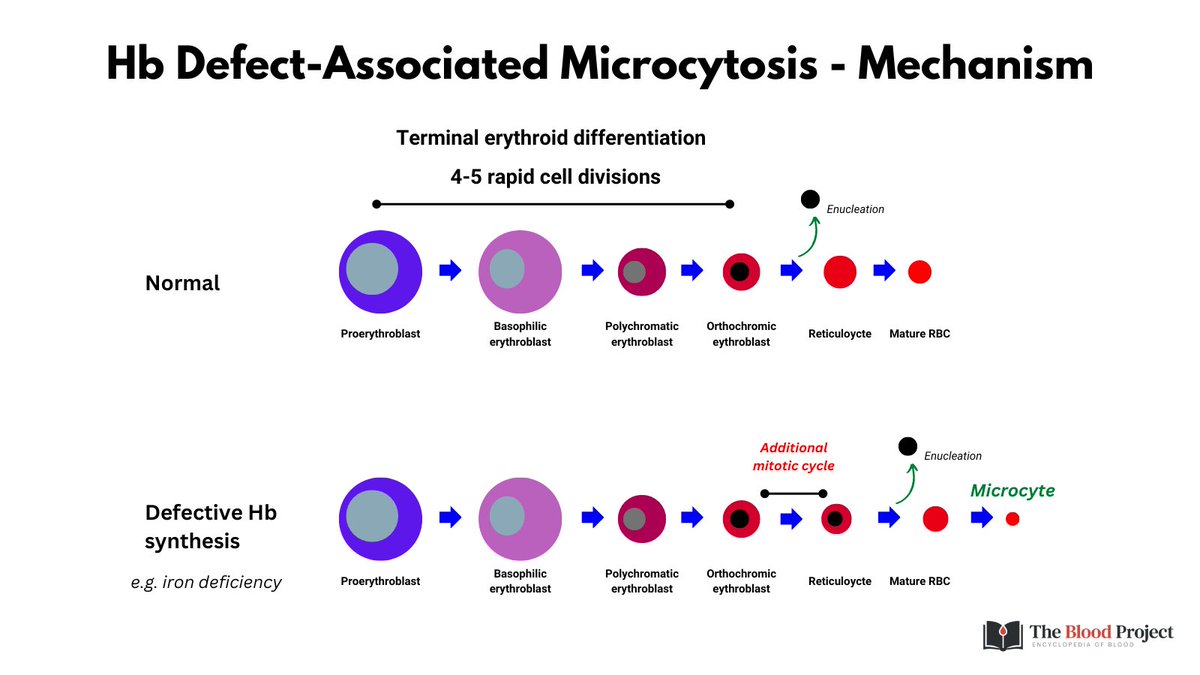
There is some evidence that a defect in Hb synthesis - whether in the iron, heme or globin compartments - is caused by delayed erythropoiesis and an mitotic division, perhaps as an adaptation to preserve the MCHC (graphic).
There is some evidence that a defect in Hb synthesis - whether in the iron, heme or globin compartments - is caused by delayed erythropoiesis and an mitotic division, perhaps as an adaptation to preserve the MCHC (graphic).
11/13
We began with a mechanistic scheme for microcytosis that included defects in RBC hydration, defects in Hb synthesis, and fragmentation.
We drilled down a little on Hb synthesis because it is by far the most common cause of microcytosis.
We began with a mechanistic scheme for microcytosis that included defects in RBC hydration, defects in Hb synthesis, and fragmentation.
We drilled down a little on Hb synthesis because it is by far the most common cause of microcytosis.
12/13
Physical disruption from fragmentation as a cause of microcytosis is pretty self-explanatory and intuitive.
Physical disruption from fragmentation as a cause of microcytosis is pretty self-explanatory and intuitive.
13/13
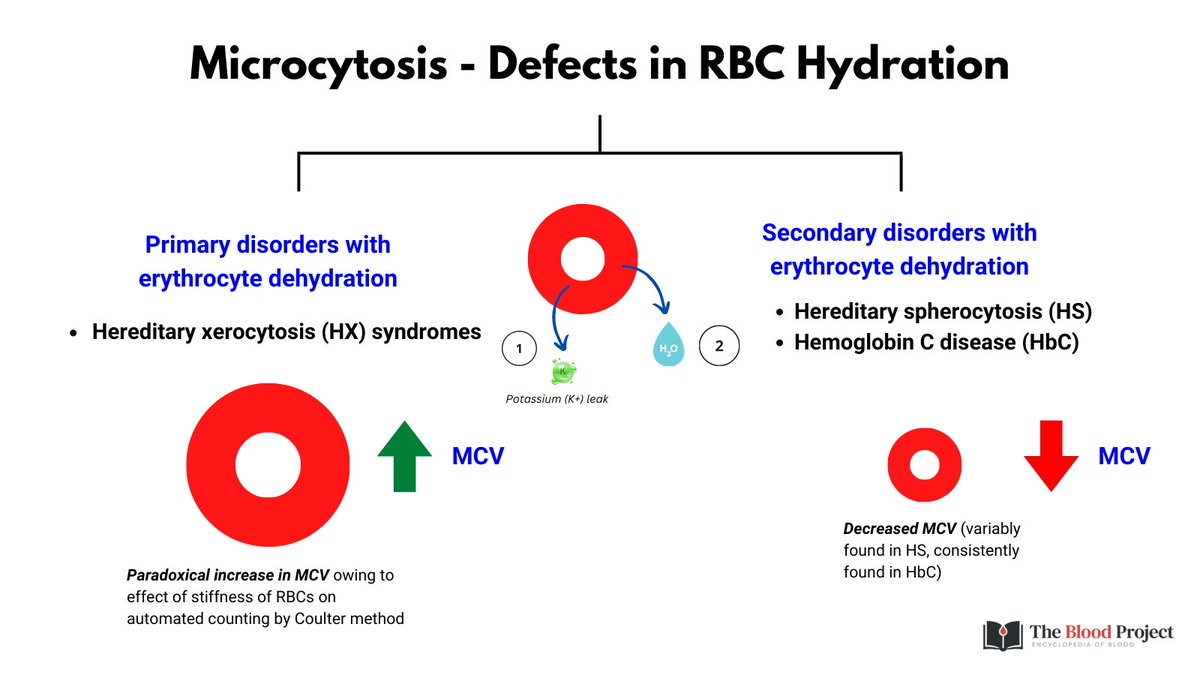
Regarding defects in RBC hydration, congenital or acquired loss of cations (especially K+) from RBCs causes water to leave the cell, increasing MCHC and (in acquired cases) reducing the MCV.
... I find the mechanistic and morphological schemes to be highly complementary.
Regarding defects in RBC hydration, congenital or acquired loss of cations (especially K+) from RBCs causes water to leave the cell, increasing MCHC and (in acquired cases) reducing the MCV.
... I find the mechanistic and morphological schemes to be highly complementary.
Loading suggestions...