

Exclusively breast fed baby with these lesions.
Diagnosis?
Diagnosis?
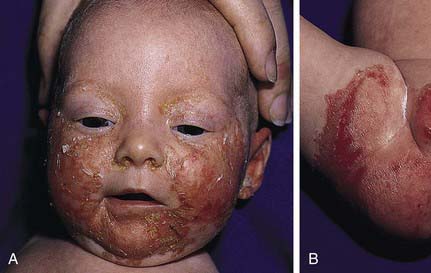
Answer
A, Periorificial eruption.
B, Diaper rash.
The skin findings are typical of zinc deficiency, in this case caused by low levels of zinc in breast milk.
A, Periorificial eruption.
B, Diaper rash.
The skin findings are typical of zinc deficiency, in this case caused by low levels of zinc in breast milk.
Acrodermatitis Enteropathica
👉 rare autosomal recessive disorder caused by an inability to absorb sufficient zinc from the diet.
👉 rare autosomal recessive disorder caused by an inability to absorb sufficient zinc from the diet.
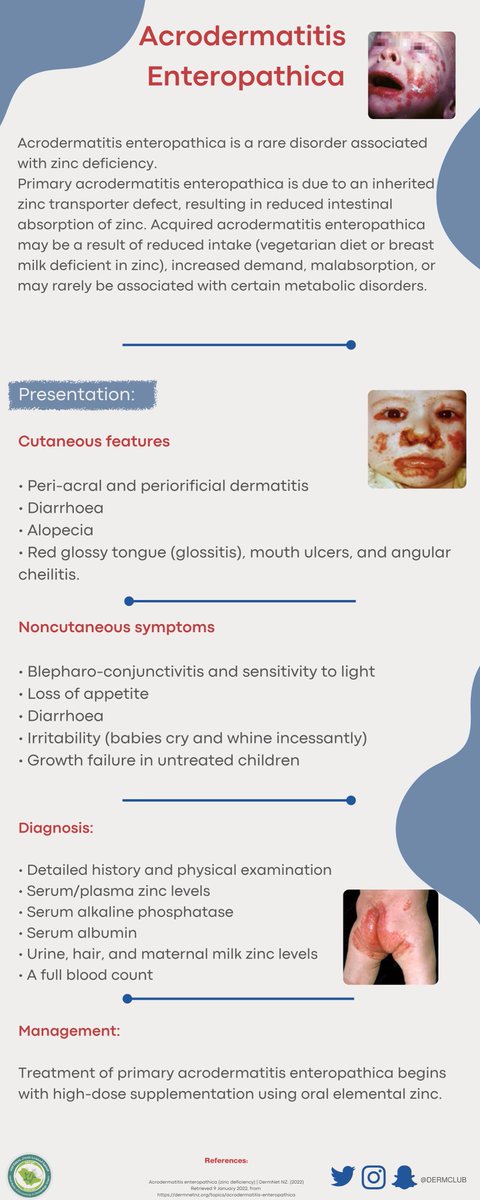
The genetic defect is in the intestinal zinc specific transporter gene SLC39A4.
Initial signs and symptoms usually occur in the first few months of life, often after weaning from breast milk to cow’s milk.
Initial signs and symptoms usually occur in the first few months of life, often after weaning from breast milk to cow’s milk.
The cutaneous eruption consists of
vesiculobullous, eczematous, dry, scaly, or psoriasiform skin lesions
symmetrically distributed in the perioral, acral, and perineal areas and on the cheeks, knees, and elbows
vesiculobullous, eczematous, dry, scaly, or psoriasiform skin lesions
symmetrically distributed in the perioral, acral, and perineal areas and on the cheeks, knees, and elbows
The hair often has a peculiar, reddish tint, and alopecia of some degree is characteristic.
*
Ocular manifestations include
photophobia,
conjunctivitis,
blepharitis, and
corneal dystrophy detectable by slit-lamp examination.
*
Ocular manifestations include
photophobia,
conjunctivitis,
blepharitis, and
corneal dystrophy detectable by slit-lamp examination.
Associated manifestations include
chronic diarrhea,
stomatitis,
glossitis,
paronychia,
nail dystrophy,
growth retardation,
irritability,
delayed wound healing,
intercurrent bacterial infections, and
superinfection with Candida albicans.
chronic diarrhea,
stomatitis,
glossitis,
paronychia,
nail dystrophy,
growth retardation,
irritability,
delayed wound healing,
intercurrent bacterial infections, and
superinfection with Candida albicans.
Lymphocyte function and free radical scavenging are impaired.
Without treatment, the course is chronic and intermittent but often relentlessly progressive.
When the disease is less severe, only growth retardation and delayed development may be apparent
Without treatment, the course is chronic and intermittent but often relentlessly progressive.
When the disease is less severe, only growth retardation and delayed development may be apparent

Loading suggestions...