

1/7
SPLENIC CONTRACTION REDUX
Ever doubt that the human spleen can contract and provide an autotransfusion of RBCs?
We may not come close to greyhound dogs, race horses or seals/whales, but we hold our own!
SPLENIC CONTRACTION REDUX
Ever doubt that the human spleen can contract and provide an autotransfusion of RBCs?
We may not come close to greyhound dogs, race horses or seals/whales, but we hold our own!
2/7
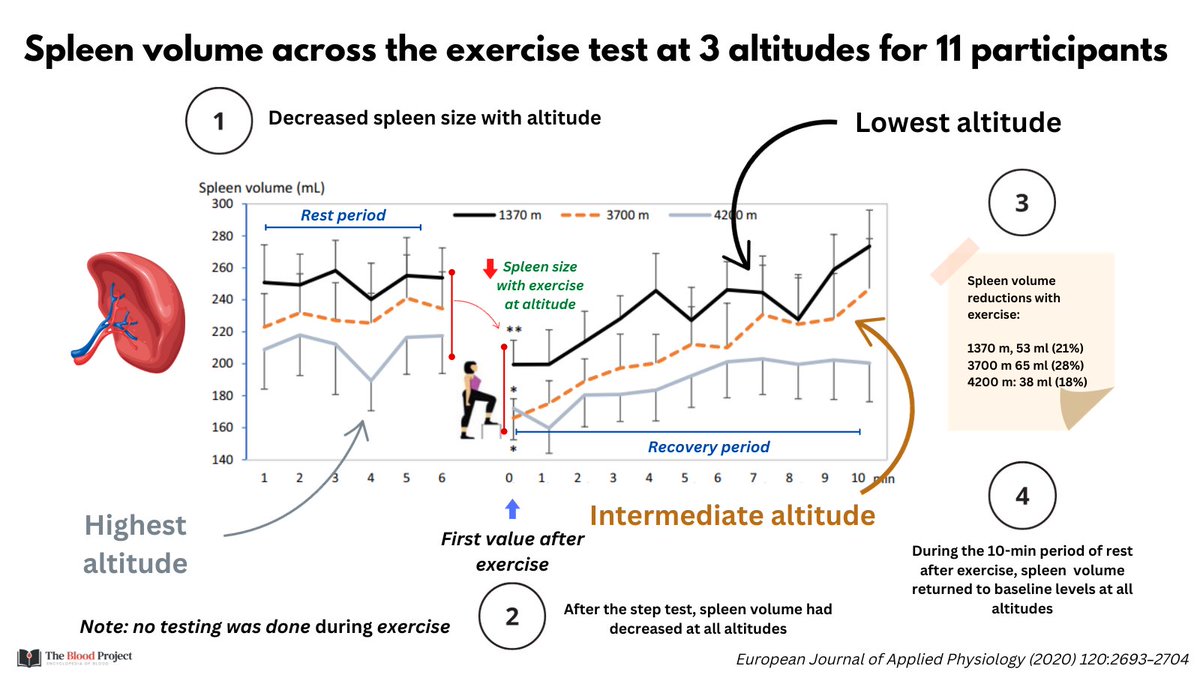
Check out this study in which 11 healthy lowlanders were exercised at 1370, 3700 and 4200 m altitude (i.e., progressively more hypoxic conditions) and underwent US imaging for spleen volume as well as capillary Hb assay.
Check out this study in which 11 healthy lowlanders were exercised at 1370, 3700 and 4200 m altitude (i.e., progressively more hypoxic conditions) and underwent US imaging for spleen volume as well as capillary Hb assay.
3/7
Note that:
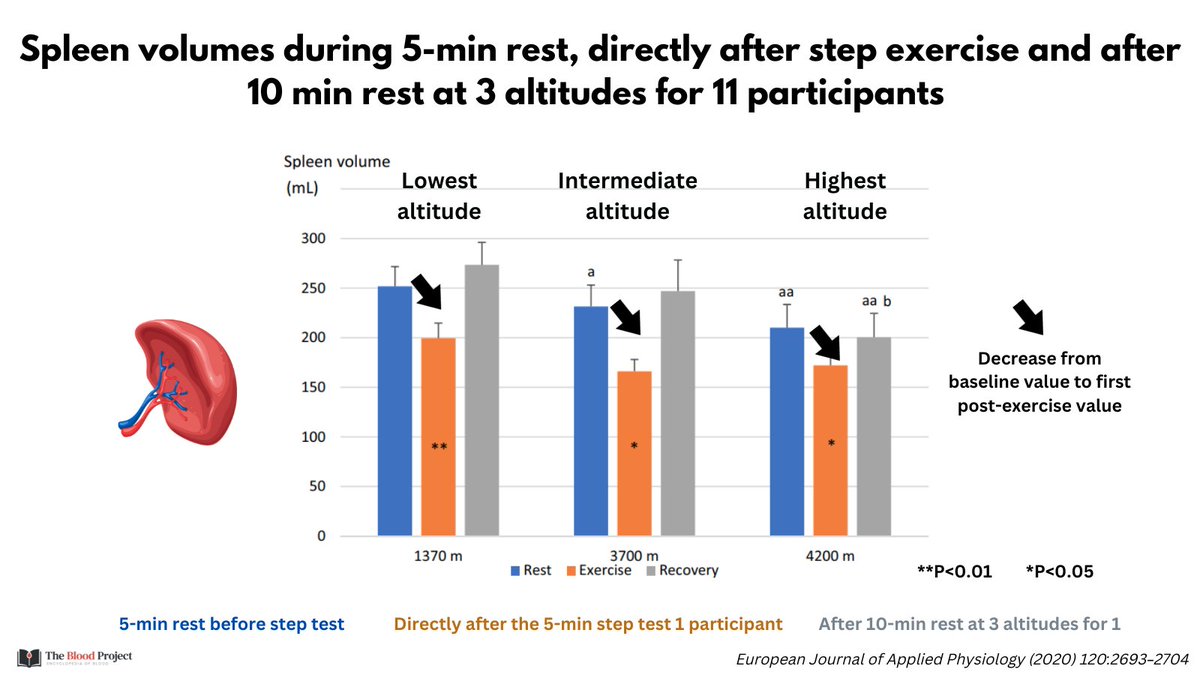
1. Resting spleen volume was reduced with increasing altitude.
2. Resting spleen volume was further reduced with exercise at all altitudes.
3. Spleen volume reductions were as high as 65 ml (28% of the spleen volume).
Note that:
1. Resting spleen volume was reduced with increasing altitude.
2. Resting spleen volume was further reduced with exercise at all altitudes.
3. Spleen volume reductions were as high as 65 ml (28% of the spleen volume).
4/7
4. During the 10-min period of rest after exercise, spleen volume returned to baseline levels at all altitudes.
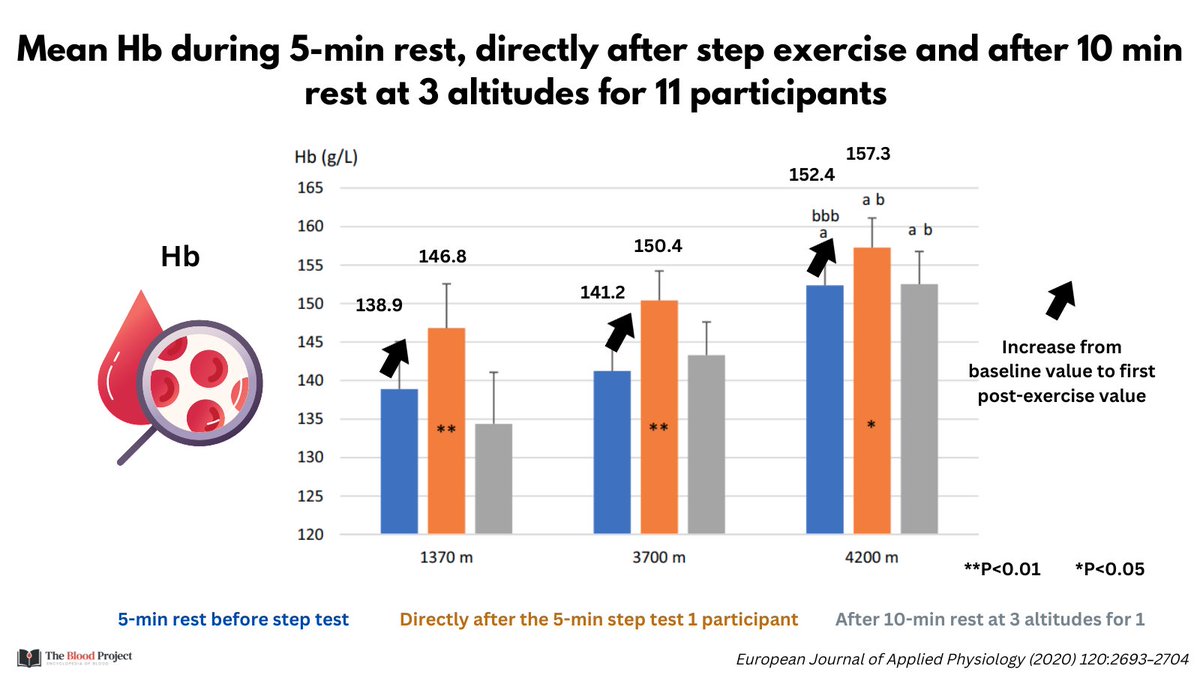
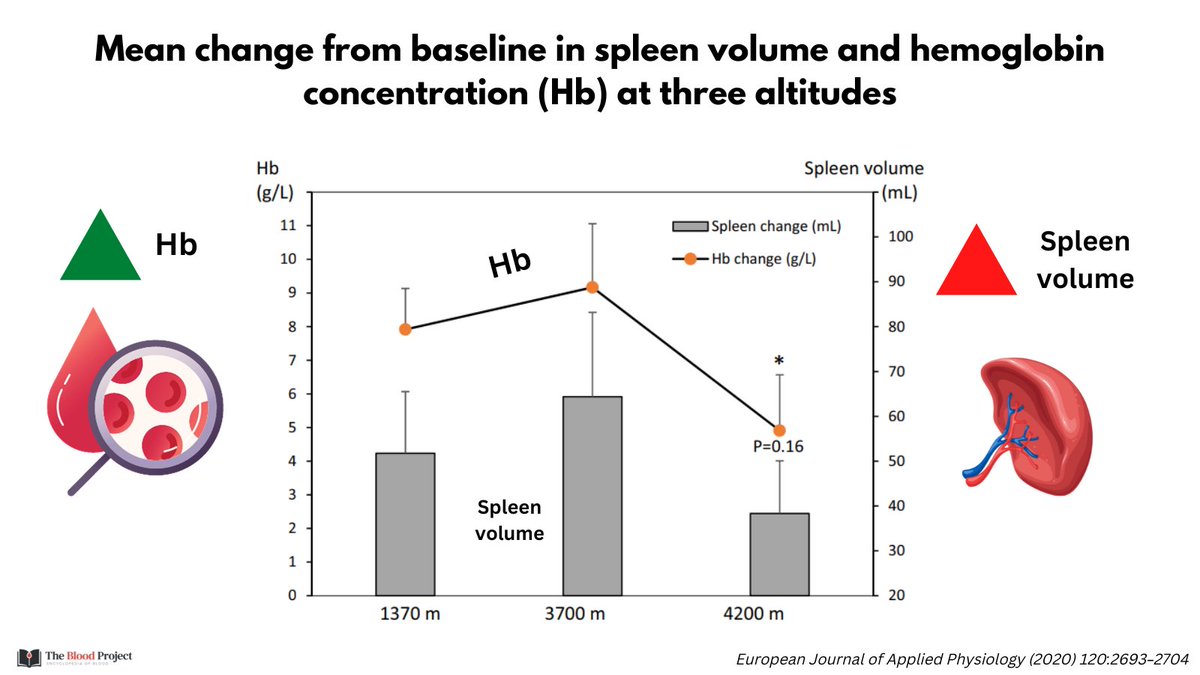
5. Hb progressively increased with increasing altitude and with exercise at all altitudes.
4. During the 10-min period of rest after exercise, spleen volume returned to baseline levels at all altitudes.
5. Hb progressively increased with increasing altitude and with exercise at all altitudes.
5/7
The authors conclude:
1. The spleen acts as a dynamic red blood cell reservoir at high altitude.
2. Recruitment of part of the reservoir occurs already during rest at high altitude.
The authors conclude:
1. The spleen acts as a dynamic red blood cell reservoir at high altitude.
2. Recruitment of part of the reservoir occurs already during rest at high altitude.
6/7
3. During exercise, the spleen has a capacity to expel a supplementary volume of RBCs into the circulation, to cope with the aggravated hypoxia.
3. During exercise, the spleen has a capacity to expel a supplementary volume of RBCs into the circulation, to cope with the aggravated hypoxia.
7/7
4. In this way, the un-acclimatized climber will have a means to cope with hypoxia much earlier than if only the Hb elevation caused by enhanced erythropoiesis would be available, which takes at least a week to develop.
4. In this way, the un-acclimatized climber will have a means to cope with hypoxia much earlier than if only the Hb elevation caused by enhanced erythropoiesis would be available, which takes at least a week to develop.
Loading suggestions...