

Almost EVERYONE will develop coronary artery disease at some point in life.
This significantly ⬆️ the risk of heart attack.
A Cardiac CT can tell:
If you have plaque & your degree of risk.
Here are 5 things you need to know about CAC scans.
📕 Make sure To Bookmark ✅
This significantly ⬆️ the risk of heart attack.
A Cardiac CT can tell:
If you have plaque & your degree of risk.
Here are 5 things you need to know about CAC scans.
📕 Make sure To Bookmark ✅

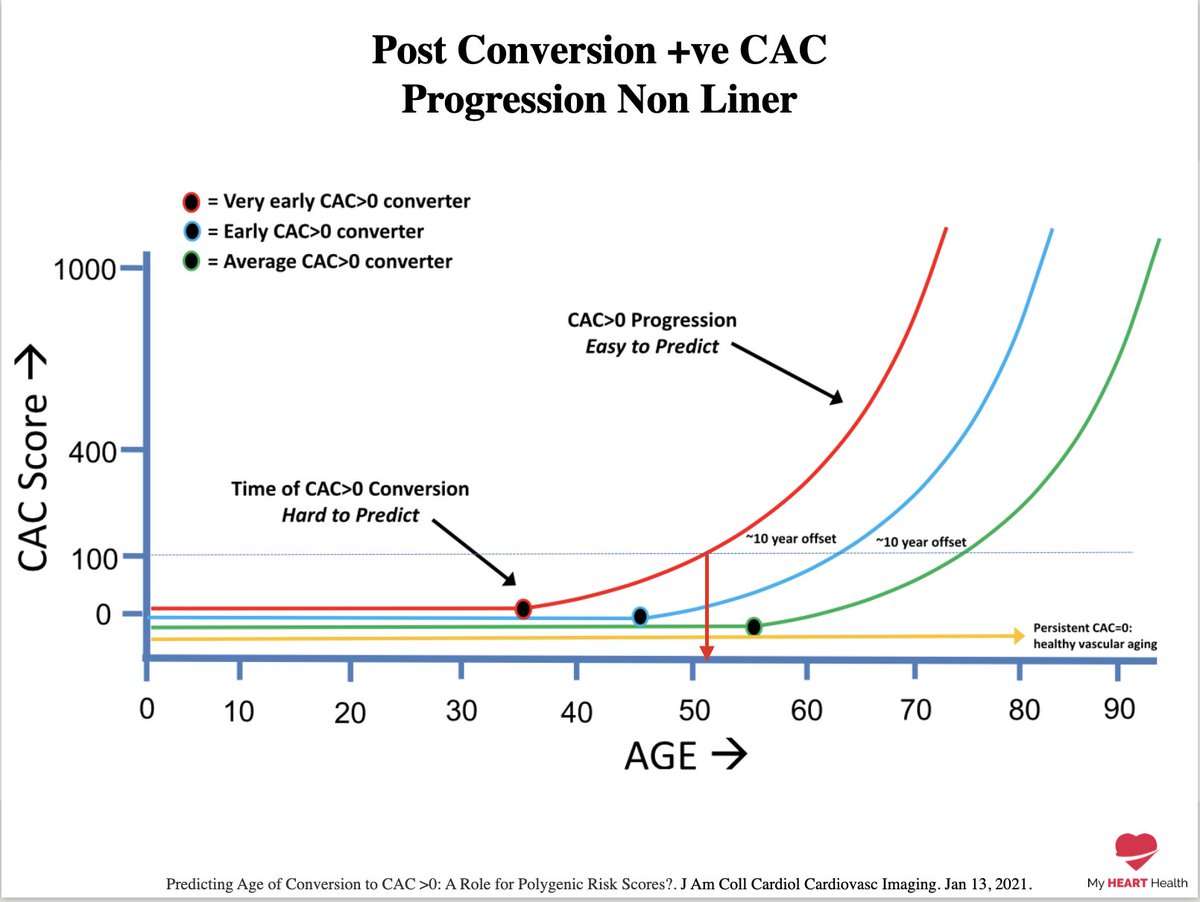
1. Everyone Starts Out With a CAC Score Of 0
But at some point you will likely convert to a score >0.
When you do is crucial.
It takes about 8-10 years to go from a score of 1->100.
So if you convert in your 30s your risk in your 40s just went ⬆️⬆️⬆️
But at some point you will likely convert to a score >0.
When you do is crucial.
It takes about 8-10 years to go from a score of 1->100.
So if you convert in your 30s your risk in your 40s just went ⬆️⬆️⬆️
2. A CAC Score >100 Suggests ⬆️ Risk
Over a 10 year time frame.
But for lifetime risk we always need to think beyond 10 years.
As CAC score increases:
Heart attack & Stroke risk increases.
As does All Cause Mortality
Over a 10 year time frame.
But for lifetime risk we always need to think beyond 10 years.
As CAC score increases:
Heart attack & Stroke risk increases.
As does All Cause Mortality

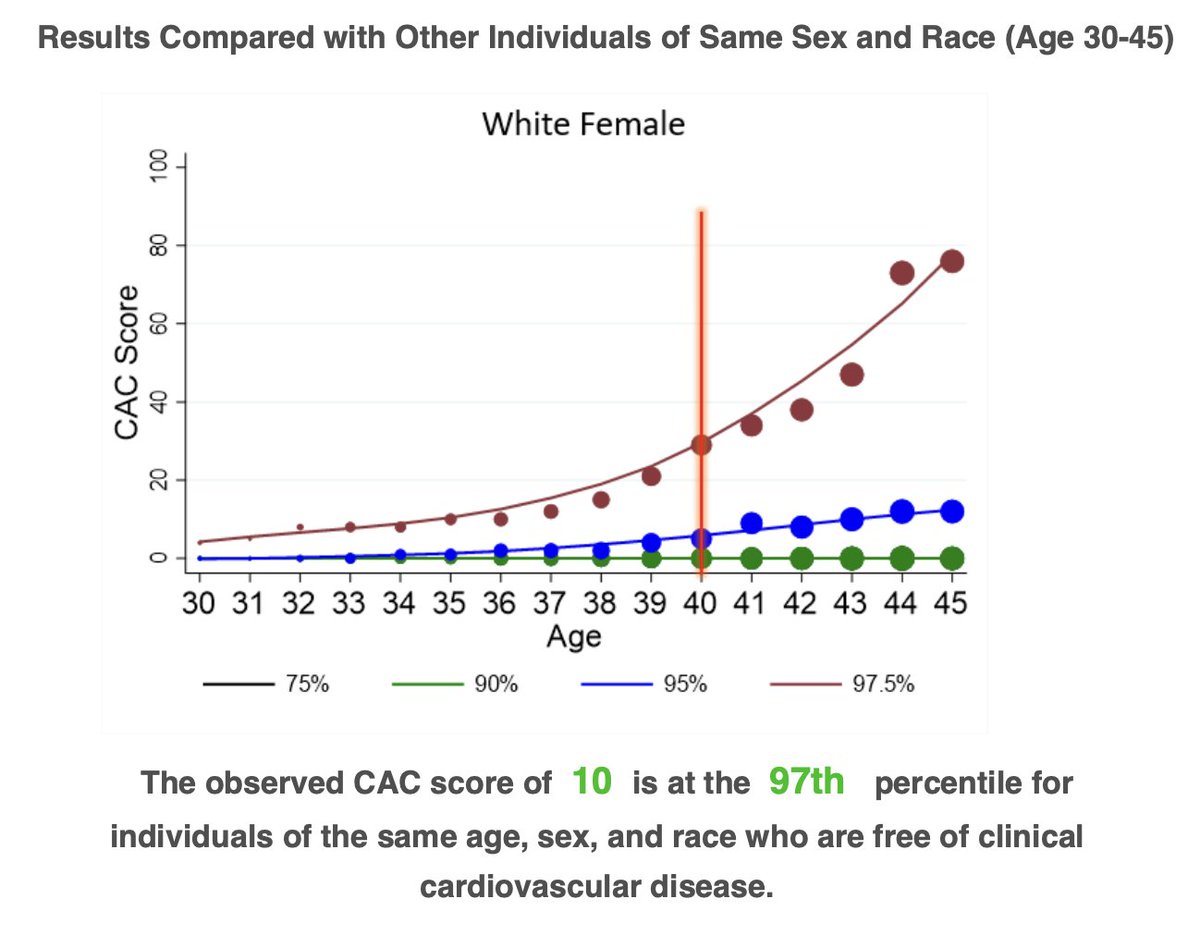
3. A CAC Score between 0-99 Needs To Be Taken In Context Of Age
A CAC score of 10 isn't particularly high.
But it is for younger people.
A CAC score of 10 for a 45 year old female is at the 97th percentile.
This person is laying down plaque WAY earlier than expected.
A CAC score of 10 isn't particularly high.
But it is for younger people.
A CAC score of 10 for a 45 year old female is at the 97th percentile.
This person is laying down plaque WAY earlier than expected.
4. A CAC Score >300 Puts You In The Same Risk Category Of Someone Who Has Had A Prior Heart Attack
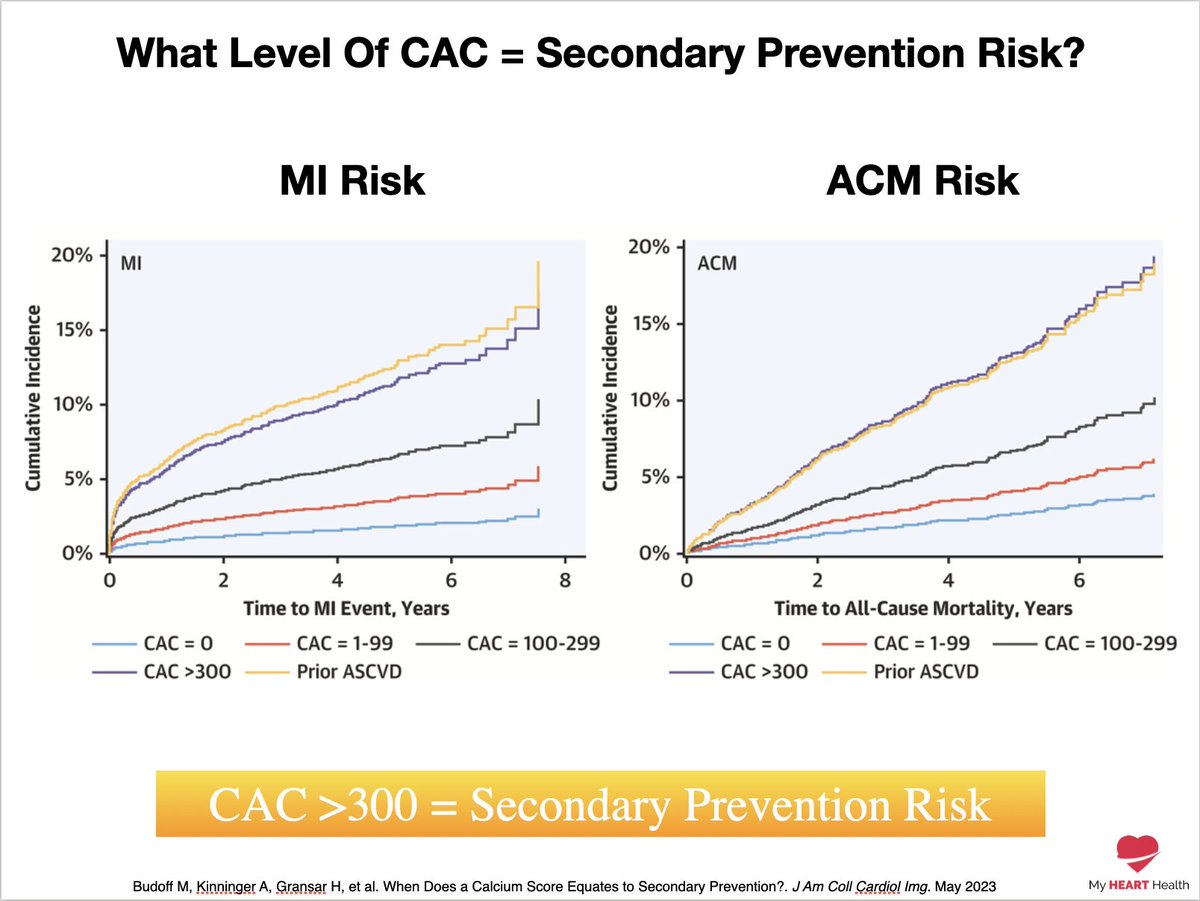
In general - the person at highest risk of a heart attack
Is the person who has had one before.
A CAC score >300 equates to the same risk.
Beware hidden risk.
In general - the person at highest risk of a heart attack
Is the person who has had one before.
A CAC score >300 equates to the same risk.
Beware hidden risk.
5. Your CAC Score Is Highly Dependent On Your Lifestyle
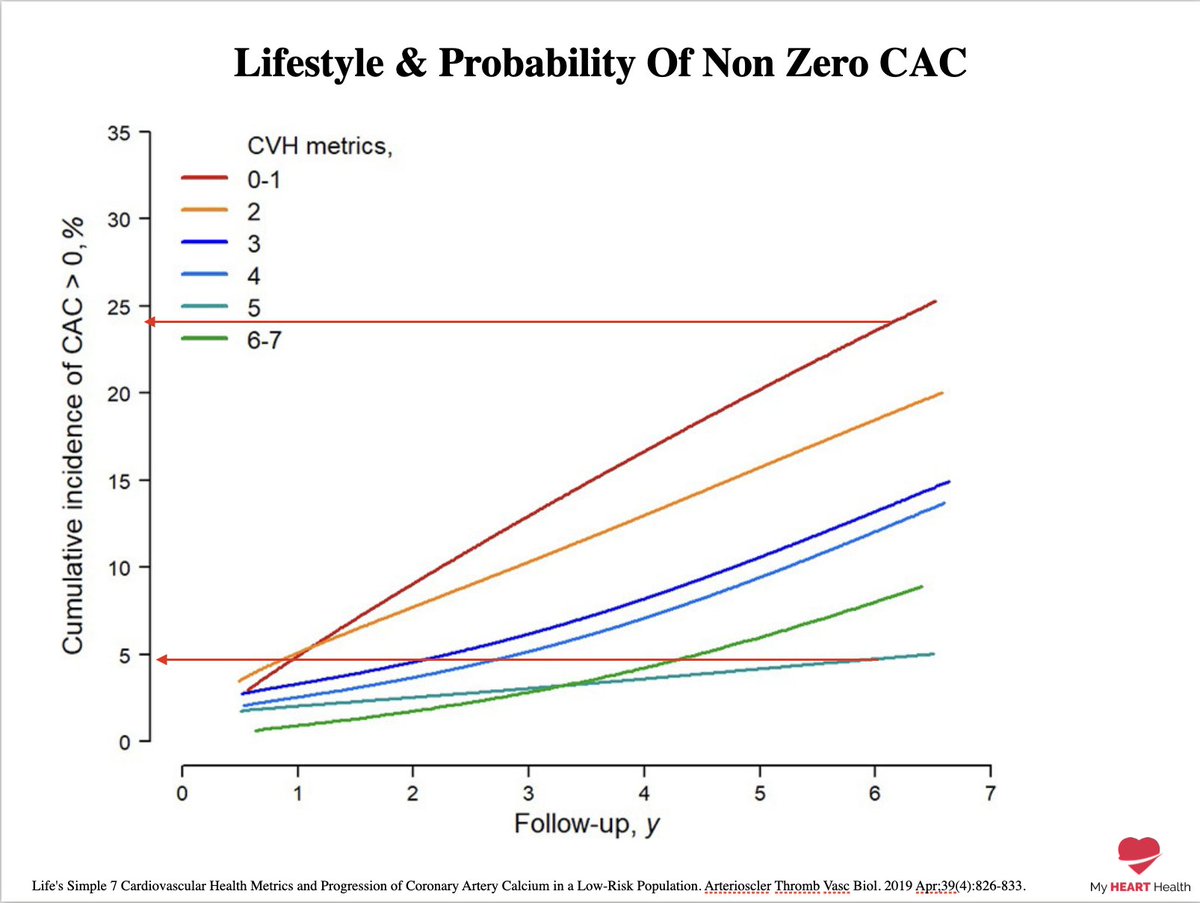
When you convert from a 0 score to a score >0
Is tightly linked to your lifestyle factors:
Exercise
Sleep
Smoking
Weight etc.
Better lifestyle.
Delayed onset of coronary disease.
When you convert from a 0 score to a score >0
Is tightly linked to your lifestyle factors:
Exercise
Sleep
Smoking
Weight etc.
Better lifestyle.
Delayed onset of coronary disease.
That's a wrap!
If you enjoyed this thread:
👋 You might like to join 14K+ others on my free weekly newsletter on heart disease prevention and living longer.
If so, just click my Bio above and follow the link.
If you enjoyed this thread:
👋 You might like to join 14K+ others on my free weekly newsletter on heart disease prevention and living longer.
If so, just click my Bio above and follow the link.
If you like Tweets like this, you might enjoy my weekly newsletter.
Actionable content to help you understand and improve your health.
Join thousands of other subscribers by checking out the link in my bio.
Have to do it this way. Blame Elon ;)
Actionable content to help you understand and improve your health.
Join thousands of other subscribers by checking out the link in my bio.
Have to do it this way. Blame Elon ;)
Loading suggestions...