

It’s not normal to be sensitive to many different foods.
Dealing with symptoms like bloating, fatigue, brain fog & anxiety after every meal is often a sign of serious underlying issues.
Here’s what often causes this & why it’s more serious than you think.
-- THREAD --
Dealing with symptoms like bloating, fatigue, brain fog & anxiety after every meal is often a sign of serious underlying issues.
Here’s what often causes this & why it’s more serious than you think.
-- THREAD --
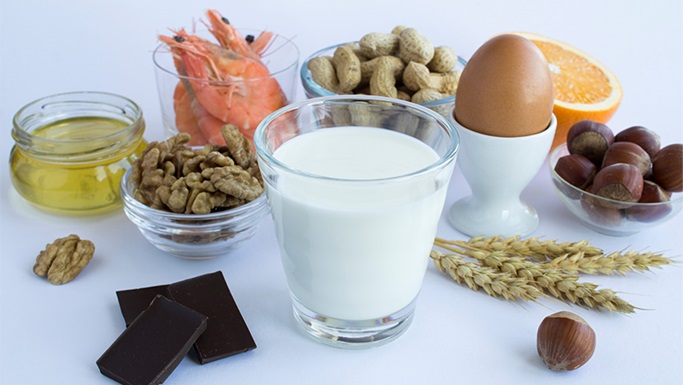
First, let’s clarify terminology.
Allergies are IgE immune responses (potentially life-threatening).
Intolerances are non-allergic responses that don’t involve the immune system.
Sensitivities are non-allergic IgG immune responses.
Allergies are IgE immune responses (potentially life-threatening).
Intolerances are non-allergic responses that don’t involve the immune system.
Sensitivities are non-allergic IgG immune responses.
Food allergies are rare with less than 6% of the population having them.
The main causes are believed to be genetics, immune dysregulation & environment.
They’re generally not curable, but experiments with exposure to small amounts showed it can desensitize the immune system.
The main causes are believed to be genetics, immune dysregulation & environment.
They’re generally not curable, but experiments with exposure to small amounts showed it can desensitize the immune system.
Intolerances are usually caused by having a hard time digesting particular foods.
This usually involves foods like gluten, dairy or nuts.
Many times it’s caused by enzyme deficiencies such as lactase when it comes to lactose intolerance.
This usually involves foods like gluten, dairy or nuts.
Many times it’s caused by enzyme deficiencies such as lactase when it comes to lactose intolerance.
We're going to cover food sensitivities in this thread..
Allergies and sensitivities both involve immune responses.
Allergies cause an IgE immune response, which is an immediate release of histamine and other chemicals causing things like hives or life-threatening anaphylaxis.
Allergies and sensitivities both involve immune responses.
Allergies cause an IgE immune response, which is an immediate release of histamine and other chemicals causing things like hives or life-threatening anaphylaxis.
Sensitivities on the other hand are an IgG response.
This is a delayed secondary response sometimes even days after consumption of a particular food.
This happens when the body perceives certain proteins as harmful but is rarely serious or life-threatening like allergies.
This is a delayed secondary response sometimes even days after consumption of a particular food.
This happens when the body perceives certain proteins as harmful but is rarely serious or life-threatening like allergies.
Sensitivities occur after food is broken down and absorbed into the bloodstream.
Once there, the immune system detects it and produces IgG antibodies and releases inflammatory mediators like cytokines.
This manifests symptoms, which can be hours or days after consumption.
Once there, the immune system detects it and produces IgG antibodies and releases inflammatory mediators like cytokines.
This manifests symptoms, which can be hours or days after consumption.
Since food sensitivity symptoms can come long after food is consumed, it’s hard to determine what caused them.
While it is helpful to know what specific foods you’re sensitive to, what’s more important is understanding the root cause of them.
Which is often not the food itself.
While it is helpful to know what specific foods you’re sensitive to, what’s more important is understanding the root cause of them.
Which is often not the food itself.
There are two common underlying issues that can cause food sensitivities.
LEAKY GUT
This describes a condition where the lining of the gut is weakened or malfunctioning allowing things like toxins & partially digested food to leak from the gut into the bloodstream.
LEAKY GUT
This describes a condition where the lining of the gut is weakened or malfunctioning allowing things like toxins & partially digested food to leak from the gut into the bloodstream.
Normally, small food particles are absorbed into the blood after proper digestion.
With leaky gut, food particles can enter the blood before proper digestion.
The immune system isn’t used to food in this form, so it can perceive them as threats.
With leaky gut, food particles can enter the blood before proper digestion.
The immune system isn’t used to food in this form, so it can perceive them as threats.
IgG antibodies are normally cleared by macrophages.
But when leaky gut occurs and you’re sensitive to many foods, macrophages don’t have enough capacity.
The complexes formed with food particles can then deposit in tissues & cause higher inflammation.
But when leaky gut occurs and you’re sensitive to many foods, macrophages don’t have enough capacity.
The complexes formed with food particles can then deposit in tissues & cause higher inflammation.
When leaky gut is not addressed properly, it can cause frequent IgG responses even to beneficial things like probiotics.
This can result in a continuous loop of increasingly higher inflammation & an increasingly weaker gut lining.
This can result in a continuous loop of increasingly higher inflammation & an increasingly weaker gut lining.
Leaky gut is a serious condition.
It can lead to other conditions like autoimmunity, depression and even cancer.
It can lead to other conditions like autoimmunity, depression and even cancer.
DYSBIOSIS
The microbiome can play a role in food sensitivities.
They can do this by influencing immunity, helping maintain the gut barrier, affecting enzyme production & protecting against pathogen overgrowth.
When out of balance (dysbiosis), sensitivities can develop.
The microbiome can play a role in food sensitivities.
They can do this by influencing immunity, helping maintain the gut barrier, affecting enzyme production & protecting against pathogen overgrowth.
When out of balance (dysbiosis), sensitivities can develop.
The microbiome is involved in the breakdown of the food we eat.
With celiac for example, certain bacteria break down gluten.
Others can increase its toxicity.Certain strains like Lactobacillus can increase reactions to gluten.
With celiac for example, certain bacteria break down gluten.
Others can increase its toxicity.Certain strains like Lactobacillus can increase reactions to gluten.
Dysbiosis & pathogen overgrowth are closely linked.
Imbalances in the microbiome make it easier for pathogens to flourish.
On the other hand, pathogen overgrowth can cause an overall imbalance in the microbiome.
Imbalances in the microbiome make it easier for pathogens to flourish.
On the other hand, pathogen overgrowth can cause an overall imbalance in the microbiome.
Certain types of bacterial overgrowth for example can cause a deficiency of DAO, an enzyme that breaks down histamine.
Additionally, overgrowth can lead to increased production of histamine in the gut.
Higher histamine with lower levels of DAO can lead to high sensitivity.
Additionally, overgrowth can lead to increased production of histamine in the gut.
Higher histamine with lower levels of DAO can lead to high sensitivity.
The microbiome also affects the gut lining:
- Contributes to mucosal layer
- Supports tight junctions
- Produces SCFAs
- Regulates immune responses
In dysbiosis, these functions are disrupted, weakening the gut lining often resulting in food sensitivities.
- Contributes to mucosal layer
- Supports tight junctions
- Produces SCFAs
- Regulates immune responses
In dysbiosis, these functions are disrupted, weakening the gut lining often resulting in food sensitivities.
While leaky gut and dysbiosis are common, that doesn’t mean they’re no big deal.
They can cause serious conditions like:
- IBD
- Celiac
- Diabetes
- Obesity
- Fatty liver disease
- Multiple sclerosis
- Depression
- Alzheimer's
- Psoriasis & eczema
- Cancer
They can cause serious conditions like:
- IBD
- Celiac
- Diabetes
- Obesity
- Fatty liver disease
- Multiple sclerosis
- Depression
- Alzheimer's
- Psoriasis & eczema
- Cancer
So, if you’re experiencing food sensitivities and think that they’re no big deal, think again.
They can be a sign of underlying issues like dysbiosis or leaky gut & potentially be a precursor to more serious conditions like autoimmune disease or cancer.
They can be a sign of underlying issues like dysbiosis or leaky gut & potentially be a precursor to more serious conditions like autoimmune disease or cancer.
Looking for a personalized solution to food sensitivities, more specifically the underlying issues that contribute to them?
Click below for more info on my 1 on 1 coaching.
program.theholisticnick.com
Click below for more info on my 1 on 1 coaching.
program.theholisticnick.com
Loading suggestions...