

Do You Need A Stent To Treat Your Heart Disease?
📕Make Sure To Bookmark✅
🧵👇
/1
📕Make Sure To Bookmark✅
🧵👇
/1
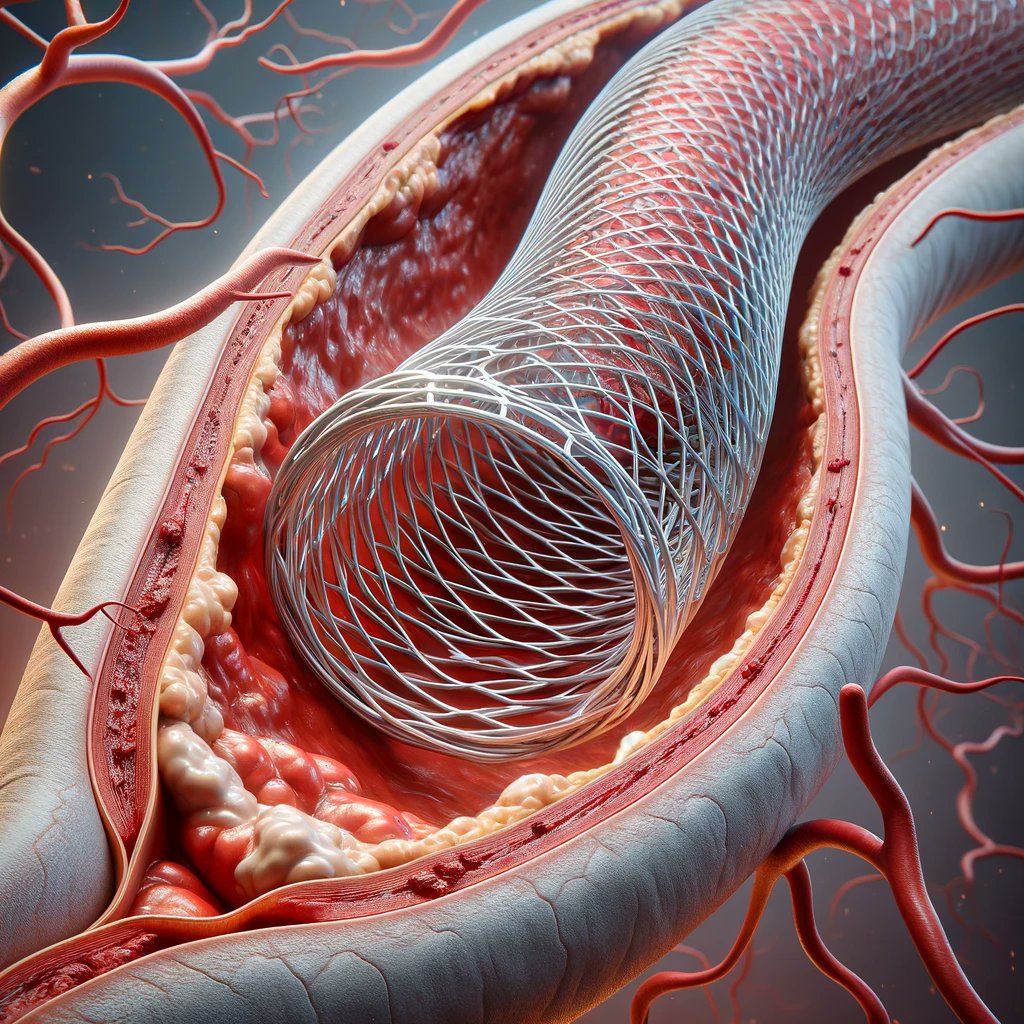
One of the most common questions I get is
“Do I need a stent to treat my heart disease?”
First, we must understand what a stent is and why it is used.
A stent is a metal scaffold deployed in a coronary artery that has reduced flow in that artery to restore flow.
/2
“Do I need a stent to treat my heart disease?”
First, we must understand what a stent is and why it is used.
A stent is a metal scaffold deployed in a coronary artery that has reduced flow in that artery to restore flow.
/2
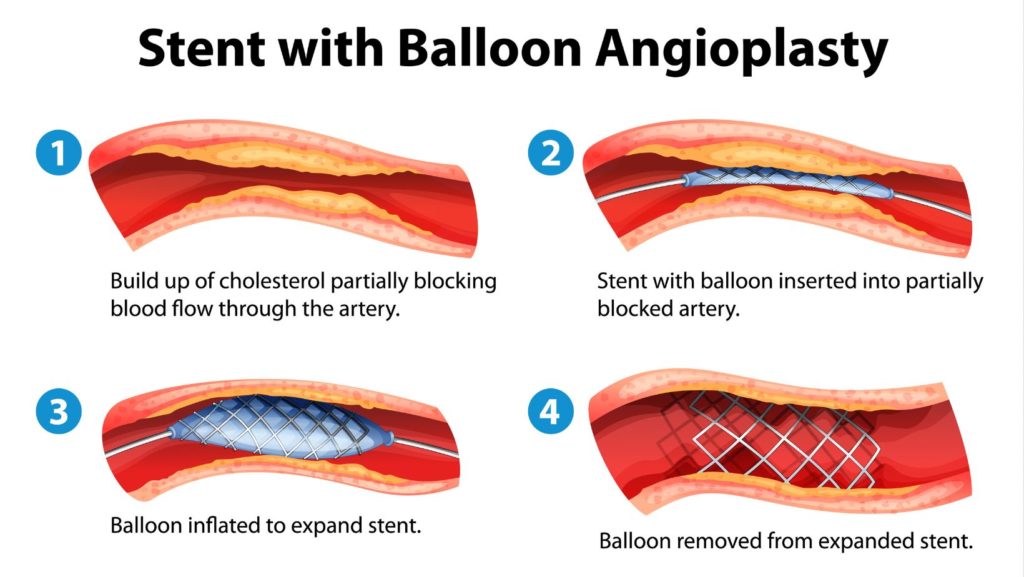
Seems pretty simple and makes total sense.
The artery is blocked.
The stent ‘unblocks’ it.
Flow is restored.
Of course, this all seems like a good idea.
But the devil is in the detail.
/3
The artery is blocked.
The stent ‘unblocks’ it.
Flow is restored.
Of course, this all seems like a good idea.
But the devil is in the detail.
/3
Arteries generally narrow and occlude for one of two reasons:
1. The progressive accumulation of plaque.
2. A plaque ruptures, and a clot forms in the artery, thereby occluding it.
The second reason is commonly referred to as a ‘Heart Attack’ or acute coronary syndrome.
/4
1. The progressive accumulation of plaque.
2. A plaque ruptures, and a clot forms in the artery, thereby occluding it.
The second reason is commonly referred to as a ‘Heart Attack’ or acute coronary syndrome.
/4

This is an emergency & is most often treated with a stent to restore blood flow in the artery.
The decision to use a stent here is usually clear & is associated with fewer deaths and heart attacks.
There is little debate here regarding stenting.
/5
The decision to use a stent here is usually clear & is associated with fewer deaths and heart attacks.
There is little debate here regarding stenting.
/5
The real debate relates to the role of stenting in the setting of a severely narrow coronary artery
Outside the setting of a heart attack.
This is what is called stable obstructive coronary disease.
You have all heard the following story.
/6
Outside the setting of a heart attack.
This is what is called stable obstructive coronary disease.
You have all heard the following story.
/6
“Johnny got checked or had some symptoms, and he needed a stent.”
The artery is blocked. The artery is now open.
Makes total sense.
But let’s take a closer look.
/7
The artery is blocked. The artery is now open.
Makes total sense.
But let’s take a closer look.
/7
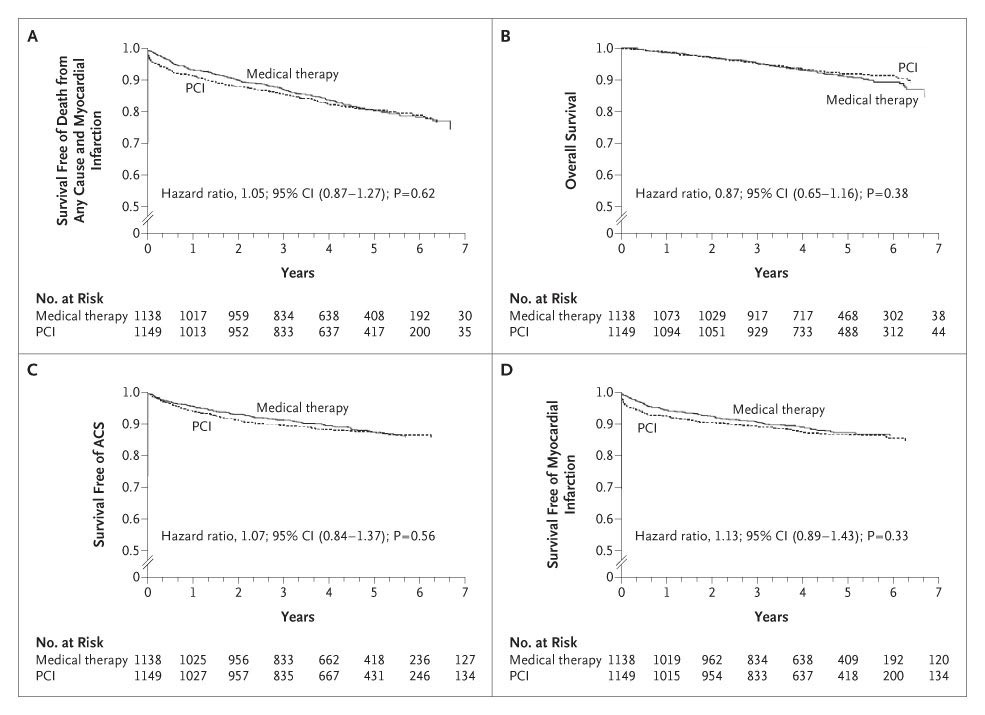
The COURAGE trial took patients with significant coronary artery disease
As evidenced by arteries that were at least 70% narrowed
And tested whether medications or medications PLUS stenting would improve outcomes.
The result?
/8
As evidenced by arteries that were at least 70% narrowed
And tested whether medications or medications PLUS stenting would improve outcomes.
The result?
/8
After 4.6 years
There was no difference between these two groups in terms of death from any cause or heart attacks.
This was a major surprise.
Stenting narrowed coronary arteries did not prevent heart attacks or early death.
/9
There was no difference between these two groups in terms of death from any cause or heart attacks.
This was a major surprise.
Stenting narrowed coronary arteries did not prevent heart attacks or early death.
/9
There were many criticisms of this trial
Which we will not get into here
But this finding was not widely adopted into clinical practice for a variety of reasons.
A subsequent similar but importantly different trial called ISCHEMIA attempted to answer this question.
/10
Which we will not get into here
But this finding was not widely adopted into clinical practice for a variety of reasons.
A subsequent similar but importantly different trial called ISCHEMIA attempted to answer this question.
/10
The ISCHEMIA trial showed that
There was no difference in deaths or a combination of major heart events, including heart attacks.
With the addition of stenting to medications in those with severely narrowed coronary arteries.
/11
There was no difference in deaths or a combination of major heart events, including heart attacks.
With the addition of stenting to medications in those with severely narrowed coronary arteries.
/11
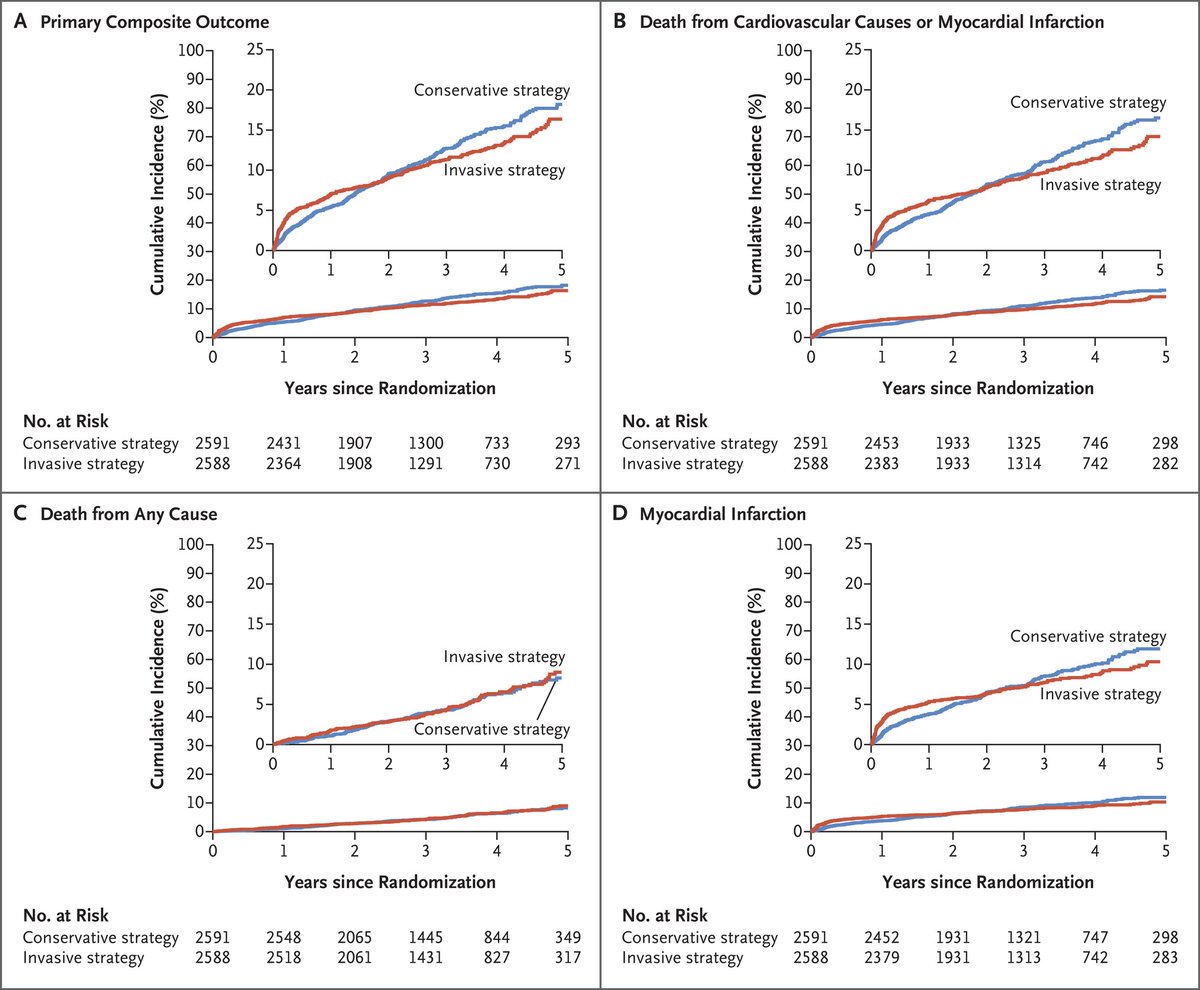
So it is now clear that outside of a heart attack
Stenting obstructive coronary artery disease does not:
Make you live longer.
Prevent you from having a future heart attack.
This was another major finding in the world of cardiology.
However...
/12
Stenting obstructive coronary artery disease does not:
Make you live longer.
Prevent you from having a future heart attack.
This was another major finding in the world of cardiology.
However...
/12
There are the ‘garden variety’ heart attacks
Whereby a plaque ruptures in the coronary artery, called a spontaneous heart attack.
There are also heart attacks that can be caused by the stenting procedure itself, called periprocedural heart attacks.
/13
Whereby a plaque ruptures in the coronary artery, called a spontaneous heart attack.
There are also heart attacks that can be caused by the stenting procedure itself, called periprocedural heart attacks.
/13
In the group who were stented
There were MORE of the periprocedural heart attacks (as you would expect)
But FEWER of the spontaneous heart attacks.
Interesting...
But not statistically sound given the primary endpoint of the trial was negative.
/14
There were MORE of the periprocedural heart attacks (as you would expect)
But FEWER of the spontaneous heart attacks.
Interesting...
But not statistically sound given the primary endpoint of the trial was negative.
/14
The bottom line is people did not live longer & did not have fewer heart attacks in total when stenting was used.
It is very easy to land on one side of this debate or the other and be rigid in your opinions.
/15
It is very easy to land on one side of this debate or the other and be rigid in your opinions.
/15
It is easy to say stenting does not save lives or prevent heart attacks, and you would be right.
It is also easy to point out many elements of this trial that are worthy of discussion and potentially future studies that may change this finding.
/16
It is also easy to point out many elements of this trial that are worthy of discussion and potentially future studies that may change this finding.
/16
When I have a patient with obstructive coronary artery disease, I ensure they:
Have all their risk factors addressed
Are on all the appropriate medications
I then go over this data and am very clear about the evidence.
For most this enough. We go with medical therapy.
/17
Have all their risk factors addressed
Are on all the appropriate medications
I then go over this data and am very clear about the evidence.
For most this enough. We go with medical therapy.
/17
Some patients however, really wish to have the narrowing addressed
And for those people:
I highlight all the gaps in our knowledge
Explain the risks
And proceed accordingly with stenting.
This works out well most of the time.
But sometimes it doesn’t.
/18
And for those people:
I highlight all the gaps in our knowledge
Explain the risks
And proceed accordingly with stenting.
This works out well most of the time.
But sometimes it doesn’t.
/18
And the potential bad outcomes here include death.
At a minimum, it requires the implantation of a foreign metal object in your artery
And also taking two potent blood thinners for at least six months.
/19
At a minimum, it requires the implantation of a foreign metal object in your artery
And also taking two potent blood thinners for at least six months.
/19
This situation requires careful conversation
And an honest explanation of what the data says and where the gaps in our knowledge are.
For most, I encourage medical therapy alone.
But what about symptoms such as chest pain?
/20
And an honest explanation of what the data says and where the gaps in our knowledge are.
For most, I encourage medical therapy alone.
But what about symptoms such as chest pain?
/20
This is a very different area than the hard outcomes of heart attacks, etc
But is about quality of life and symptom control.
That is what next week’s article dives into.
And you guessed it.
It’s not exactly straightforward.
Tune in next week.
/21
But is about quality of life and symptom control.
That is what next week’s article dives into.
And you guessed it.
It’s not exactly straightforward.
Tune in next week.
/21
That's a wrap!
👋 If you enjoyed this thread, you might like to join over 15K others on my weekly newsletter, getting actionable insights on heart disease prevention.
Link in bio above ☝️
👋 If you enjoyed this thread, you might like to join over 15K others on my weekly newsletter, getting actionable insights on heart disease prevention.
Link in bio above ☝️
If you like Tweets like this, you might enjoy my weekly newsletter.
Actionable content to help you understand and improve your health.
Join thousands of other subscribers by checking out the link in my bio.
Have to do it this way. Blame Elon ;)
Actionable content to help you understand and improve your health.
Join thousands of other subscribers by checking out the link in my bio.
Have to do it this way. Blame Elon ;)
Loading suggestions...