

We cannot escape aging.
However, inflammation is a major accelerator of aging.
Lower your inflammation = slow down your aging
I will cover the tests that measure your inflammation levels to see where you stand.
THREAD
However, inflammation is a major accelerator of aging.
Lower your inflammation = slow down your aging
I will cover the tests that measure your inflammation levels to see where you stand.
THREAD
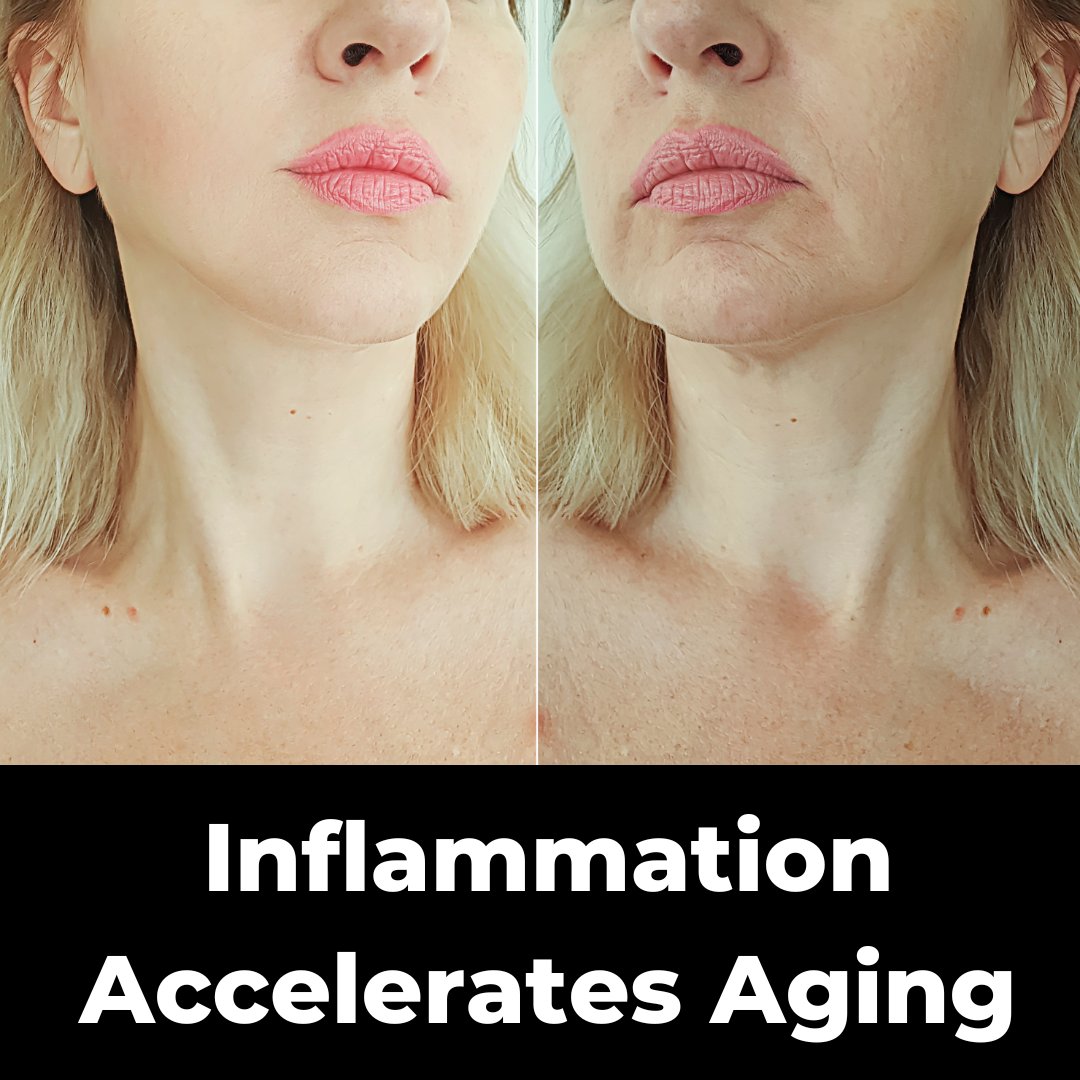
Not only will inflammation accelerate aging, inflammation is also a major root cause involved in all chronic diseases.
The diseases that plague our modern society:
•Heart Disease
•Diabetes
•Obesity
•Autoimmune Diseases
•Dementia & Alzheimer’s
•Cancer
•And Many More
The diseases that plague our modern society:
•Heart Disease
•Diabetes
•Obesity
•Autoimmune Diseases
•Dementia & Alzheimer’s
•Cancer
•And Many More
Additionally, more and more research is coming out showing connections to chronic systemic inflammation and mental health issues too.
So, lowering your inflammation will:
•Reduce the rate at which you age
•Significantly reduce your risk for the above disease processes
•Improve your mental health
•Reduce the rate at which you age
•Significantly reduce your risk for the above disease processes
•Improve your mental health
How Do You Know Your Inflammation Levels In Your Body?
There are 5 bio markers found in lab work that are great indicators of your inflammation levels.
There are 5 bio markers found in lab work that are great indicators of your inflammation levels.
Additionally, there are also 4 other bio markers commonly found in routine lab work, that can also help indicate where your levels stand.
This will be an info packed thread to bookmark.
Let’s dive into all of it…
This will be an info packed thread to bookmark.
Let’s dive into all of it…
Here Are The 5 Biomarkers That Are Great for Measuring Inflammation
1)CRP
C-Reactive Protein (CRP) is a protein made by the liver.
The level of CRP increases when there's inflammation in the body.
1)CRP
C-Reactive Protein (CRP) is a protein made by the liver.
The level of CRP increases when there's inflammation in the body.
While not run on routine lab work, it's a common test doctors run on many patients.
Normal levels are considered to be under 2.0 mg/L
If you are 8.0 mg/L or more, you are at very high risk for chronic diseases and a heart attack.
Ideally, you want your CRP level under 1.0 mg/L
Normal levels are considered to be under 2.0 mg/L
If you are 8.0 mg/L or more, you are at very high risk for chronic diseases and a heart attack.
Ideally, you want your CRP level under 1.0 mg/L
2)Homocysteine
Homocysteine is an amino acid. Amino acids are placed together and create proteins.
Think of an amino acid like an individual Lego block. You put Lego blocks together to build Lego structures. The possibilities of what you can build are almost endless.
Homocysteine is an amino acid. Amino acids are placed together and create proteins.
Think of an amino acid like an individual Lego block. You put Lego blocks together to build Lego structures. The possibilities of what you can build are almost endless.
Proteins are the Lego structures that are built by the individual Lego blocks (amino acids).
Vitamins B12, B9 (folate), and B6 break down homocysteine to generate methionine and cysteine.
Vitamins B12, B9 (folate), and B6 break down homocysteine to generate methionine and cysteine.
Cysteine is a nonessential amino acid synthesized from methionine that:
•Reduces inflammation
•Increases communication between immune cells
•Increases liver health
•Reduces inflammation
•Increases communication between immune cells
•Increases liver health
High homocysteine levels increase your risk for:
•Heart Disease
•Dementia
•Stroke
This is due to not having sufficient levels of cysteine, and subsequent elevated inflammation levels.
•Heart Disease
•Dementia
•Stroke
This is due to not having sufficient levels of cysteine, and subsequent elevated inflammation levels.
Normal homocysteine levels are:
5–15 μmol/L
High homocysteine levels fall into three categories:
•Moderate 16–30 μmol/L
•Intermediate 31–100 μmol/L
•Severe if over 100 μmol/L
Ideal homocysteine levels:
5 – 7.2 μmol/L
5–15 μmol/L
High homocysteine levels fall into three categories:
•Moderate 16–30 μmol/L
•Intermediate 31–100 μmol/L
•Severe if over 100 μmol/L
Ideal homocysteine levels:
5 – 7.2 μmol/L
3)Fasting Insulin
Fasting Insulin is very predictive of overall metabolic health.
This test shows up "positive" even before the other metabolic tests show up in the abnormal range.
Fasting Insulin is very predictive of overall metabolic health.
This test shows up "positive" even before the other metabolic tests show up in the abnormal range.
Fasting insulin is also an indicator of inflammation, indirectly.
The higher your insulin levels, your body will be more inflamed.
The higher your insulin levels, your body will be more inflamed.
By looking at your fasting insulin, you can truly see how metabolically healthy you are... or unhealthy you are.
Which will also give you an indication of the inflammation level in your body.
Which will also give you an indication of the inflammation level in your body.
"Normal" fasting insulin levels are:
2.6 - 24.9 µIU/mL
However, ideally you should be:
Less than 10 µIU/mL
And optimally, you should be:
Less than 5 µIU/mL
2.6 - 24.9 µIU/mL
However, ideally you should be:
Less than 10 µIU/mL
And optimally, you should be:
Less than 5 µIU/mL
4)Vitamin D
Vitamin D is technically not a vitamin. It is a steroid hormone.
Steroid hormones help regulate inflammation in the body.
The lower your vitamin D levels, the more prone you are to have increased levels of inflammation.
Vitamin D is technically not a vitamin. It is a steroid hormone.
Steroid hormones help regulate inflammation in the body.
The lower your vitamin D levels, the more prone you are to have increased levels of inflammation.
I could write an entire thread on the importance of Vitamin D alone… which I have.
You can read it here:
x.com
You can read it here:
x.com
“Normal” levels of Vitamin D with most labs are considered to be 30-100 ng/mL
So, someone with a 32 or 34 thinks they are in the normal range. But through my experience with patients over the years, this is still too low and not normal.
So, someone with a 32 or 34 thinks they are in the normal range. But through my experience with patients over the years, this is still too low and not normal.
Ideally, you want your Vitamin D level over 50 ng/mL.
Optimally, you really want your Vitamin D in the 70s or 80s.
If you’re below 50, you should really consider taking Vitamin D3.
Optimally, you really want your Vitamin D in the 70s or 80s.
If you’re below 50, you should really consider taking Vitamin D3.
It’s probably one of the supplements I have recommended the most to my patients.
It is very cheap too.
The one I personally use has a healthy carrier oil of MCT and is $6.62/mo
You can get it here:
us.fullscript.com
It is very cheap too.
The one I personally use has a healthy carrier oil of MCT and is $6.62/mo
You can get it here:
us.fullscript.com
If you want a Vitamin D with Vitamin K2 to help with absorption, I recommend this one to patients regularly:
us.fullscript.com
us.fullscript.com
5)The Omega-3 Index Plus
Omega 3’s are known to help regulate inflammation in the body.
Additionally, they are essentially fatty acids. Meaning your body needs them, but can’t make them.
So, you have to get them from your food.
Omega 3’s are known to help regulate inflammation in the body.
Additionally, they are essentially fatty acids. Meaning your body needs them, but can’t make them.
So, you have to get them from your food.
Omega 6’s (predominant in seed oils) increase inflammation in the body.
The Omega-3 Index Plus test measures fatty acid levels in the blood and reports omega-3, omega-6 and trans fat blood levels.
The Omega-3 Index Plus test measures fatty acid levels in the blood and reports omega-3, omega-6 and trans fat blood levels.
When you take an Omega-3 Index test it gives you a percentage, which is simply a measure of the amount of EPA and DHA in your blood.
An Omega-3 Index of 8% or higher is ideal, the lowest risk zone.
However, most people hover around 6% or below.
And unfortunately, in the US, most people are at 4% or below—the highest risk zone.
However, most people hover around 6% or below.
And unfortunately, in the US, most people are at 4% or below—the highest risk zone.
Raising your Omega-3 Index to the desirable zone of 8% or more will help ensure you are getting enough of the right omega-3s—EPA and DHA—keep your inflammation levels lowered.
In a close 2nd to Vitamin D, Omega 3’s are also one of the most common supplements I recommend to patients.
So many people are deficient in them with our modern food system.
So many people are deficient in them with our modern food system.
The 3 keys are getting:
•A high-quality supplement
•At a therapeutic dosage
•At a great price per dosage.
•A high-quality supplement
•At a therapeutic dosage
•At a great price per dosage.
The one I personally take & recommend to patients is below.
In only 2 capsules per day, I get 1,400 mg of DHA & EPA.
For the quality & price, it is an incredible value!
us.fullscript.com
In only 2 capsules per day, I get 1,400 mg of DHA & EPA.
For the quality & price, it is an incredible value!
us.fullscript.com
If you are vegan or vegetarian, I recommend the below to patients since it has sufficient levels of EPA & DHA
Most vegan Omega 3’s don't have sufficient (if any) levels of EPA
EPA loweras inflammation, which is why I utilize this product with patients.
us.fullscript.com
Most vegan Omega 3’s don't have sufficient (if any) levels of EPA
EPA loweras inflammation, which is why I utilize this product with patients.
us.fullscript.com
In addition to these 5 biomarkers, there are 4 additional markers that are good indicators of overall systemic inflammation & metabolic function in your body.
These are more commonly found on routine bloodwork.
These are more commonly found on routine bloodwork.
The below are indicative of and associated with increased levels of inflammation in your body.
•Triglycerides over 150 mg/dL
•Low HDL of 40 mg/dL or lower
•Fasting blood sugar of 100 mg/dL or higher
•A1c of 5.9 or higher
•Triglycerides over 150 mg/dL
•Low HDL of 40 mg/dL or lower
•Fasting blood sugar of 100 mg/dL or higher
•A1c of 5.9 or higher
Ok, so let’s say your lab work is indicating you need to lower your inflammation levels, what do you need to do?
I have found there are 3 foods you want to make sure you are avoiding, or drastically reducing.
I have found there are 3 foods you want to make sure you are avoiding, or drastically reducing.
Additionally, there are 5 lifestyle habits that will make a big difference.
And 1 other supplement that will help reduce inflammation.
Let’s start with the 3rd supplement first since we’ve talked about the other 2, Vitamin D3 and Omega 3’s.
And 1 other supplement that will help reduce inflammation.
Let’s start with the 3rd supplement first since we’ve talked about the other 2, Vitamin D3 and Omega 3’s.
Besides these 2 supplements being some of the most researched nutrients to lower inflammation, there is another nutrient that has been highly researched with positive effects for lowering inflammation.
That is curcumin.
Curcumin is the active ingredient in turmeric.
That is curcumin.
Curcumin is the active ingredient in turmeric.
For centuries, people have used turmeric to help with a number of ailments and promote better health.
But we now know that it is curcumin that does most of the heavy lifting when it comes to lowering inflammation.
But we now know that it is curcumin that does most of the heavy lifting when it comes to lowering inflammation.
Arthritic patients really do well with curcumin.
When they combine it with therapeutic dosages of Vitamin D3 and Omega 3’s, these 3 really make an impact.
Not only for those suffering with arthritic conditions, but those who have any type of systemic chronic inflammation.
When they combine it with therapeutic dosages of Vitamin D3 and Omega 3’s, these 3 really make an impact.
Not only for those suffering with arthritic conditions, but those who have any type of systemic chronic inflammation.
Since people always ask me or DM me, the concentrated curcumin I regularly recommend to patients can be found below.
Just like the Vitamin D3 and Omega 3’s, if you are in the U.S., it can be shipped to you.
us.fullscript.com
Just like the Vitamin D3 and Omega 3’s, if you are in the U.S., it can be shipped to you.
us.fullscript.com
Beyond supplements, one of the things I emphasize the most with patients is you must get your food choices right.
Even if you are using the healthiest & best organic fertilizer on your plants (supplements), it’s hard to grow and keep your plants flourishing if you keep spraying Round Up on them.
This is why you really want to drastically reduce or eliminate the below. They are equivalent to Round Up in the analogy above.
The 3 Most Inflammatory Foods You Want To Avoid
1)Refined Sugar
This is different from sugar found in whole, real fruit.
Think more along the lines of table sugar.
However, it’s not just table sugar.
1)Refined Sugar
This is different from sugar found in whole, real fruit.
Think more along the lines of table sugar.
However, it’s not just table sugar.
Unfortunately, the food industry has refined sugar hidden in so many products that you are probably completely unaware of.
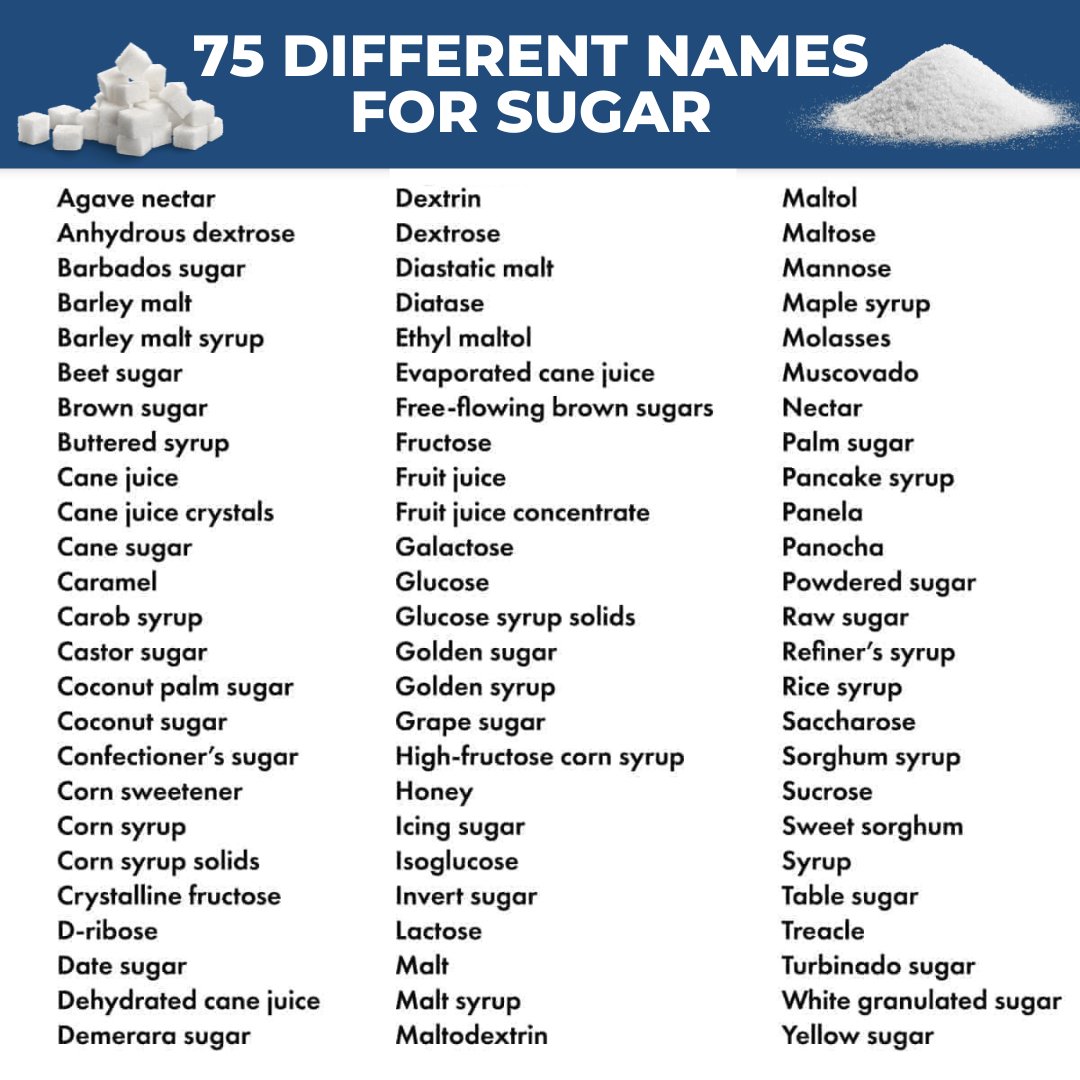
Here’s a list of 75 hidden sugars regularly use in food products.
This is why you must begin reading ingredient lists.
Here’s a list of 75 hidden sugars regularly use in food products.
This is why you must begin reading ingredient lists.
2)Seed Oils aka “Vegetable Oils”
First, these oils were not consumed by humans in their concentrated form like we have today, prior to 1906.
Second, they are not made from vegetables.
First, these oils were not consumed by humans in their concentrated form like we have today, prior to 1906.
Second, they are not made from vegetables.
That term was only begun being used to make them sound healthy so the manufacturers could sell more product.
And frankly, it worked. So, the term “vegetable oils” has stuck.
But they are not made from vegetables.
And frankly, it worked. So, the term “vegetable oils” has stuck.
But they are not made from vegetables.
You can read more about it below but know that seed oils are very pro-inflammatory.
x.com
x.com
So many packaged products and sauces utilize seed oils.
They really are ubiquitous in our modern food system.
Additionally, nearly every friend food you eat in our modern food system is fried in seed oils.
They really are ubiquitous in our modern food system.
Additionally, nearly every friend food you eat in our modern food system is fried in seed oils.
I’m not even against frying food.
People pan fried foods in healthy fats for centuries before seed oils were invented.
If you are going to have something fried, the fat or oil used is of utmost importance.
People pan fried foods in healthy fats for centuries before seed oils were invented.
If you are going to have something fried, the fat or oil used is of utmost importance.
Ideally, use those with saturated fats like tallow, lard or butter.
If you choose to use a vegetarian oil, I’d suggest avocado oil.
But if you're ordering something at a restaurant, or buying it commercially and it is fried, chances are very high that it is cooked in seed oils.
If you choose to use a vegetarian oil, I’d suggest avocado oil.
But if you're ordering something at a restaurant, or buying it commercially and it is fried, chances are very high that it is cooked in seed oils.
3)Refined Grains
Grains rapidly raise blood sugar levels, even whole grains. And even organically grown grains.
Refined grains create an even sharper spike in blood sugar.
Grains rapidly raise blood sugar levels, even whole grains. And even organically grown grains.
Refined grains create an even sharper spike in blood sugar.
When you spike blood sugar, you spike insulin.
One of the metabolic effects of spiking the hormone insulin is an inflammatory response in the body.
This is the same mechanism why refined sugar causes increase in inflammation to.
One of the metabolic effects of spiking the hormone insulin is an inflammatory response in the body.
This is the same mechanism why refined sugar causes increase in inflammation to.
If you choose to consume grains, make it sparingly.
Ideally, consume grains that are long-fermented or sprouted when you do consume them.
Ideally, consume grains that are long-fermented or sprouted when you do consume them.
5 Lifestyle Habits That Reduce Inflammation
1)Eat whole, real food 90% of the time.
This alone will drastically reduce your consumption of the 3 above-mentioned foods.
1)Eat whole, real food 90% of the time.
This alone will drastically reduce your consumption of the 3 above-mentioned foods.
Plus, it will give your body so many other nutrients that it needs to optimally function metabolically.
The better you function metabolically, the lower the inflammation in your body will be.
The better you function metabolically, the lower the inflammation in your body will be.
2)Reduce your stress.
Stress releases cortisol and other hormones that create an inflammatory state within the body.
If we were being attacked by a wild animal, we would want this.
Stress releases cortisol and other hormones that create an inflammatory state within the body.
If we were being attacked by a wild animal, we would want this.
But most of the stress in our lives now is not this short-lived type of stress. It’s more chronic in nature.
You need to either: change:
•Change your situation
•Change jobs
•Get counseling
•Get on a budget & reduce expenditures
•Or practice stress reducing activities
You need to either: change:
•Change your situation
•Change jobs
•Get counseling
•Get on a budget & reduce expenditures
•Or practice stress reducing activities
One of the easiest is the 4-7-8 method. It’s highly effective and it’s free!
Here’s how to do it:
Breathe in through your nose slowly and deeply for 4 seconds.
Hold your breath for 7 seconds.
Exhale the breath slowly through your mouth over 8 seconds.
Repeat.
Here’s how to do it:
Breathe in through your nose slowly and deeply for 4 seconds.
Hold your breath for 7 seconds.
Exhale the breath slowly through your mouth over 8 seconds.
Repeat.
Just try it for 20 reps. You will feel calmer and more relaxed.
I’ll often do it for 10 minutes straight as I am commuting to work.
The 4-7-8 method also works great for helping people fall asleep more quickly. Give it a try.
I’ll often do it for 10 minutes straight as I am commuting to work.
The 4-7-8 method also works great for helping people fall asleep more quickly. Give it a try.
3)Stop smoking.
This one is more “obvious” nowadays.
But most don’t realize the inflammatory response it creates in the body.
This one is more “obvious” nowadays.
But most don’t realize the inflammatory response it creates in the body.
Each puff is a small drip of inflammation in the body.
It’s why it is also closely associated with heart disease.
The root cause of which is chronic inflammation, not cholesterol.
It’s why it is also closely associated with heart disease.
The root cause of which is chronic inflammation, not cholesterol.
4)Regularly detox.
Two very simple principles to prevent disease and promote health are:
•Provide sufficient nutrients
•Eliminate and drastically reduce toxins
I write a lot about the first.
I’ll cover the second here, briefly.
Two very simple principles to prevent disease and promote health are:
•Provide sufficient nutrients
•Eliminate and drastically reduce toxins
I write a lot about the first.
I’ll cover the second here, briefly.
First, drinking plenty of unsweetened fluids will help your body detox more effectively.
For Pounds:
Half of your body weight in ounces, up to 100 oz. per day.
For Pounds:
Half of your body weight in ounces, up to 100 oz. per day.
For Kilograms:
Drink 500 mL for every 15 kg of body weight, up to 3 L per day.
2/3 of this amount should be filtered or spring water. The rest can be tea, coffee or water.
Drink 500 mL for every 15 kg of body weight, up to 3 L per day.
2/3 of this amount should be filtered or spring water. The rest can be tea, coffee or water.
Second, I would highly suggest time restricted eating.
Keep your eating window to less than a 12 hour time period in a day. Ideally, an 8 hour window or less.
Keep your eating window to less than a 12 hour time period in a day. Ideally, an 8 hour window or less.
This allows your body to put energy towards:
•Detoxing
•Regenerating
•Repairing
Instead of putting energy in to breaking down food and absorbing it.
Time restricted eating also lowers inflammation.
•Detoxing
•Regenerating
•Repairing
Instead of putting energy in to breaking down food and absorbing it.
Time restricted eating also lowers inflammation.
Third, if you have the ability, try and utilize a sauna several times a week.
This could be a:
•Dry heat sauna
•Infrared sauna
•Steam sauna
They each have benefits and help with detoxification, which decreases inflammation.
This could be a:
•Dry heat sauna
•Infrared sauna
•Steam sauna
They each have benefits and help with detoxification, which decreases inflammation.
5)Exercise that makes you sweat
Often you stink when you sweat
It's another way your body rids itself of toxins
Hence, the smell
I’ve been told by patients many times over the years that when they changed up their diet to eating more healthy, they stunk less when they sweat.
Often you stink when you sweat
It's another way your body rids itself of toxins
Hence, the smell
I’ve been told by patients many times over the years that when they changed up their diet to eating more healthy, they stunk less when they sweat.
Exercises, also stimulates lymphatics and lymphatic drainage, which is another detoxification organ that can help lower inflammation.
My one caveat to you:
Make sure you don’t exercise too long.
Frankly, the body wasn’t built to endure long forms of strenuous exercise.
My one caveat to you:
Make sure you don’t exercise too long.
Frankly, the body wasn’t built to endure long forms of strenuous exercise.
Can the human body do it?
Yes.
But is long, strenuous endurance the best form of exercise for optimal health?
I don’t believe so.
Yes.
But is long, strenuous endurance the best form of exercise for optimal health?
I don’t believe so.
I know some won’t like me saying this.
But let me ask you this: Do you know anyone who has finished a marathon and felt refreshed and energized?
During the next several days, did they physically want to go run another marathon?
But let me ask you this: Do you know anyone who has finished a marathon and felt refreshed and energized?
During the next several days, did they physically want to go run another marathon?
I’ve only known people who are miserably sore for days.
Or injured for weeks and months afterwards.
Or injured for weeks and months afterwards.
Even the first messenger who ran the length from Marathon to Athens died upon delivering the message at the Acropolis.
This should give us an indication that the body was not built for this type of activity.
This should give us an indication that the body was not built for this type of activity.
More and more research is showing strenuous exercise for short bursts shows tremendous health benefits.
See HIIT type exercises.
Or moderate intensity, for moderate lengths of time.
See HIIT type exercises.
Or moderate intensity, for moderate lengths of time.
So, my advice:
Exercise regularly, but just not strenuously for long periods of time.
There is an inflammatory response in the body with this type of activity.
Exercise regularly, but just not strenuously for long periods of time.
There is an inflammatory response in the body with this type of activity.
Your One Actionable Step This Week
There are several this week ;-)
Check your biomarkers to see where your inflammation levels lie.
Begin eliminating or drastically reducing the top 3 inflammatory foods.
There are several this week ;-)
Check your biomarkers to see where your inflammation levels lie.
Begin eliminating or drastically reducing the top 3 inflammatory foods.
Consider taking the 3 supplements to lower inflammation.
Begin incorporating the 5 habits that help decrease inflammation in your body.
Begin incorporating the 5 habits that help decrease inflammation in your body.
If you think this could help someone, repost it. Click on the below tweet first & then share it (so they see it from the beginning).
If you like these types of tweets, follow me.
I love sharing & helping people!
Thank you for reading.
If you like these types of tweets, follow me.
I love sharing & helping people!
Thank you for reading.
Loading suggestions...