

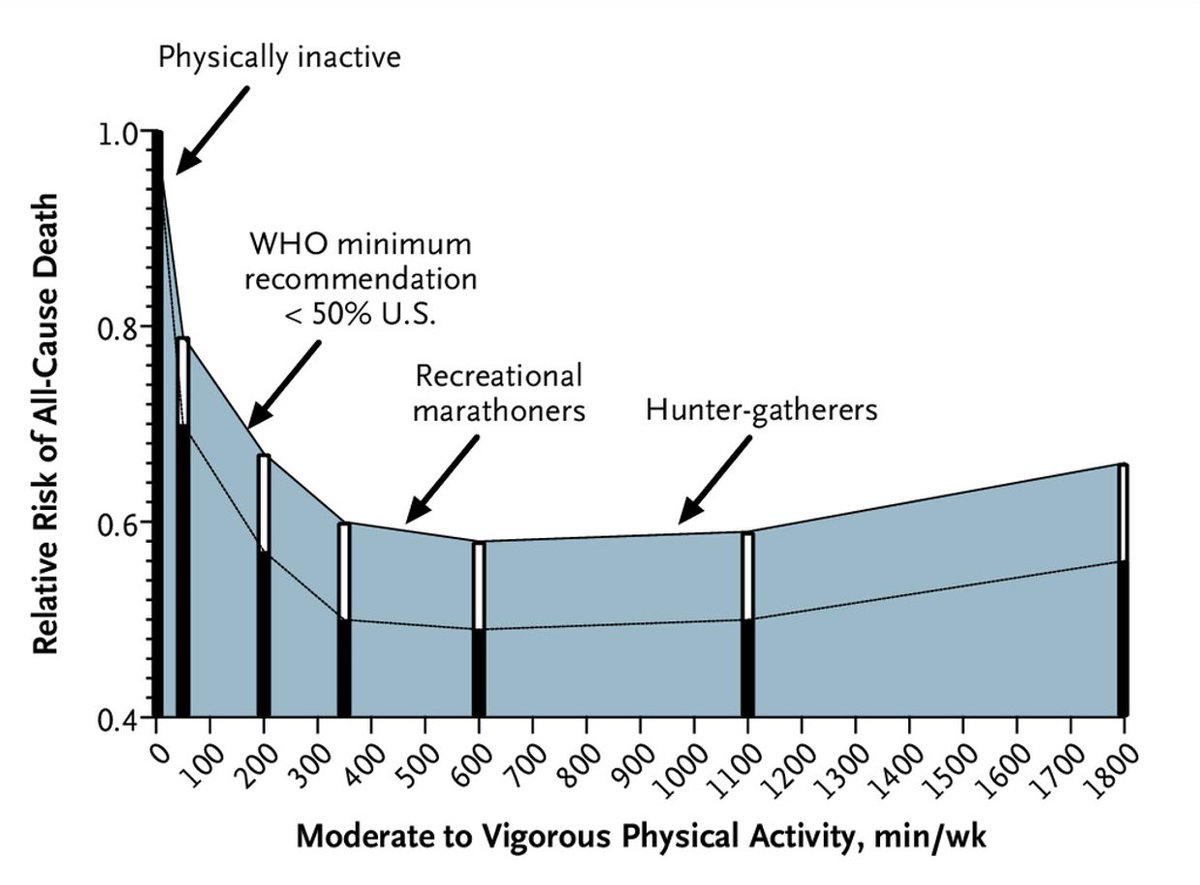
Small amounts of daily physical activity yield substantial mortality benefits.
🧵1/11
🧵1/11
These findings are from a review in @NEJMEvidence which explains why we live in a physical inactivity epidemic and why exercise is required for our health. evidence.nejm.org 2/11
Habitual physical activity minimizes vulnerability to future disease and maximizes an individual’s healthspan and lifespan. 3/11
However, many people today engage in the lowest amount of physical activity since the origin of our species. 4/11
Despite the fact that exercise is widely considered a “medicine,” few medical practitioners appreciate the science of exercise and its full therapeutic potential. 5/11
The relationship between physical activity and life expectancy is curvilinear, whereby a complete lack of physical activity is associated with the highest mortality, with small amounts of daily physical activity yielding substantial mortality benefits. 6/11
Large-scale studies show that 150 minutes of moderate to vigorous physical activity per week reduces the relative mortality rate by approximately 33%, and additional doses yield further but comparatively less benefit. 7/11
Further, although the incidence of most noncommunicable diseases increases with chronologic age, chronic disease is not an inevitable consequence of aging. 8/11
Instead, most chronic diseases are partly attributable to decreasing levels of physical activity and increasing levels of sedentarism, along with increased consumption of highly processed foods and other environmental changes. 9/11
Fortunately, a simple but underemployed way to address this costly shift is to more effectively promote, enable, and prescribe exercise. 10/11
By advocating and empowering patients to be physically active, clinicians and the broader medical infrastructure can help prevent and treat many common forms of disease while simultaneously improving people’s quality of life. 11/11
Loading suggestions...