

The most underrated dietary factor to focus on is shifting dietary fat intake away from long-chain saturated fats, toward short and medium-chain saturated fats, and toward odd-chain saturated fats
For now it feels like I'm the only one talking about chain length
THREAD //
For now it feels like I'm the only one talking about chain length
THREAD //
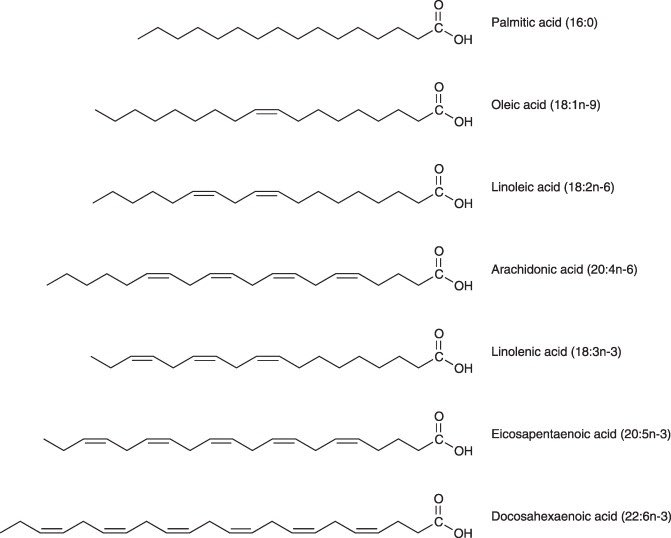
There are different nuances to this, but the biggest point I've argued is that we now consume much more palmitic acid (a 16 carbon long chain saturated fat) than our ancestors
The same is true for myristic acid (14 carbons) as well
Palmitic acid in particular is problematic
The same is true for myristic acid (14 carbons) as well
Palmitic acid in particular is problematic
The main reason for this is its accumulation in cell stress
When people talk about free fatty acids, visceral fat synthesis, and insulin resistance, they all boil down to high free palmitic acid levels in the cell cytosol
When people talk about free fatty acids, visceral fat synthesis, and insulin resistance, they all boil down to high free palmitic acid levels in the cell cytosol
In cases of energy surplus or impaired metabolism, excess acetyl-coa is carboxylated by ACC into another intermediate called malonyl-coa
Fatty acid synthase, another enzyme implicated in various diseases, including cancer, drives conversion of malonyl-coa into palmitic acid
Fatty acid synthase, another enzyme implicated in various diseases, including cancer, drives conversion of malonyl-coa into palmitic acid

When a human or animal is obese, the majority of the fatty acids they create are in the form of palmitic acid
This is also the case in industrial agriculture, where cows are fed grains, low fiber diets, and given antibiotics, in order to make them store more carbohydrates as fat
This is also the case in industrial agriculture, where cows are fed grains, low fiber diets, and given antibiotics, in order to make them store more carbohydrates as fat
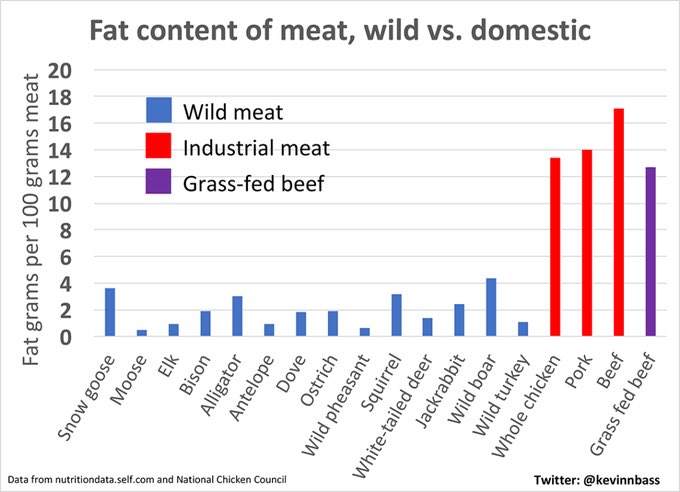
This results in modern meat containing previously unheard of levels of palmitic acid and far more fat in general vs wild meat
This is why I'm so adamant about eating wild game like bison, elk, venison, and boar, instead of modern industrial meat
This is why I'm so adamant about eating wild game like bison, elk, venison, and boar, instead of modern industrial meat
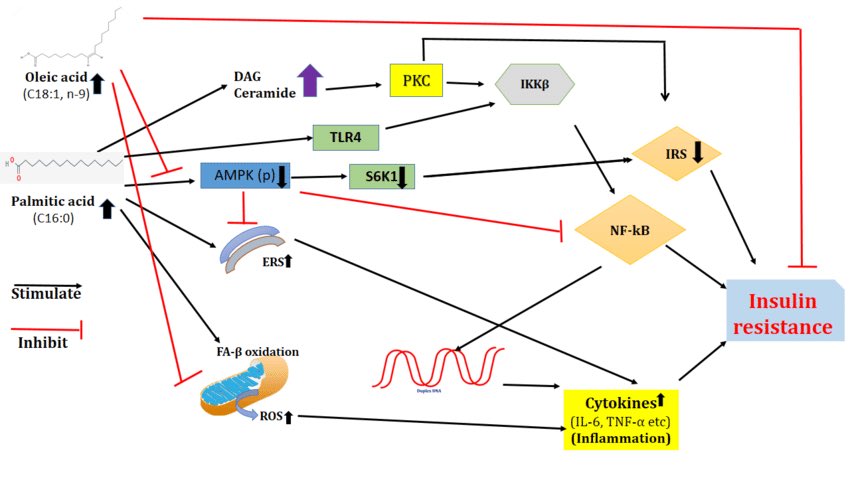
Palmitic acid and other long-chain saturated fats drive cell stress through several mechanisms
Free PA blocks downstream signals from insulin receptors, and this is now thought to be the primary mechanism behind insulin resistance
While MUFAs like oleic acid are protective
Free PA blocks downstream signals from insulin receptors, and this is now thought to be the primary mechanism behind insulin resistance
While MUFAs like oleic acid are protective
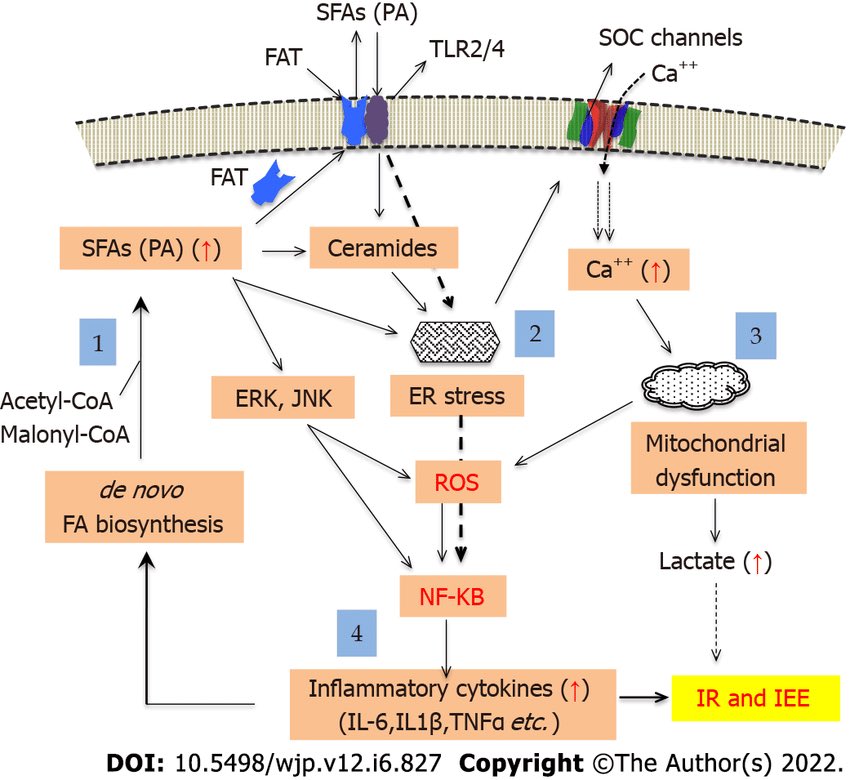
This is also implicated in general inflammation and cytokine release, via palmitic acid's activation of TLR4 receptors in the gut and brain
Palmitic acid enhances response to bacterial endotoxin
nature.com
And contributes to neural stress and brain inflammation
journals.physiology.org
Palmitic acid enhances response to bacterial endotoxin
nature.com
And contributes to neural stress and brain inflammation
journals.physiology.org
Now this is definitely an issue in obesity, in which case fatty acid synthase enzymes are over-activated, and free palmitic acid is being liberated into organs like the brain, liver, and pancreas
But what are the impacts of dietary long-chain saturated fat intake?
But what are the impacts of dietary long-chain saturated fat intake?
It turns out there are a few different avenues of research on this question
This study found that the MUFA oleic acid improved resting total daily energy expenditure, while palmitic acid lowered it
sciencedirect.com
This study found that the MUFA oleic acid improved resting total daily energy expenditure, while palmitic acid lowered it
sciencedirect.com
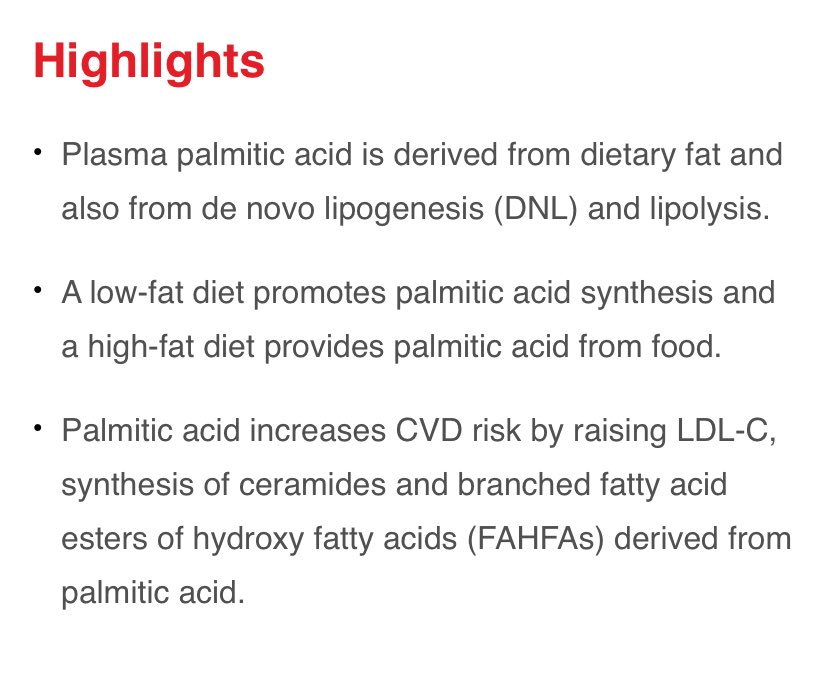
This study points out a number of problems in palmitic acid metabolism
lipidjournal.com
- Palmitic acid synthesis is increased in low-fat diets, so avoiding fat is not a good solution
- Palmitic acid from food does influence circulating levels
- The increase in heart disease seen in RCTs and observational studies in saturated fat intake are mostly attributable to long-chain saturated fats and their ability to increase LDL particle count and skew LDL/HDL ratio
- Palmitic acid has a FAR greater
impact when obesity and insulin resistance are already present, as more PA is found in the "free" form in these individuals
lipidjournal.com
- Palmitic acid synthesis is increased in low-fat diets, so avoiding fat is not a good solution
- Palmitic acid from food does influence circulating levels
- The increase in heart disease seen in RCTs and observational studies in saturated fat intake are mostly attributable to long-chain saturated fats and their ability to increase LDL particle count and skew LDL/HDL ratio
- Palmitic acid has a FAR greater
impact when obesity and insulin resistance are already present, as more PA is found in the "free" form in these individuals
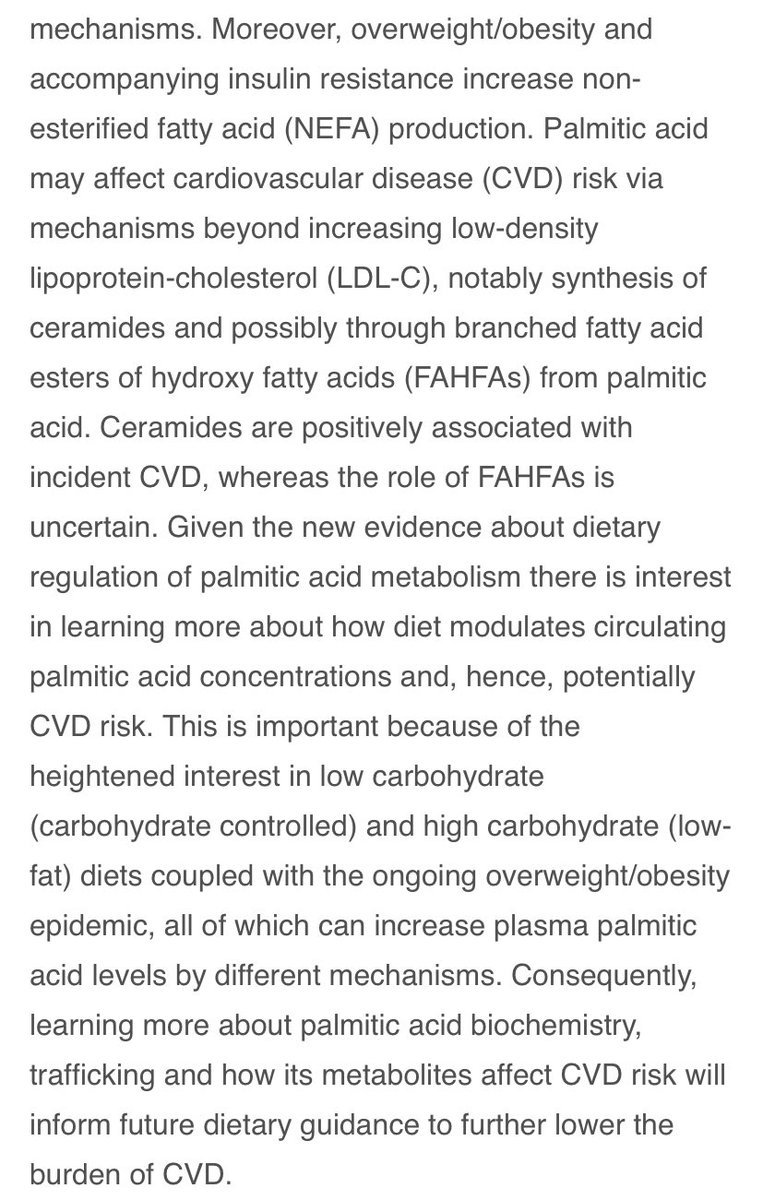
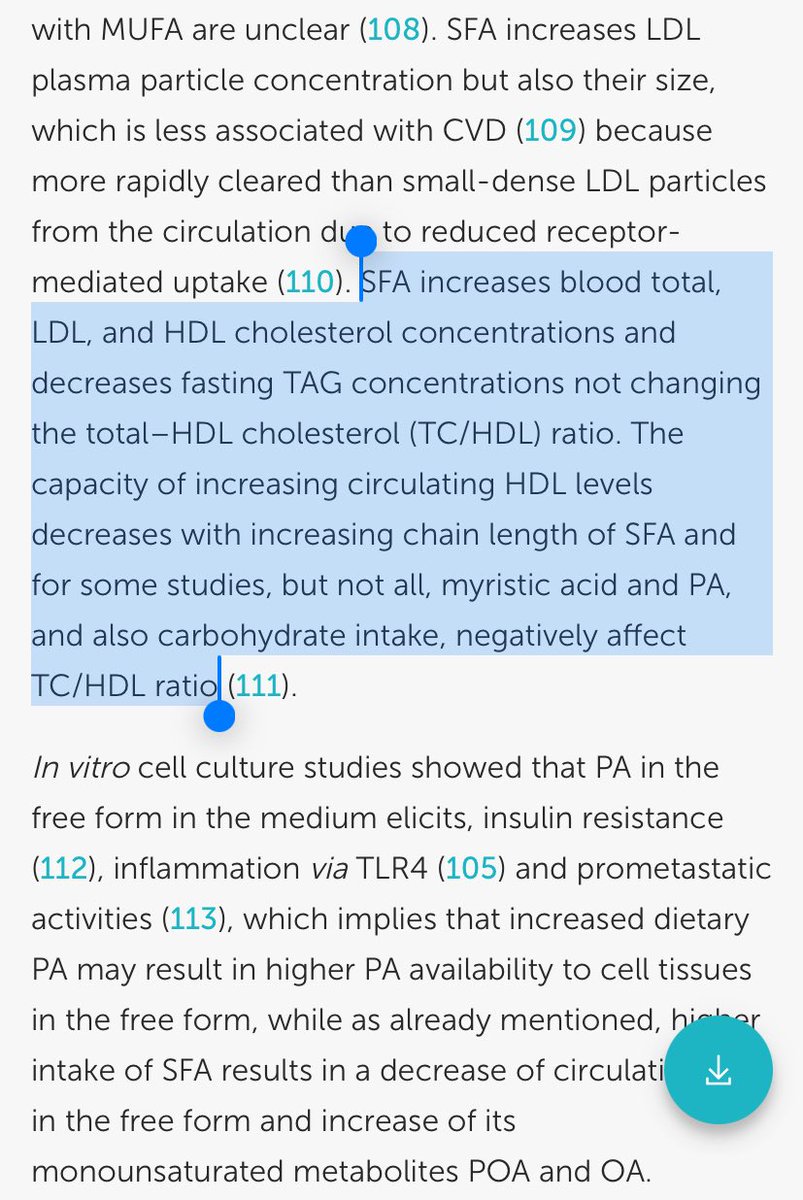
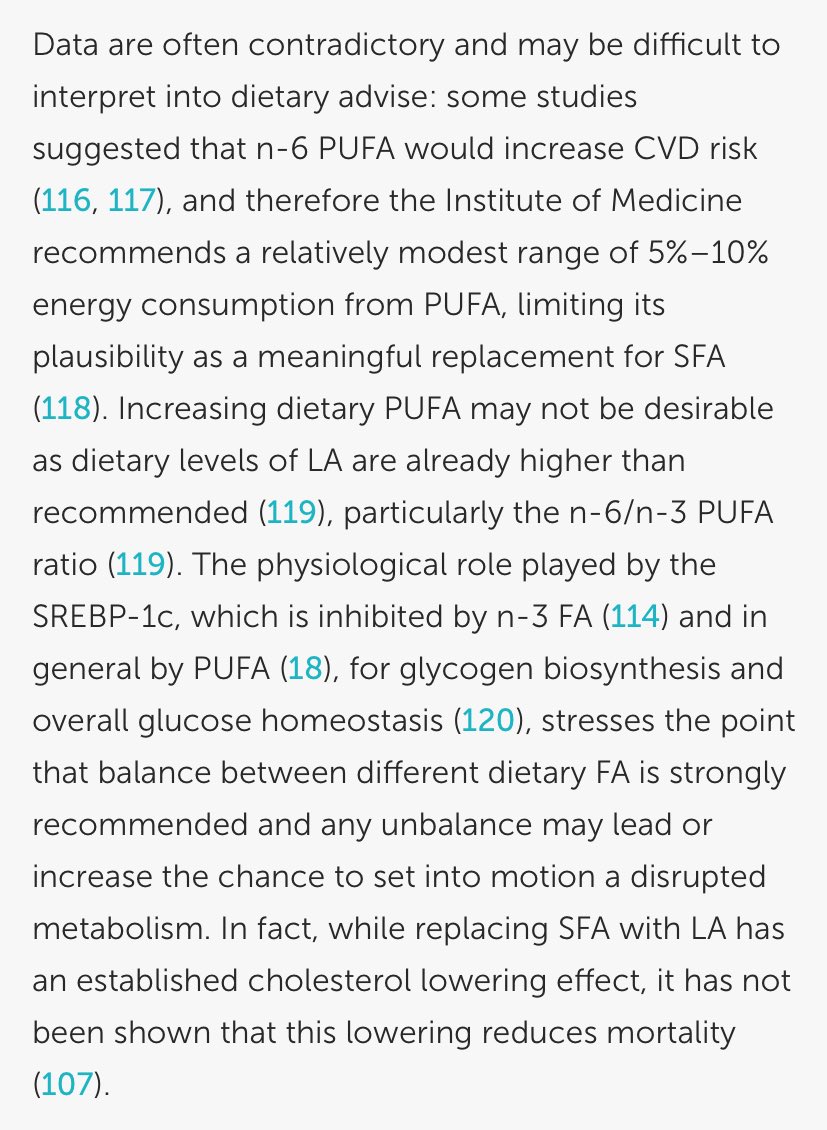
However, this article is another good overview of many sides of this question
frontiersin.org
It makes several good points:
- PA and myristic acid both negatively affect HDL/total cholesterol ratio, and increase LDL particle number, though this will have far worse effects when combined with other risk factors
- The body desaturates some dietary palmitic acid to MUFA as a protective mechanism
- Many studies highlight the impact of PA by swapping it with things like omega-3 fats which would normally be protective against free fatty acids
- Replacing palmitic acid with PUFA will skew PUFA intake too high, causing problems of its own
frontiersin.org
It makes several good points:
- PA and myristic acid both negatively affect HDL/total cholesterol ratio, and increase LDL particle number, though this will have far worse effects when combined with other risk factors
- The body desaturates some dietary palmitic acid to MUFA as a protective mechanism
- Many studies highlight the impact of PA by swapping it with things like omega-3 fats which would normally be protective against free fatty acids
- Replacing palmitic acid with PUFA will skew PUFA intake too high, causing problems of its own
Lastly, both palmitic acid and myristic acid have been shown to directly elevate apoB, the best overall predictor of heart disease since it's a proxy for LDL particle count
ahajournals.org
ahajournals.org
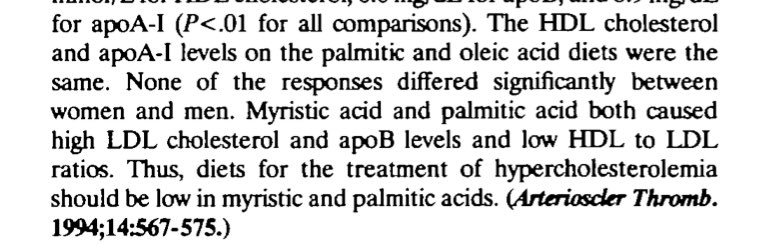
Remember that heart disease is the number one cause of death in the United States, and increased LDL particle count and apoB is the closest predictor of mortality, so this is the biggest cause for concern here
I wrote a previous thread on this topic for those interested:
I wrote a previous thread on this topic for those interested:
So where does this leave us?
I'm not in favor of replacing palmitic acid and myristic acid with omega-6 or omega-3 PUFA, as the amount you'd need to swap would be excessive
Our bodies need fairly limited amounts of PUFA, and the O3:O6 ratio needs to be balanced
I'm not in favor of replacing palmitic acid and myristic acid with omega-6 or omega-3 PUFA, as the amount you'd need to swap would be excessive
Our bodies need fairly limited amounts of PUFA, and the O3:O6 ratio needs to be balanced
We could also swap some long-chain SFAs for carbohydrates, and this seems to be neutral or mildly beneficial as far as I can tell
However there's also a third option... focusing instead on saturated fat sources rich in short and medium chain fats rather than long chain fats!
However there's also a third option... focusing instead on saturated fat sources rich in short and medium chain fats rather than long chain fats!
This is the approach I've landed on personally
Let's look at some of the benefits of short and medium chain length
These include fats like lauric, capric, caprylic, caproic, and butyric acid, all of which have very interesting effects
Let's look at some of the benefits of short and medium chain length
These include fats like lauric, capric, caprylic, caproic, and butyric acid, all of which have very interesting effects
Lauric acid is the most abundant in food
It only slightly raises LDL while significantly improving HDL, so it creates a more favorable ratio
In general, the shorter the chain length the less a fat raises LDL particle count (the exception is stearic acid C18 which is neutral)
openheart.bmj.com
It only slightly raises LDL while significantly improving HDL, so it creates a more favorable ratio
In general, the shorter the chain length the less a fat raises LDL particle count (the exception is stearic acid C18 which is neutral)
openheart.bmj.com
Medium and short chain length fats also bypass the carnitine shuttle and enter mitochondria more quickly
MCFs increase metabolic rate in the short term, increase levels of acetyl-coa, produce a thermogenic effect, and even elevate circulating ketones without protein catabolism
MCFs increase metabolic rate in the short term, increase levels of acetyl-coa, produce a thermogenic effect, and even elevate circulating ketones without protein catabolism
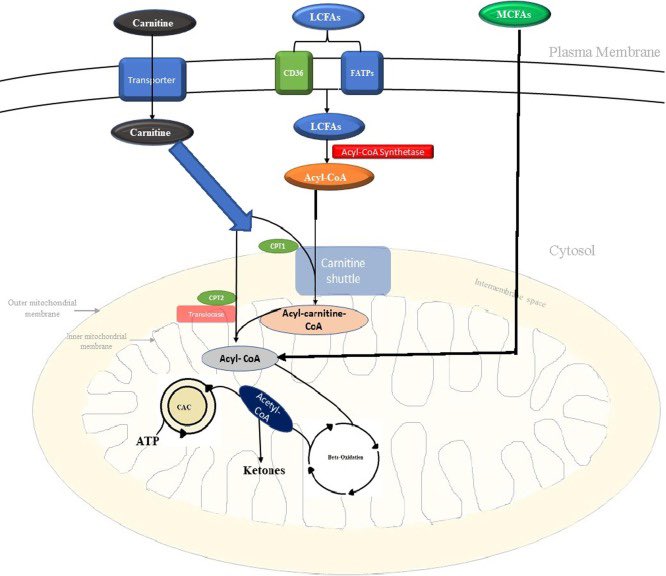
Short chain fats like butyrate can either be acquired from food, or produced by gut bacteria digesting soluble fiber
Dairy products are high in butyrate when ruminants are grassfed and eating a high fiber diet
Butyrate has potent anti-inflammatory effects, and promotes neuroplasticity by acting as an HDAC inhibitor
Dairy products are high in butyrate when ruminants are grassfed and eating a high fiber diet
Butyrate has potent anti-inflammatory effects, and promotes neuroplasticity by acting as an HDAC inhibitor
Something I find really interesting is that the body even has a receptor system activated by different chain lengths
Short and medium chain saturated fats activate FFAR2 and FFAR3, both of which are being studied as targets to protect against diabetes and obesity
Short and medium chain saturated fats activate FFAR2 and FFAR3, both of which are being studied as targets to protect against diabetes and obesity
I'll expand more on the benefits of short chain fats in later writing
The last thing I want to touch on is the presence of odd-chain saturated fats in certain foods
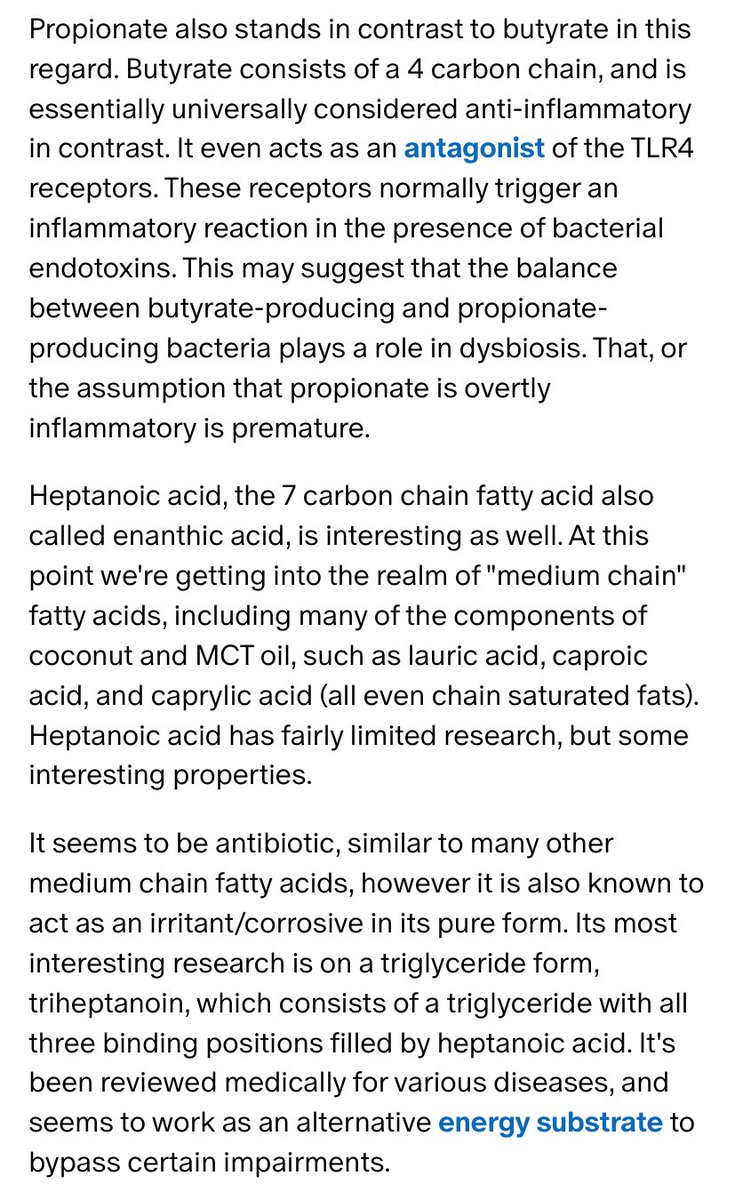
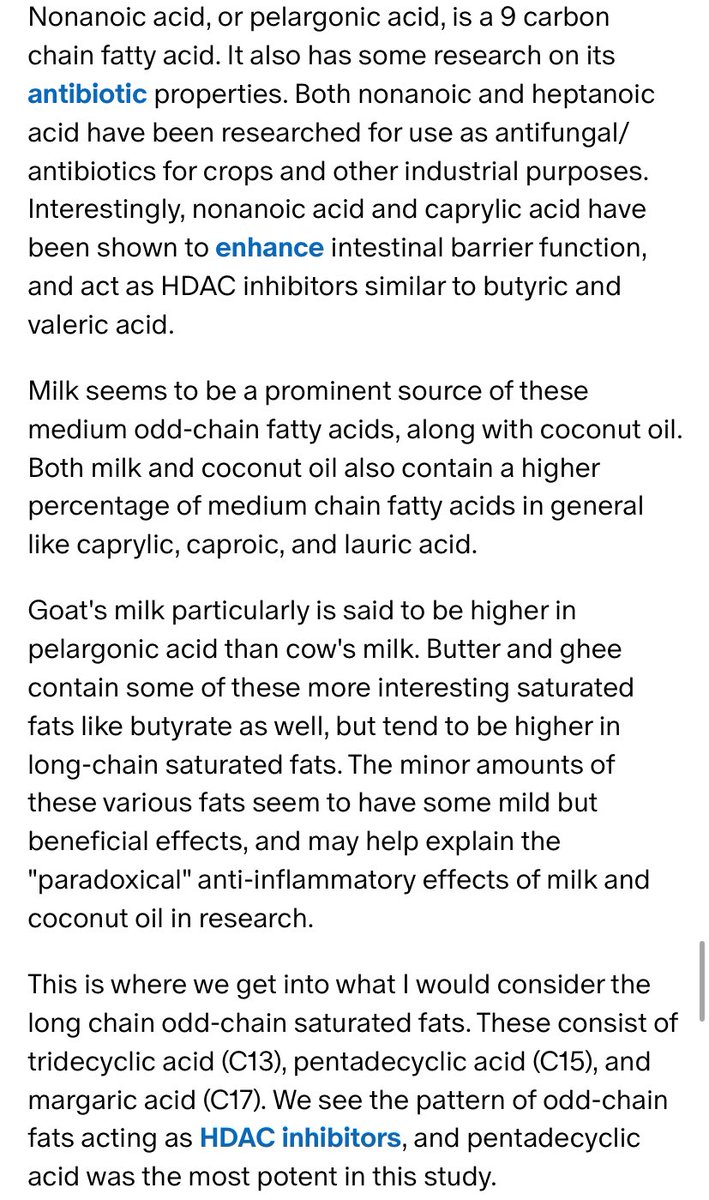
There's are incredibly beneficial for several reasons, they act as HDAC inhibitors, have antibiotic properties, and enhance mitochondrial metabolism by skipping acetyl-coa to direct increase succinyl-coa, as well as feeding electrons into the ETC
Here's an excerpt from my article on odd-chain fats and valerian from last year
patreon.com
The last thing I want to touch on is the presence of odd-chain saturated fats in certain foods
There's are incredibly beneficial for several reasons, they act as HDAC inhibitors, have antibiotic properties, and enhance mitochondrial metabolism by skipping acetyl-coa to direct increase succinyl-coa, as well as feeding electrons into the ETC
Here's an excerpt from my article on odd-chain fats and valerian from last year
patreon.com
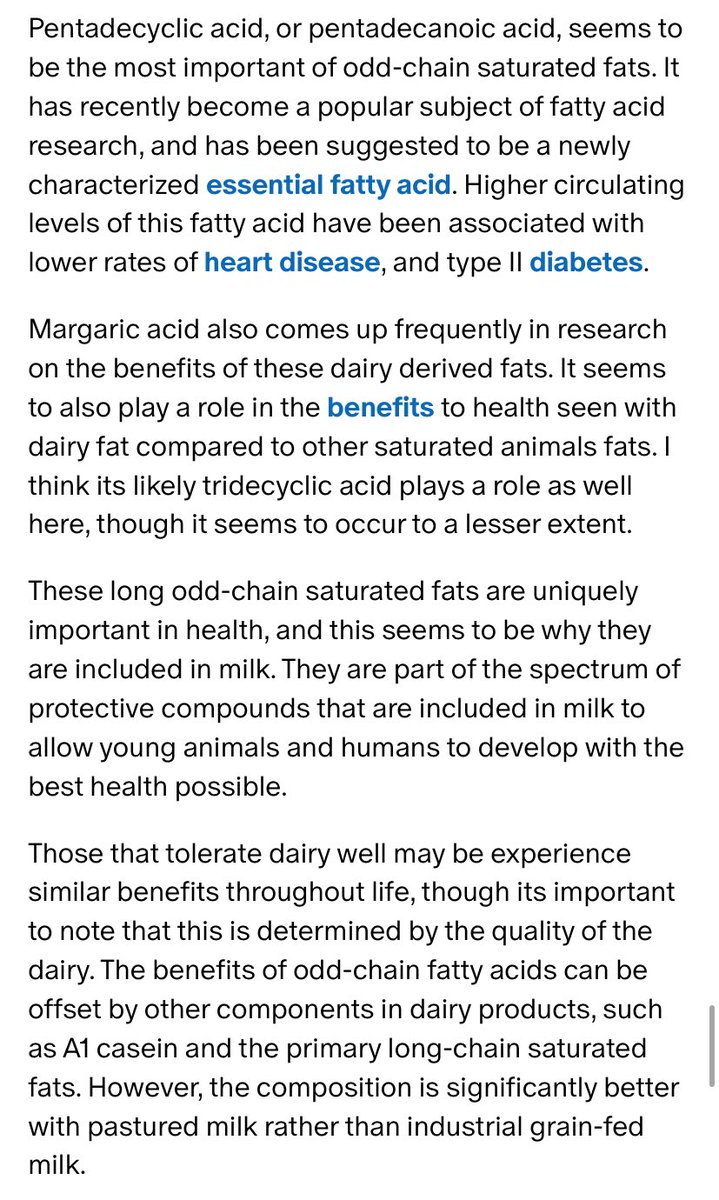
So we have potentially negative effects from palmitic and myristic acid, and huge positive effects from short, medium, and odd-chain saturated fats
How do we shift towards the positives and away from the negatives?
How do we shift towards the positives and away from the negatives?
The single best way to balance this equation is by shifting away from beef fat, butter, and ghee, and toward wild game fat, milk fat, cream, and coconut oil
Coconut oil is VERY high in short and medium chain fats compared with butter, 50% of its fat content is lauric acid while palmitic only makes up 8%
Palm kernel oil is very similar, and is superior to palm oil itself
In comparison, beef fat and butter contain ~25% palmitic and are very low in short and medium chain fats
Coconut oil is VERY high in short and medium chain fats compared with butter, 50% of its fat content is lauric acid while palmitic only makes up 8%
Palm kernel oil is very similar, and is superior to palm oil itself
In comparison, beef fat and butter contain ~25% palmitic and are very low in short and medium chain fats
Milk fat is also similar to butter, with 25-30% palmitic acid, but it contains around 10-15% short and medium chain fats, as much as 5% of that being butyrate
It also contains beneficial CLA, vaccenic acid, and pentadecanoic acid in smaller amounts
Butter and milk fat are similar and somewhat interchangeable, the issue is that butter is often consumed in excess in the absence of other nutrients
Small amounts of butter will have similar benefits to milk, and grassfed will have lower palmitic acid generally
In general I prefer milk as a whole food, and coconut oil or olive oil as cooking oils
It also contains beneficial CLA, vaccenic acid, and pentadecanoic acid in smaller amounts
Butter and milk fat are similar and somewhat interchangeable, the issue is that butter is often consumed in excess in the absence of other nutrients
Small amounts of butter will have similar benefits to milk, and grassfed will have lower palmitic acid generally
In general I prefer milk as a whole food, and coconut oil or olive oil as cooking oils
This also begs the question...
What about people eating a healthy diet in general but lots of palmitic acid?
This is fairly common in "high fat" or low carb circles, and the outcome seems to be that high metabolism, good thyroid function, and good mitochondrial function will mitigate most issues
Problems occur when a stimulus of de novo lipogenesis like slow metabolism or high calorie malnutrition is paired with high palmitic acid consumption
This scenario is a recipe for metabolic dysfunction and heart disease, and replacing long chain for short and medium chain fats may be therapeutic
Given that these shorter chain fats provide so many benefits, even if we consider palmitic acid totally neutral it would still be worthwhile to replace it with them!
What about people eating a healthy diet in general but lots of palmitic acid?
This is fairly common in "high fat" or low carb circles, and the outcome seems to be that high metabolism, good thyroid function, and good mitochondrial function will mitigate most issues
Problems occur when a stimulus of de novo lipogenesis like slow metabolism or high calorie malnutrition is paired with high palmitic acid consumption
This scenario is a recipe for metabolic dysfunction and heart disease, and replacing long chain for short and medium chain fats may be therapeutic
Given that these shorter chain fats provide so many benefits, even if we consider palmitic acid totally neutral it would still be worthwhile to replace it with them!
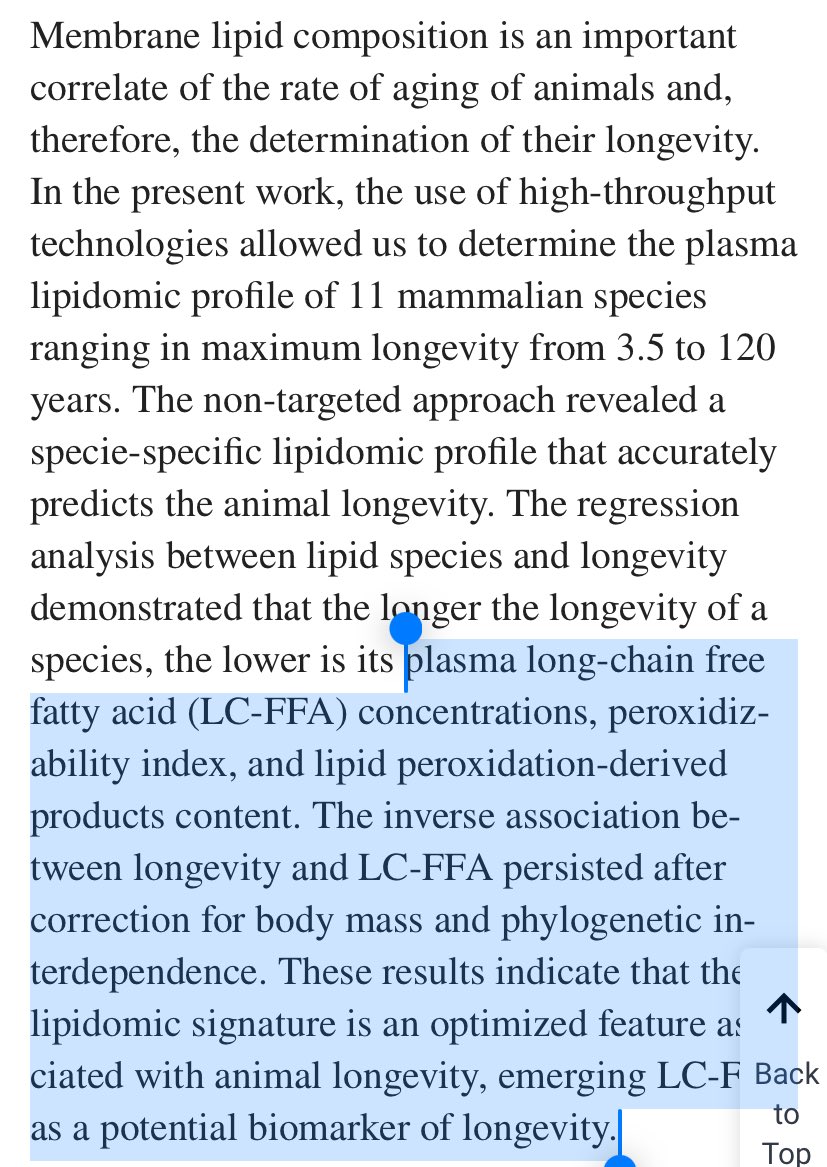
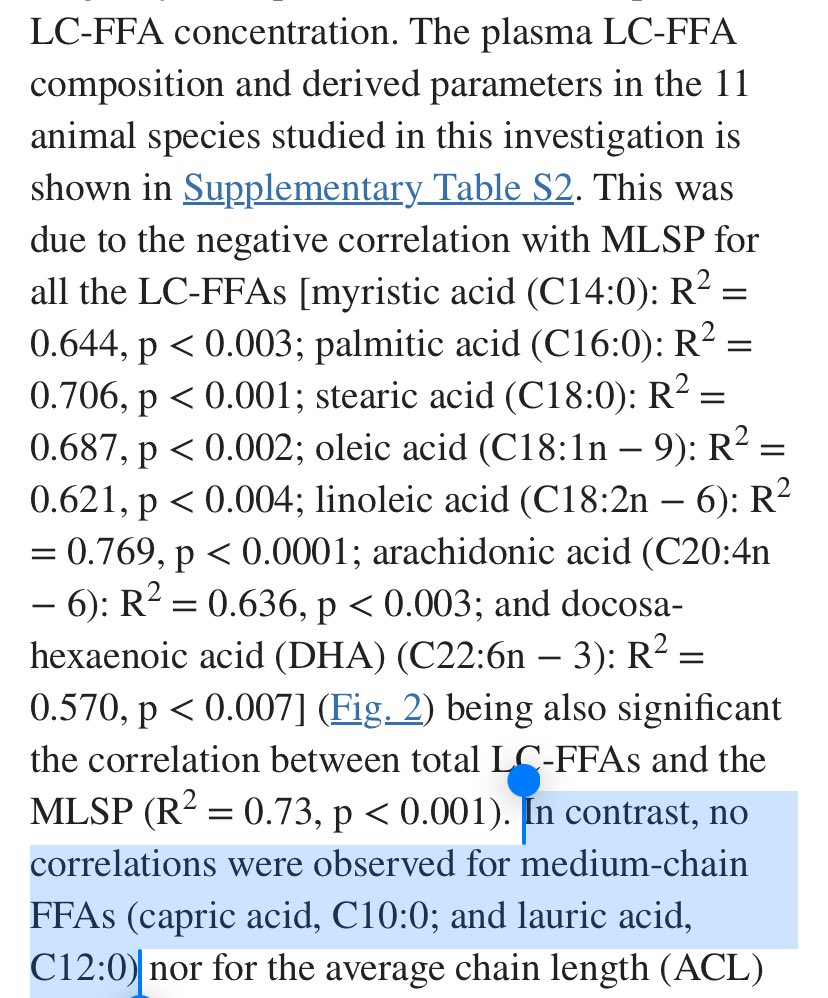
This paper is also very key
It found that circulating long chain fats was one of the closest predictors of short lifespan in mammals
This includes both palmitic and myristic acid and long chain omega-6 or omega-3 fats like arachidonic acid or DHA
All of these fats are fine, but optimal levels are likely in some moderation, especially with highly unsaturated long chain omega-3/6 fats
High circulating free fatty acids, excessive long chain fats, and excessive membrane peroxidation, are all associated with shorter lifespan in mammals
It found that circulating long chain fats was one of the closest predictors of short lifespan in mammals
This includes both palmitic and myristic acid and long chain omega-6 or omega-3 fats like arachidonic acid or DHA
All of these fats are fine, but optimal levels are likely in some moderation, especially with highly unsaturated long chain omega-3/6 fats
High circulating free fatty acids, excessive long chain fats, and excessive membrane peroxidation, are all associated with shorter lifespan in mammals
To summarize:
- Long chain fats like palmitic and myristic acid are associated with heart disease, inflammation, and insulin resistance in various organs
- This causes the biggest problem when metabolism is impaired or in a state of high calorie malnutrition, since de novo lipogenesis accumulates these fats directly, and high dietary intake compounds this
- Long chain unsaturated fat intake of both omega-6 and omega-3 should not replace long chain SFAs as these are only needed in small amounts and excess accumulation causes issues
- Carbohydrates can be used to replace long chain SFAs, but an even better replacement is with short and medium chain SFAs
- In practice this means swapping industrial animal fat with fat from milk, cheese, and coconut oil or palm kernel oil, these sources also provide beneficial odd-chain fats as well
- The optimal ratio of fatty acids seems to be high MUFA and short/medium SFAs, while consuming PUFA in moderation with balance between O3/O6, and consuming long chain SFAs in moderation
- Long chain fats like palmitic and myristic acid are associated with heart disease, inflammation, and insulin resistance in various organs
- This causes the biggest problem when metabolism is impaired or in a state of high calorie malnutrition, since de novo lipogenesis accumulates these fats directly, and high dietary intake compounds this
- Long chain unsaturated fat intake of both omega-6 and omega-3 should not replace long chain SFAs as these are only needed in small amounts and excess accumulation causes issues
- Carbohydrates can be used to replace long chain SFAs, but an even better replacement is with short and medium chain SFAs
- In practice this means swapping industrial animal fat with fat from milk, cheese, and coconut oil or palm kernel oil, these sources also provide beneficial odd-chain fats as well
- The optimal ratio of fatty acids seems to be high MUFA and short/medium SFAs, while consuming PUFA in moderation with balance between O3/O6, and consuming long chain SFAs in moderation
That's all for now, I'll continue fleshing out the mechanisms behind these ideas in future threads and articles
For those who want to see more of my previous writing on this subject, I suggest these articles
GABA, Valerian, and odd-chain saturated fats
patreon.com
Breaking beef: how we ruined industrial agriculture
patreon.com
For those who want to see more of my previous writing on this subject, I suggest these articles
GABA, Valerian, and odd-chain saturated fats
patreon.com
Breaking beef: how we ruined industrial agriculture
patreon.com
Loading suggestions...