

Higher polyphenol intake is robustly associated with lower all cause mortality, and reduced risk of cancer, heart disease, and more
What are polyphenols?
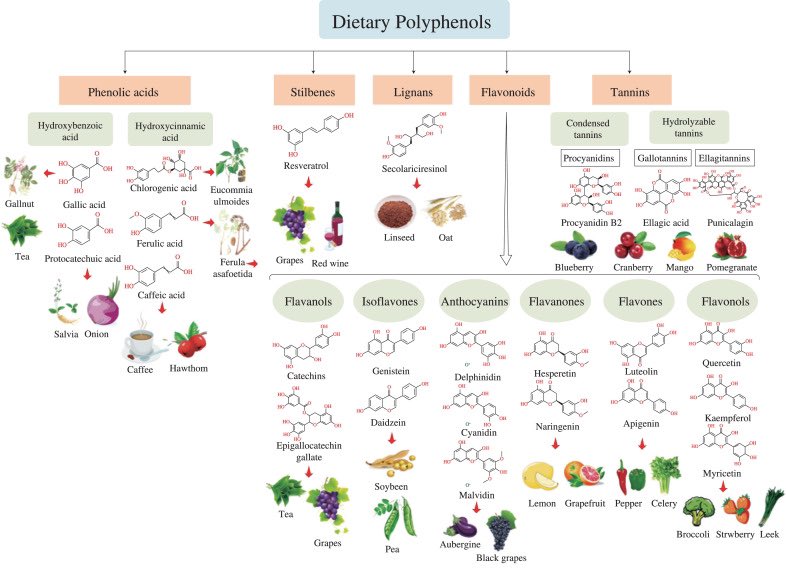
The simple definition is plant-derived compounds with at least two six-carbon "phenol" rings in their structure
Examples include:
- flavonoids
- anthocyanins
- quinones
- lignans
- tannins
- catechins
And much more...
What are polyphenols?
The simple definition is plant-derived compounds with at least two six-carbon "phenol" rings in their structure
Examples include:
- flavonoids
- anthocyanins
- quinones
- lignans
- tannins
- catechins
And much more...

So how do they work?
The simple explanation is through their participation in electron-transfer (redox) reactions
Phenolic rings are "resonant" structures, meaning the electrons they contain are delocalized evenly throughout the structure in something called a pi-conjugated bond
This means they can donate electrons while tending to remain stable
The simple explanation is through their participation in electron-transfer (redox) reactions
Phenolic rings are "resonant" structures, meaning the electrons they contain are delocalized evenly throughout the structure in something called a pi-conjugated bond
This means they can donate electrons while tending to remain stable
Pi-conjugated resonant molecules have another distinctive feature however
The large continuous electron band also absorbs light, the absorption spectrum is proportional to the nm width of the pi-band
This is why essentially all polyphenols are also pigment molecules
The large continuous electron band also absorbs light, the absorption spectrum is proportional to the nm width of the pi-band
This is why essentially all polyphenols are also pigment molecules
This means polyphenols also have interactions with light
For example, carotenoids like astaxanthin and lutein absorb blue light and re-emit red light, and prevent blue light-triggered free radical production
Other polyphenols act as photosensitizers, which produce free radicals in response to light, which may elevate antioxidant expression
For example, carotenoids like astaxanthin and lutein absorb blue light and re-emit red light, and prevent blue light-triggered free radical production
Other polyphenols act as photosensitizers, which produce free radicals in response to light, which may elevate antioxidant expression
This duality is at the heart of polyphenol effects
Many are potent antioxidants, but others are actually PRO-oxidants, and both mechanisms are beneficial
Antioxidants protect against damage in heart disease, brain, lower inflammation, etc
While pro-oxidants trigger production of endogenous anti-stress factors like antioxidant enzymes or heat shock proteins
Many are potent antioxidants, but others are actually PRO-oxidants, and both mechanisms are beneficial
Antioxidants protect against damage in heart disease, brain, lower inflammation, etc
While pro-oxidants trigger production of endogenous anti-stress factors like antioxidant enzymes or heat shock proteins
Another mechanism of action of polyphenols is binding of iron and other reactive free metals
Iron "in use" is not affected, however free unbound iron is highly damaging to cells
Some research even suggests that the longevity-promoting effect of polyphenols like curcumin and green tea catechins actually stem from their ability to clear iron from mitochondria
Iron "in use" is not affected, however free unbound iron is highly damaging to cells
Some research even suggests that the longevity-promoting effect of polyphenols like curcumin and green tea catechins actually stem from their ability to clear iron from mitochondria
So how do we get more polyphenols in our diets?
Simplest advice I've heard is:
"Eat the rainbow" 🌈
Each color represents a different family of polyphenols with unique benefits
Flavonoids = yellow
Carotenoids = red/orange
Anthocyanins = purple
Try to include several per day
Simplest advice I've heard is:
"Eat the rainbow" 🌈
Each color represents a different family of polyphenols with unique benefits
Flavonoids = yellow
Carotenoids = red/orange
Anthocyanins = purple
Try to include several per day
More on redox and antioxidants
More on reductive stress and pro-oxidants
"The meta-analysis showed consistent evidence that increased dietary exposure to polyphenols reduces the risk of all-cause mortality by 7%"
mdpi.com
"In the Spanish adult population, intake of specific polyphenol subgroups was prospectively associated with a 20% lower all-cause mortality risk. This decrease was mainly due to a 40% lower cardiovascular mortality risk over time"
pubmed.ncbi.nlm.nih.gov
"Total polyphenol intake in Japanese is inversely associated with all-cause mortality and mortality from cardiovascular and digestive diseases"
ncbi.nlm.nih.gov
"Among high-risk subjects, those who reported a high polyphenol intake, especially of stilbenes and lignans, showed a reduced risk of overall mortality compared to those with lower intakes"
bmcmedicine.biomedcentral.com
mdpi.com
"In the Spanish adult population, intake of specific polyphenol subgroups was prospectively associated with a 20% lower all-cause mortality risk. This decrease was mainly due to a 40% lower cardiovascular mortality risk over time"
pubmed.ncbi.nlm.nih.gov
"Total polyphenol intake in Japanese is inversely associated with all-cause mortality and mortality from cardiovascular and digestive diseases"
ncbi.nlm.nih.gov
"Among high-risk subjects, those who reported a high polyphenol intake, especially of stilbenes and lignans, showed a reduced risk of overall mortality compared to those with lower intakes"
bmcmedicine.biomedcentral.com
Loading suggestions...