
1887: The Michelson–Morley experiment fails to detect any motion of the Earth through the luminiferous aether, a hypothetical medium for the propagation of light.
1892–1904: Hendrik Lorentz develops the Lorentz transformations, a set of equations that relate the coordinates and time of two inertial frames moving at a constant velocity relative to each other. He also introduces the concepts of length contraction and local time to explain the null result of the Michelson–Morley experiment.
1900: Max Planck proposes the quantum hypothesis, that light consists of discrete packets of energy called quanta, to explain the black-body radiation phenomenon.
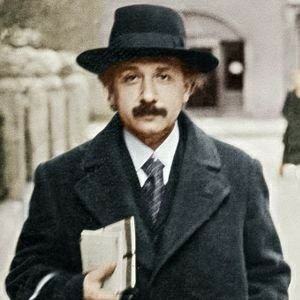
1905: Albert Einstein publishes his paper on special relativity, in which he derives the Lorentz transformations from two postulates: the principle of relativity and the constancy of the speed of light. He also shows that mass and energy are equivalent, according to his famous equation E = mc².
1907: Einstein introduces the equivalence principle, which states that the effects of gravity are indistinguishable from those of acceleration.
1908: Hermann Minkowski presents his four-dimensional spacetime formulation of special relativity, which unifies space and time into a single entity.
1911: Einstein predicts the gravitational redshift, that light loses energy as it escapes from a gravitational field, thus shifting to lower frequencies.
1915: Einstein completes his general theory of relativity, a theory of gravity that describes gravity as a consequence of the curvature of spacetime caused by mass and energy. He also applies his theory to explain the anomalous precession of Mercury's orbit.
1916: Einstein predicts the existence of gravitational waves, ripples in spacetime that propagate at the speed of light and are produced by accelerating masses.
1919: Arthur Eddington confirms Einstein's prediction of the gravitational deflection of light by observing the bending of starlight during a solar eclipse.
1926: Einstein writes an essay on space-time for Britannica, explaining his theories in simple terms.
1960s–1970s: The golden age of general relativity, when many new solutions to Einstein's field equations are discovered, such as black holes, wormholes, and cosmological models.
1974: The discovery of the Hulse–Taylor binary system, a pair of neutron stars orbiting each other and emitting gravitational waves. This provides the first indirect evidence for gravitational waves.
2015: The first direct detection of gravitational waves by the LIGO and Virgo collaborations, from the merger of two black holes. This confirms one of the major predictions of general relativity.
2019: The first image of a black hole's shadow by the Event Horizon Telescope, showing the effects of extreme gravity on light around a supermassive black hole at the center of a galaxy. This provides another test for general relativity.
Recent Threads
taekook taguan ng anak au wherein jk received a surprising gift from their xmas party… [ christmas special 🎄] https://t.co/WY3C450KpV

@HitWithAHeart I hear him before I see him. The weight of his steps on the stairs. Slower than usual. Measured. Like he’s already bracing for whatev...

(1/7) I'm not going to do a full trailer breakdown for Zach Cregger's Resident Evil film, since we have an early form of the script you can place a lo...

Nikola Jokic is 0-6 against 50+ win teams in the playoffs. https://t.co/l5hCeVCoUj

Uni is a fighter! https://t.co/AXkBVFJ2My

Triggered girl at comedy show… https://t.co/z1BC2qG7Rd
Popular Threads
The ICT Mentorship Core Content Month 1 Summarized: https://t.co/6tXJxPMDhm

A thread: Pakistani newspaper Dawn's front pages from 4th december 1971 to 20 December to see how they kept their own people in the dark. This was on...

Please retweet and share if you support my and others' vaccine injury recoveries. https://t.co/y8xNWwRUOO

ICT’s 2022 Mentorship Summarized: https://t.co/zFJCgIfDAR
These are the 41 most powerful tenants of Tateism for a man to live by. Wether you are Christian, Muslim; It doesn’t matter if you are strong, weak...
Here's 40 TikTok hooks that could make you go viral. (Not in any particular order) //THREAD//
