

"A good laugh and a long sleep are the best cures in the doctor's book"
Compromising on sleep can affect
🔸Physical
🔸Mental
🔸Emotional health
Here’s a thread🧵 on the importance of good sleep for good health and tips for better sleep👇
Compromising on sleep can affect
🔸Physical
🔸Mental
🔸Emotional health
Here’s a thread🧵 on the importance of good sleep for good health and tips for better sleep👇
🛌Repair&recovery
When you sleep, you allow your body to repair and rebuild. During this time, the body is able to clear toxins.
While you sleep, there are many important processes that happen, including:
🔹Muscle repair
🔹Protein synthesis
🔹Tissue growth
🔹Hormone release
When you sleep, you allow your body to repair and rebuild. During this time, the body is able to clear toxins.
While you sleep, there are many important processes that happen, including:
🔹Muscle repair
🔹Protein synthesis
🔹Tissue growth
🔹Hormone release
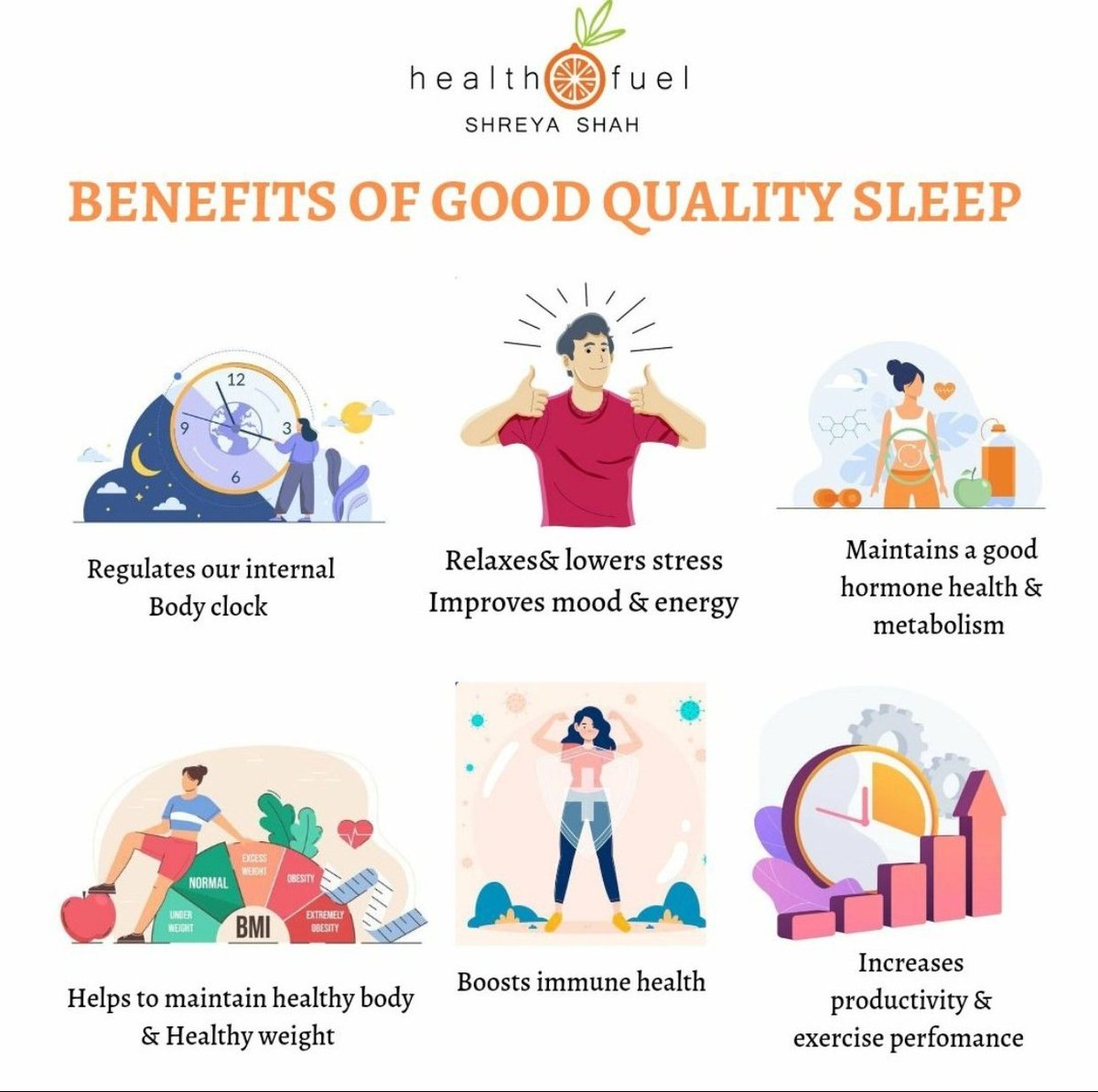
Everything from blood vessels to the immune system uses sleep as a time for repair.
🛌Sleep Reduces Stress
Sleep is a powerful stress-reliever. It improves concentration,regulates mood,sharpens judgment&decision-making
A lack of sleep reduces mental clarity ,ability to cope with stressful situations.This is due to the impact of high levels of cortisol
Sleep is a powerful stress-reliever. It improves concentration,regulates mood,sharpens judgment&decision-making
A lack of sleep reduces mental clarity ,ability to cope with stressful situations.This is due to the impact of high levels of cortisol
Your cortisol levels fall in the evening hours, as a part of the body’s natural mechanism for sleep.
When we don’t sleep, cortisol levels remain high and interfere with the release of melatonin, a hormone that is essential for the regulation of sleep-wake cycles.
When we don’t sleep, cortisol levels remain high and interfere with the release of melatonin, a hormone that is essential for the regulation of sleep-wake cycles.
🛌Sleep Helps You Maintain a Healthy Body Weight
When you are sleep deprived your body alters the hormones that regulate hunger and appetite. These hormones include:
🔹Leptin: This hormone suppresses appetite and encourages the body to expend energy.
When you are sleep deprived your body alters the hormones that regulate hunger and appetite. These hormones include:
🔹Leptin: This hormone suppresses appetite and encourages the body to expend energy.
🔹Ghrelin: This hormone triggers feelings of hunger.
There is an hormonal imbalance when you are short on sleep—leptin goes down and ghrelin goes up.
There is an hormonal imbalance when you are short on sleep—leptin goes down and ghrelin goes up.
🛌Sleep deprivation can have very detrimental health impacts and has been linked to chronic diseases such as diabetes and heart disease and can even lead to obesity.
🛌Lower inflammation
There is a link between getting adequate sleep and reducing inflammation in the body.
There is a significant positive association between greater sleep inconsistency and higher levels of inflammation, particularly in women.
There is a link between getting adequate sleep and reducing inflammation in the body.
There is a significant positive association between greater sleep inconsistency and higher levels of inflammation, particularly in women.
🛌Mental health
The association between sleep and mental health has been the subject of research for a long time.
A meta-analysis concluded that insomnia is significantly associated with an increased risk of depression.
The association between sleep and mental health has been the subject of research for a long time.
A meta-analysis concluded that insomnia is significantly associated with an increased risk of depression.
Sleep loss may result in cognitive alterations that lead to depression risk.
Sleep disturbance may also impair emotional regulation and stability, as well as altering neural processes, which may all lead to symptoms of depression.
Sleep disturbance may also impair emotional regulation and stability, as well as altering neural processes, which may all lead to symptoms of depression.
🛌How much sleep do we need?
Sleep needs vary from person to person, depending on their age. As a person ages, they typically require less sleep to function properly.
According to the National sleep foundation, the breakdown is as follows👇
Sleep needs vary from person to person, depending on their age. As a person ages, they typically require less sleep to function properly.
According to the National sleep foundation, the breakdown is as follows👇
🔹Newborns (0–3 months): 14–17hrs
🔹Infants(4–12mths): 12–16hrs
🔹Toddler(1–2yrs): 11–14hrs
🔹Preschool(3–5yrs): 10–13hrs
🔹School age(6–12yrs): 9–12hrs
🔹Teen(13–18 yrs): 8–10hrs
🔹Adult(18–60yrs): 7-plus hrs
🔹Adult(61–64 yrs): 7–9 hrs
🔹Adult (65+ yrs): 7–8 hrs
🔹Infants(4–12mths): 12–16hrs
🔹Toddler(1–2yrs): 11–14hrs
🔹Preschool(3–5yrs): 10–13hrs
🔹School age(6–12yrs): 9–12hrs
🔹Teen(13–18 yrs): 8–10hrs
🔹Adult(18–60yrs): 7-plus hrs
🔹Adult(61–64 yrs): 7–9 hrs
🔹Adult (65+ yrs): 7–8 hrs
🔸Tip for sleep better👇
🔹Have an early dinner
As the sun sets,ur digestive capacity slows down too.That is why late night heavy meals make u feel sluggish
Body needs time to digest the food&break it down effectively
Early dinner helps u achieve a natural 12hr circadian fast.
🔹Have an early dinner
As the sun sets,ur digestive capacity slows down too.That is why late night heavy meals make u feel sluggish
Body needs time to digest the food&break it down effectively
Early dinner helps u achieve a natural 12hr circadian fast.
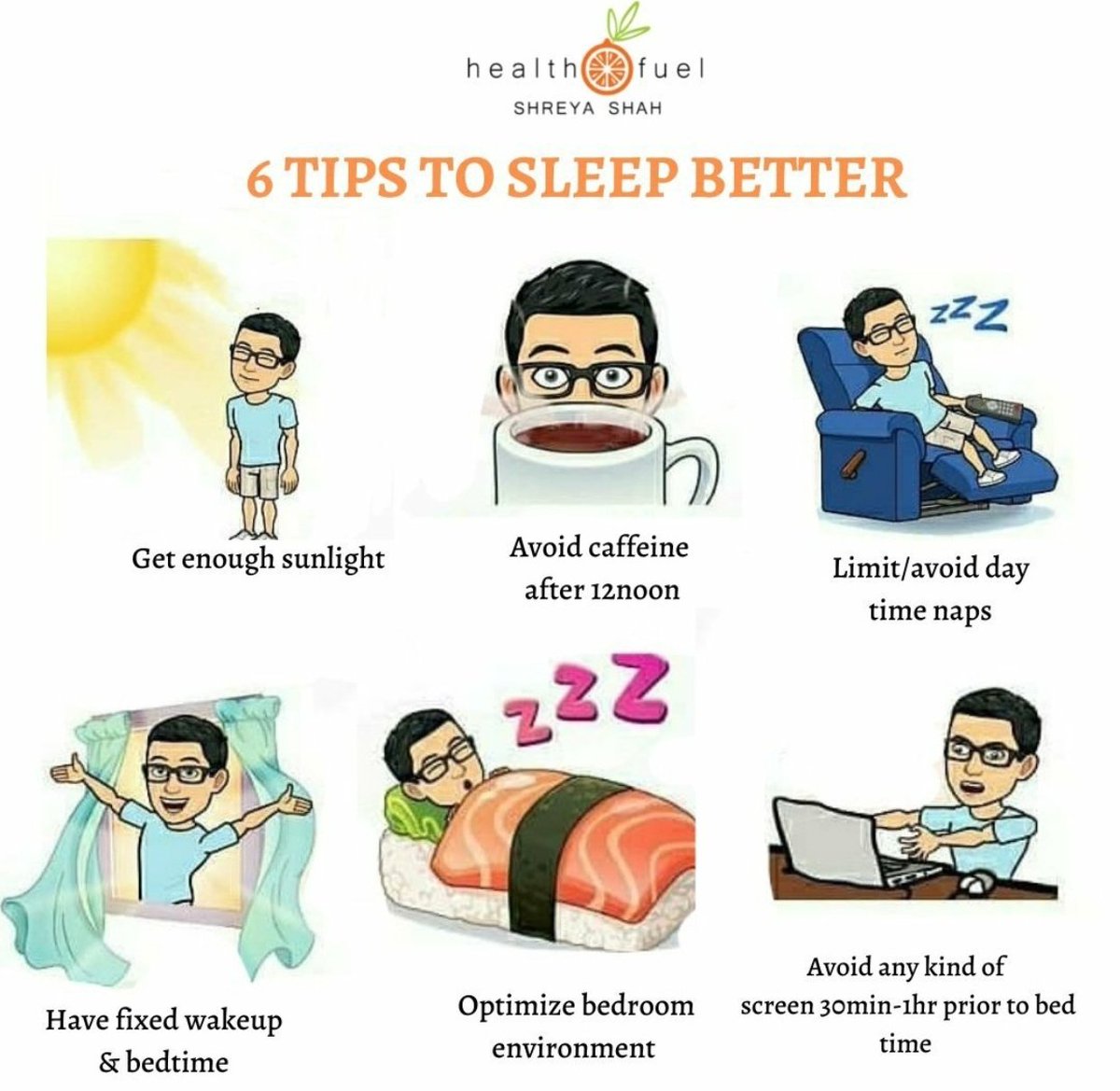
🔹Have a fixed bedtime
Whether it is a weekday or a weekend, sleep around the same time.
Try and avoid all kind of screen 30min before bed. Blue light emissions not only delay the onset of sleep but also suppress melatonin.
Whether it is a weekday or a weekend, sleep around the same time.
Try and avoid all kind of screen 30min before bed. Blue light emissions not only delay the onset of sleep but also suppress melatonin.
🔹Limit daytime naps
Long daytime naps can interfere with night time sleep. Limit naps to no more than 20&30min and avoid napping late in the day.
Long daytime naps can interfere with night time sleep. Limit naps to no more than 20&30min and avoid napping late in the day.
🔹Avoid caffeine post 3pm
Consuming caffeine up to 6 hours before bed significantly worsens sleep quality.
Caffeine can stay elevated in your blood for 6–8 hours. Therefore, drinking large amounts of coffee after 3–4 p.m. is not recommended.
Consuming caffeine up to 6 hours before bed significantly worsens sleep quality.
Caffeine can stay elevated in your blood for 6–8 hours. Therefore, drinking large amounts of coffee after 3–4 p.m. is not recommended.
🔹Exercise regularly — but not before bed
Exercise is one of the best science-backed ways to improve your sleep and health.
Although daily exercise is key for a good night’s sleep, performing it too late in the day may cause sleep problems.
Exercise is one of the best science-backed ways to improve your sleep and health.
Although daily exercise is key for a good night’s sleep, performing it too late in the day may cause sleep problems.
This is due to the stimulatory effect of exercise, which increases alertness and hormones like epinephrine and adrenaline.
🛌Conclusion
Sleep is a powerful meditation and medication. There is no replacement or alternative to it. It rejuvenates, repairs, heals, protects, balances, and does so much more.
Sleep is a powerful meditation and medication. There is no replacement or alternative to it. It rejuvenates, repairs, heals, protects, balances, and does so much more.
Loading suggestions...