

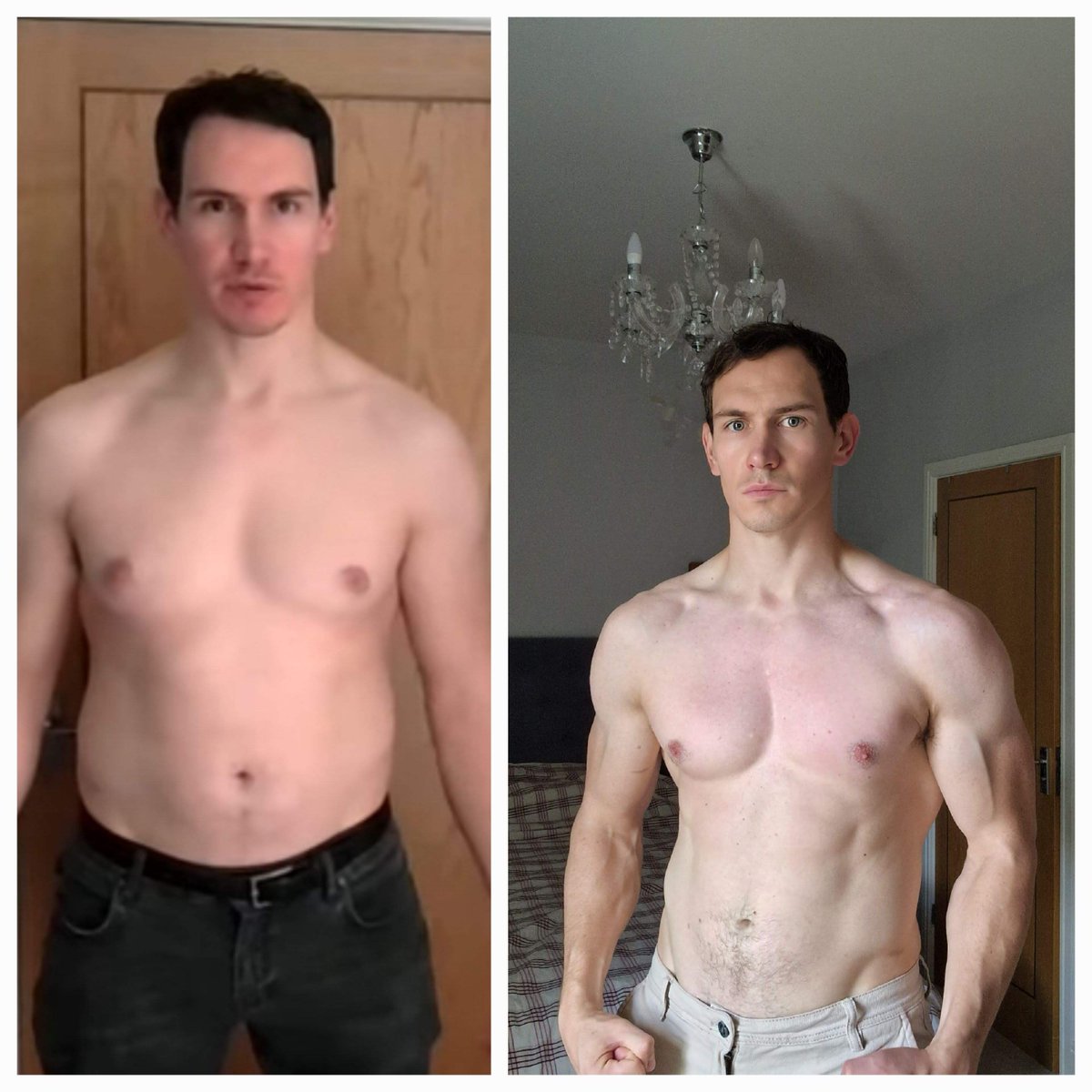
On the left: Me 18 weeks ago.
On the right: Me now.
Looks difficult but was incredibly easy.
Achieved with 60-90 minutes of training per week.
Mostly driven by diet.
Here's the simple framework I came up with for you to steal 👇🧵
On the right: Me now.
Looks difficult but was incredibly easy.
Achieved with 60-90 minutes of training per week.
Mostly driven by diet.
Here's the simple framework I came up with for you to steal 👇🧵
Key information:
This is fat loss. I haven't gained muscle between the two pictures.
I have revealed muscle.
When you get lean you will see a drastic transformation, provided you have a base of muscle to reveal.
You get smaller but you look bigger.
It's an optical illusion.
This is fat loss. I haven't gained muscle between the two pictures.
I have revealed muscle.
When you get lean you will see a drastic transformation, provided you have a base of muscle to reveal.
You get smaller but you look bigger.
It's an optical illusion.
I weighed 225 lbs at the start and weigh 200 now.
I think I've gone from about 22% body fat to about 12% body fat.
To do this, I had to be in a calorie deficit to lose fat, whilst keeping a high protein intake and lifting weights to maintain muscle.
I think I've gone from about 22% body fat to about 12% body fat.
To do this, I had to be in a calorie deficit to lose fat, whilst keeping a high protein intake and lifting weights to maintain muscle.
I mentioned that this was mostly driven by diet, but lifting is also essential unless you want to lose muscle as well as fat (which I did not).
I'll cover nutrition later, first up is training (and you'll probably be shocked by how simple this is and how little I did)
I'll cover nutrition later, first up is training (and you'll probably be shocked by how simple this is and how little I did)
𝐓𝐑𝐀𝐈𝐍𝐈𝐍𝐆
I have 2 young kids (ages three and one) and my life is busy.
I have a decent home gym setup, but I still can only really make time for 60-90 minutes per week, with sessions snatched here and there - late at night or while a child is napping in the day
I have 2 young kids (ages three and one) and my life is busy.
I have a decent home gym setup, but I still can only really make time for 60-90 minutes per week, with sessions snatched here and there - late at night or while a child is napping in the day
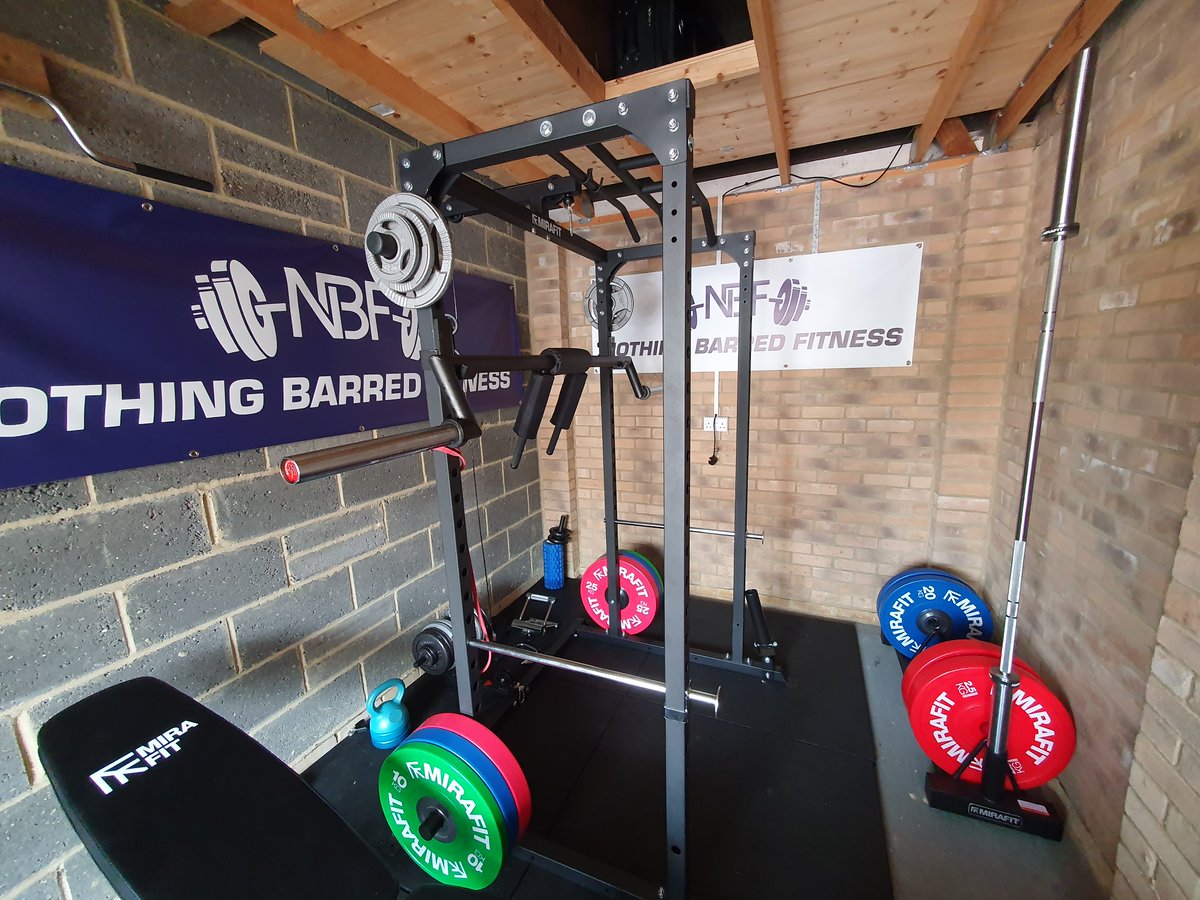
No, this is not optimal.
But we don't have to be optimal to still get great results. So stop using excuses and just do the best you can.
Something is A LOT better than nothing.
But we don't have to be optimal to still get great results. So stop using excuses and just do the best you can.
Something is A LOT better than nothing.
To maintain muscle, I knew I had to hit all of the major muscle groups with a compound exercise at least once per week.
Many studies support this view.
This one found that training once per week was sufficient to maintain results.
pubmed.ncbi.nlm.nih.gov
Many studies support this view.
This one found that training once per week was sufficient to maintain results.
pubmed.ncbi.nlm.nih.gov
This study found that a 16 week period training 3 times per week resulted in muscle gains.
For a second 32 week period training volume was reduced to one third of phase one. Strength and muscle mass were maintained for all of phase 2.
pubmed.ncbi.nlm.nih.gov
For a second 32 week period training volume was reduced to one third of phase one. Strength and muscle mass were maintained for all of phase 2.
pubmed.ncbi.nlm.nih.gov
To cover all major muscle groups, I picked one compound exercise per movement:
- Vertical push
- Vertical pull
- Horizontal push
- Horizontal pull
- Squat
- Hinge
I also sometimes trained abs and calves, but to be honest, it was rare.
These were the actual exercises I used 👇
- Vertical push
- Vertical pull
- Horizontal push
- Horizontal pull
- Squat
- Hinge
I also sometimes trained abs and calves, but to be honest, it was rare.
These were the actual exercises I used 👇
- Seated dumbbell press
- Neutral grip chinups
- Low incline dumbbell bench press
- Seated cable row
- Safety bar squat
- Romanian deadlift
I swapped some of these out towards the end to freshen things up. In came lat pulldowns, barbell back squats and dumbbell rows.
- Neutral grip chinups
- Low incline dumbbell bench press
- Seated cable row
- Safety bar squat
- Romanian deadlift
I swapped some of these out towards the end to freshen things up. In came lat pulldowns, barbell back squats and dumbbell rows.
This covered all of the major muscle groups.
I hit each of these exercises for two work sets, leaving 0-2 reps in reserve.
I followed an upper/lower body split, rotating exercises to work whatever muscle group I hadn't worked in the longest.
I hit each of these exercises for two work sets, leaving 0-2 reps in reserve.
I followed an upper/lower body split, rotating exercises to work whatever muscle group I hadn't worked in the longest.
I trained 2 movements per upper body workout (a push and a pull) and one per lower body workout.
E.G.
- Dumbbell row & dumbbell press
- Squat
- Chinups & DB bench press
- Romanian deadlift
I usually hit 3/4 of these per week, working every muscle group once per week.
E.G.
- Dumbbell row & dumbbell press
- Squat
- Chinups & DB bench press
- Romanian deadlift
I usually hit 3/4 of these per week, working every muscle group once per week.
I took a deload week in the 6th week and the 12th week.
Deloads are basically recovery weeks. Workouts need to be super easy and not stress your body at all.
I cut my routine to one set per exercise and stayed well away from failure (+5 reps).
Deloads are basically recovery weeks. Workouts need to be super easy and not stress your body at all.
I cut my routine to one set per exercise and stayed well away from failure (+5 reps).
Deloads allow your body to fully recover from the stresses of constant hard training.
They prevent nagging pains from developing further.
When used properly they will keep you in the gym more consistently without having to miss sessions or see a lack of progress due to injury.
They prevent nagging pains from developing further.
When used properly they will keep you in the gym more consistently without having to miss sessions or see a lack of progress due to injury.
OK, that's basically all there is to say about training (I told you it was simple and easy!)
Moving on to....
𝐍𝐮𝐭𝐫𝐢𝐭𝐢𝐨𝐧
Moving on to....
𝐍𝐮𝐭𝐫𝐢𝐭𝐢𝐨𝐧
I lost weight for 16 out of the 18 weeks (I had two weeks off - more on that later).
On average I lost 1.5 lbs per week over 16 weeks.
At the start, this was about 0.7% of my weight per week & 0.8% by the end.
This is within my maximum recommended speed of 1% per week.
On average I lost 1.5 lbs per week over 16 weeks.
At the start, this was about 0.7% of my weight per week & 0.8% by the end.
This is within my maximum recommended speed of 1% per week.
Going faster comes with more risk of losing lean mass, having low energy, poor workouts, compromised immune function, disrupted hormone levels, binges and relapsing.
Not recommended.
If you want sustained fat loss, slower is better. Aim for between 0.5 - 1% per week.
Not recommended.
If you want sustained fat loss, slower is better. Aim for between 0.5 - 1% per week.
To find this rate, I used my macro calculator to estimate my maintenance calories, and math to figure out how many calories to eat to see about 1.5 lbs per week fat loss.
nothingbarredfitness.com
nothingbarredfitness.com
1 lb of fat requires a 3,500 deficit to be accumulated.
Therefore 1.5 lbs requires 5,250. Over 7 days this is 750 calories per day.
Therefore 1.5 lbs requires 5,250. Over 7 days this is 750 calories per day.
According to my macro calculator, my maintenance level was around 2,900.
Therefore I ate about 2,150 calories per day to see 1.5 lbs per week fat loss.
Therefore I ate about 2,150 calories per day to see 1.5 lbs per week fat loss.
I tracked this as accurately as possible, weighing foods with a digital scale and tracking them using apps such as Carbon Diet Coach, and more recently Macro Factor. These are paid apps with a few extra features I like.
The free version of My Fitness Pal will work fine too.
The free version of My Fitness Pal will work fine too.
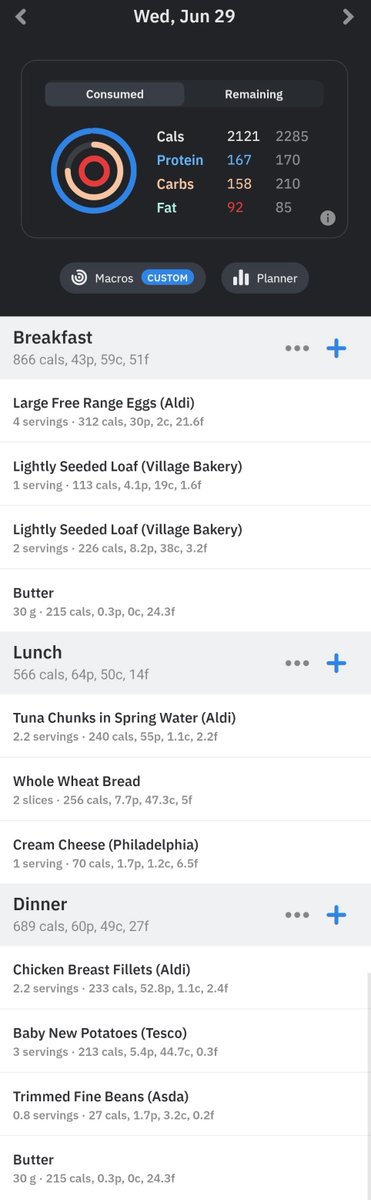
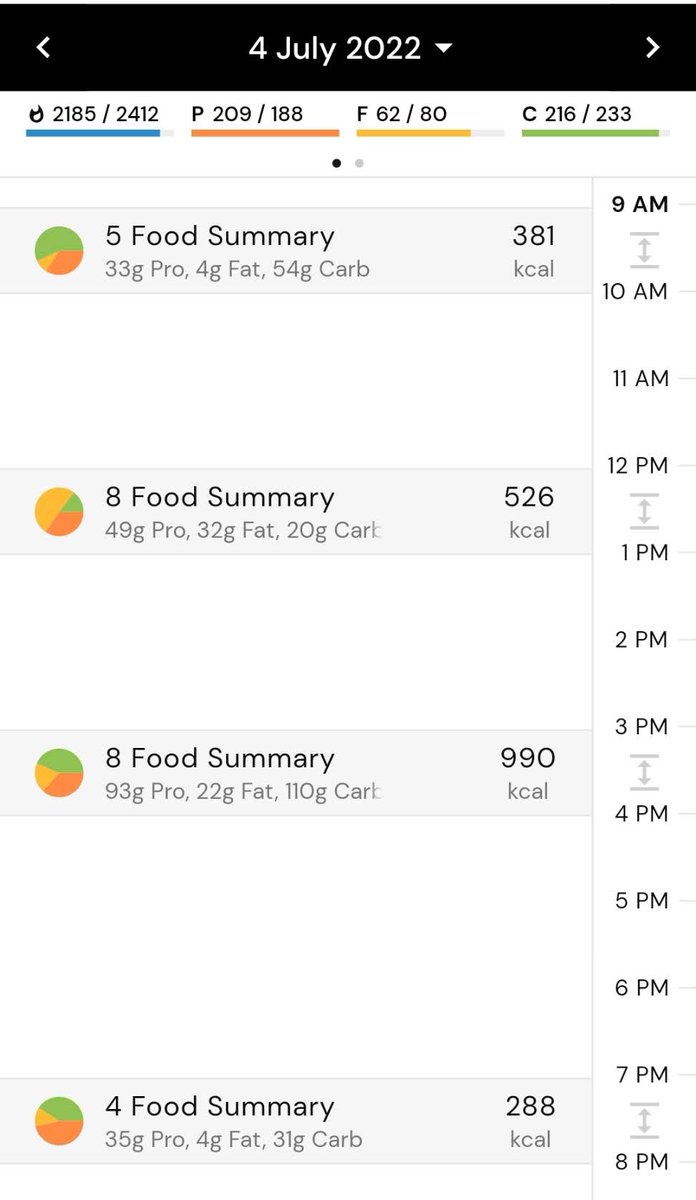
At first, I was losing weight slightly faster than I wanted - closer to the 1% per week rate.
This is because no calculator can ever get your maintenance estimation perfect (unless it's a fluke).
This is because no calculator can ever get your maintenance estimation perfect (unless it's a fluke).
We're all different, we don't do exactly the same thing every day and a lot more information would be required to get a really accurate estimation.
Calculators give you a ballpark only.
You need to use the first number then course-correct as you go. I upped my calories to 2250.
Calculators give you a ballpark only.
You need to use the first number then course-correct as you go. I upped my calories to 2250.
My protein was set at 165g (1.6g per kg of my starting bodyweight).
This is much lower than I would have used in the past.
A common recommendation is 1g per lb of your bodyweight which would have seen me eating 225g per day.
This is much lower than I would have used in the past.
A common recommendation is 1g per lb of your bodyweight which would have seen me eating 225g per day.
But the majority of scientific studies show no additional benefit for muscle maintenance or hypertrophy beyond 1.6g per kg (about 0.73g per lb).
This is what I went with, and the results did not suffer.
It was also much easier to hit the target every day.
This is what I went with, and the results did not suffer.
It was also much easier to hit the target every day.
If you're going for hypertrophy, splitting your protein intake up across the day is beneficial.
Studies find that 4 roughly equal servings of protein spaces around 4 hours apart get better results than a skewed intake that gets most of the protein in one serving at dinner.
Studies find that 4 roughly equal servings of protein spaces around 4 hours apart get better results than a skewed intake that gets most of the protein in one serving at dinner.
To me, it therefore makes sense thata similar approach would be better for maintaining muscle too.
I don't obsess over this, but I do always try to eat a decent serving of protein (30g+) with every meal.
I don't obsess over this, but I do always try to eat a decent serving of protein (30g+) with every meal.
𝐃𝐢𝐞𝐭 𝐛𝐫𝐞𝐚𝐤𝐬
In the past when I've lost fat I would have too big a calorie deficit and lose weight too fast.
I would also aim to go straight to the finish line in one sprint, with no diet breaks.
These were both mistakes that cost me strength and muscle.
In the past when I've lost fat I would have too big a calorie deficit and lose weight too fast.
I would also aim to go straight to the finish line in one sprint, with no diet breaks.
These were both mistakes that cost me strength and muscle.
I wanted to avoid these negative consequences so I scheduled diet breaks in week 6 and week 12.
This is a planned increase in calories to maintenance.
I ate 2,900 calories per day during these weeks.
This helped me to feel sane and also allowed me to keep my strength & muscle.
This is a planned increase in calories to maintenance.
I ate 2,900 calories per day during these weeks.
This helped me to feel sane and also allowed me to keep my strength & muscle.
𝐑𝐞𝐟𝐞𝐞𝐝𝐬
Most of the time, I didn't use refeeds.
Towards the end (last 4 weeks), I had 1 refeed day per week.
Refeeds are like a mini diet break.
They help refill glycogen stores, maintain training intensity & restore leptin levels (hormone regulating appetite).
Most of the time, I didn't use refeeds.
Towards the end (last 4 weeks), I had 1 refeed day per week.
Refeeds are like a mini diet break.
They help refill glycogen stores, maintain training intensity & restore leptin levels (hormone regulating appetite).
Taking refeed days in the advanced stages of a diet helps to prevent muscle mass loss and some of the other negative side effects you may experience in the later stages of a diet.
When leptin levels are low, you'll get grumpy and start experiencing intense cravings & you may not be able to think about anything but food.
You may also get quite lazy and feel quite tired as your body fights to conserve energy in order to survive.
You may also get quite lazy and feel quite tired as your body fights to conserve energy in order to survive.
This isn't ideal when you've still got to be a functioning adult.
Refeed days are NOT a cheat days. It's a *planned* and tracked increase in calories to maintenance - the increase coming mainly from carbs.
Refeed days are NOT a cheat days. It's a *planned* and tracked increase in calories to maintenance - the increase coming mainly from carbs.
On my refeed days I basically ate the same things I had been eating, but added in more bread, potatoes, rice, pasta, etc.
That's it!
You can easily follow this same process to get similar results.
If you've got at least 2 years of solid and consistent lifting experience, you should reveal a good base of muscle.
If not, you'll lose fat and be well primed to begin a lean bulk and gain some muscle.
You can easily follow this same process to get similar results.
If you've got at least 2 years of solid and consistent lifting experience, you should reveal a good base of muscle.
If not, you'll lose fat and be well primed to begin a lean bulk and gain some muscle.
I know a lot of dads used to be in shape and maybe still lift now, but since becoming a parent the pounds have piled on.
You can quite easily get back into your former shape. I hope I have showed you it's easier than you think.
You can quite easily get back into your former shape. I hope I have showed you it's easier than you think.
I'm looking to take on a few new clients at the moment to see similar results through losing 20-30 lbs.
If you need help with this, send me a DM 👇
If you need help with this, send me a DM 👇
That's the thread!
If this thread gets 500 likes I will put this into a notion document in a plan format (with a workout tracking template and everything laid out in a way that's easy to follow) & share the link below (free)!
If this thread gets 500 likes I will put this into a notion document in a plan format (with a workout tracking template and everything laid out in a way that's easy to follow) & share the link below (free)!
You can help it get there by using the shortcut below to jump back to the top (RT like + comment for maximum help)
Follow me for more.
Follow me for more.
500 likes!
Thank you. Here's the link to this as a simple plan you can save to notion, as promised:
learn.nothingbarredfitness.com
Thank you. Here's the link to this as a simple plan you can save to notion, as promised:
learn.nothingbarredfitness.com
Loading suggestions...