

Potassium is the most abundant intracellular cation that helps to maintain intracellular fluid volume.
Without potassium, you'll greatly increase your risk of hypertension, cardiovascular disease, diabetes, and stroke (THREAD⬇️⬇️)
Without potassium, you'll greatly increase your risk of hypertension, cardiovascular disease, diabetes, and stroke (THREAD⬇️⬇️)
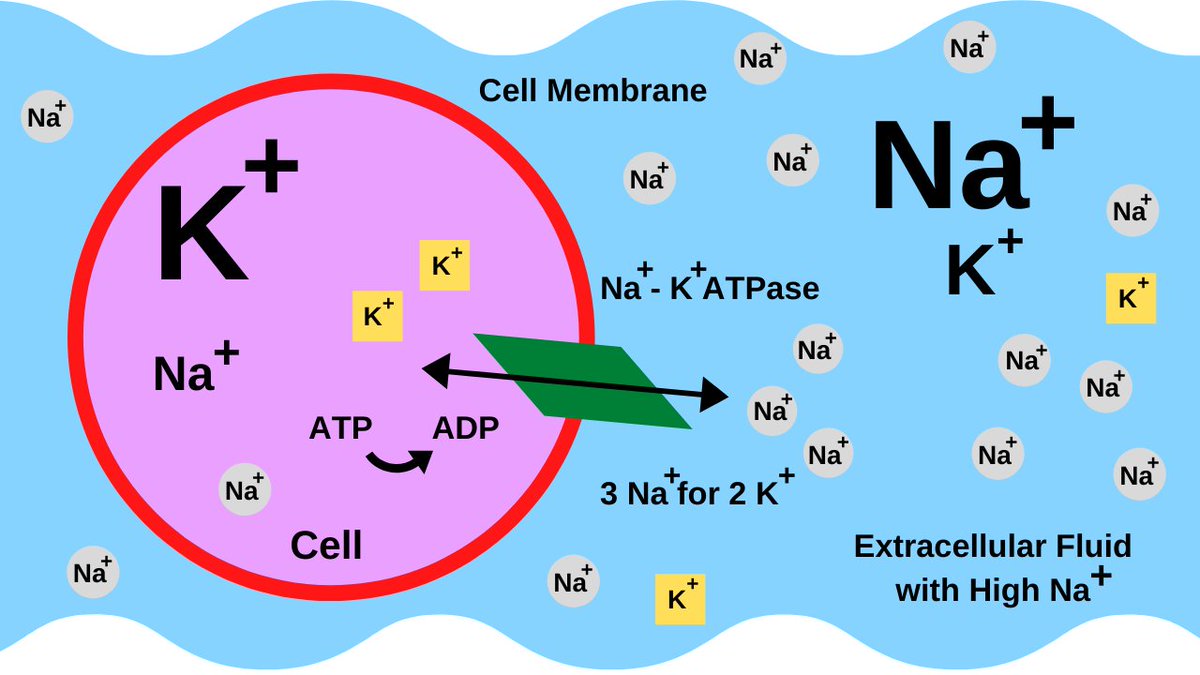
The concentration of potassium in the cell is 30x higher than outside the cell
This difference is regulated by the sodium-potassium ATPase pump
Once activated, the Na-K-ATPase exchanges 2 extracellular potassium ions for 3 intracellular sodium ions
This difference is regulated by the sodium-potassium ATPase pump
Once activated, the Na-K-ATPase exchanges 2 extracellular potassium ions for 3 intracellular sodium ions
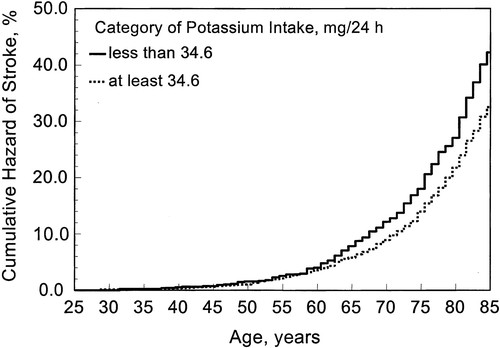
Consuming <1353 mg/day of potassium increases the risk of stroke by 28%
An intake between 3500-4700 mg/day is associated with a 24% reduced risk of stroke compared to <3500 mg/day (Bazzano et al 2001)
Most people get <2800 mg a day
An intake between 3500-4700 mg/day is associated with a 24% reduced risk of stroke compared to <3500 mg/day (Bazzano et al 2001)
Most people get <2800 mg a day
The blood pressure-lowering effects of potassium were first described in 1928
Recent studies have demonstrated how increasing potassium bicarbonate intake from 1,170 mg/day to 4,680 mg/day for 6 weeks can reduce rising blood pressure (PMID: 9931076)
Recent studies have demonstrated how increasing potassium bicarbonate intake from 1,170 mg/day to 4,680 mg/day for 6 weeks can reduce rising blood pressure (PMID: 9931076)
The Dietary Approaches to Stop Hypertension (DASH) study concluded that:
A diet rich in fruit and vegetables has a much more beneficial effect on blood pressure than the Standard American Diet high in sugar, fat, and added salt (PMID: 9099655)
A diet rich in fruit and vegetables has a much more beneficial effect on blood pressure than the Standard American Diet high in sugar, fat, and added salt (PMID: 9099655)
Potassium depletion impairs insulin production and promotes carbohydrate intolerance in humans
High dietary potassium intake is also associated with a reduced risk of type 2 diabetes (PMID: 22322920)
pubmed.ncbi.nlm.nih.gov
High dietary potassium intake is also associated with a reduced risk of type 2 diabetes (PMID: 22322920)
pubmed.ncbi.nlm.nih.gov

The old RDA for potassium is set at 4,700 mg/d
The WHO has set the adequate intake for potassium at 3,400 mg/d for men and 2,600 mg for women
For primary prevention of hypertension, it has been recommended to get over 3,500 mg/d of potassium
(PMID: 14656957)
The WHO has set the adequate intake for potassium at 3,400 mg/d for men and 2,600 mg for women
For primary prevention of hypertension, it has been recommended to get over 3,500 mg/d of potassium
(PMID: 14656957)
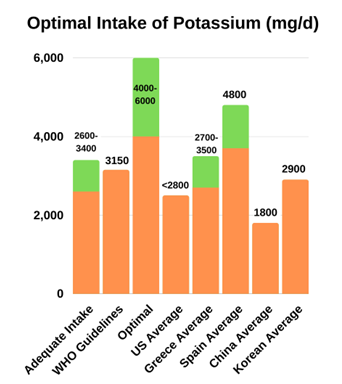
American adults only get around 2,800 mg/day of potassium
In Europe, Greece has the lowest potassium intake at 3,536 mg/day for men and 2,730 mg/day for women,
The highest average intake of potassium is in Spain, at 4,870 mg/day for men and 3,723 mg/day for women
In Europe, Greece has the lowest potassium intake at 3,536 mg/day for men and 2,730 mg/day for women,
The highest average intake of potassium is in Spain, at 4,870 mg/day for men and 3,723 mg/day for women
Increasing potassium by 700-1,200 mg/d can result in a 2-3 mmHg reduction in systolic blood pressure (PMID: 6984027)
A meta-analysis of 15 prospective cohort studies, found that increasing potassium intake by 1,640 mg/d was linked to a 21% lower risk of stroke (PMID: 21371638)
A meta-analysis of 15 prospective cohort studies, found that increasing potassium intake by 1,640 mg/d was linked to a 21% lower risk of stroke (PMID: 21371638)
Hunter-gatherer tribes have been estimated to consume anywhere from 5,850-11,310 mg/day of potassium (PMID: 2981409; Denton 1982)
Sodium intake was estimated at 1,131-2,500 mg/day but this did not take into account sodium consumed from blood, interstitial fluids, and salty water
Sodium intake was estimated at 1,131-2,500 mg/day but this did not take into account sodium consumed from blood, interstitial fluids, and salty water
Industrialized societies that consume a lot of processed foods get about 2,100-2,730 mg/day of potassium and about 3,400 mg/day of sodium or a K/Na ratio of 0.7:1
The potassium-to-sodium ratio of our ancestors likely sits somewhere between 2-3:1
The potassium-to-sodium ratio of our ancestors likely sits somewhere between 2-3:1
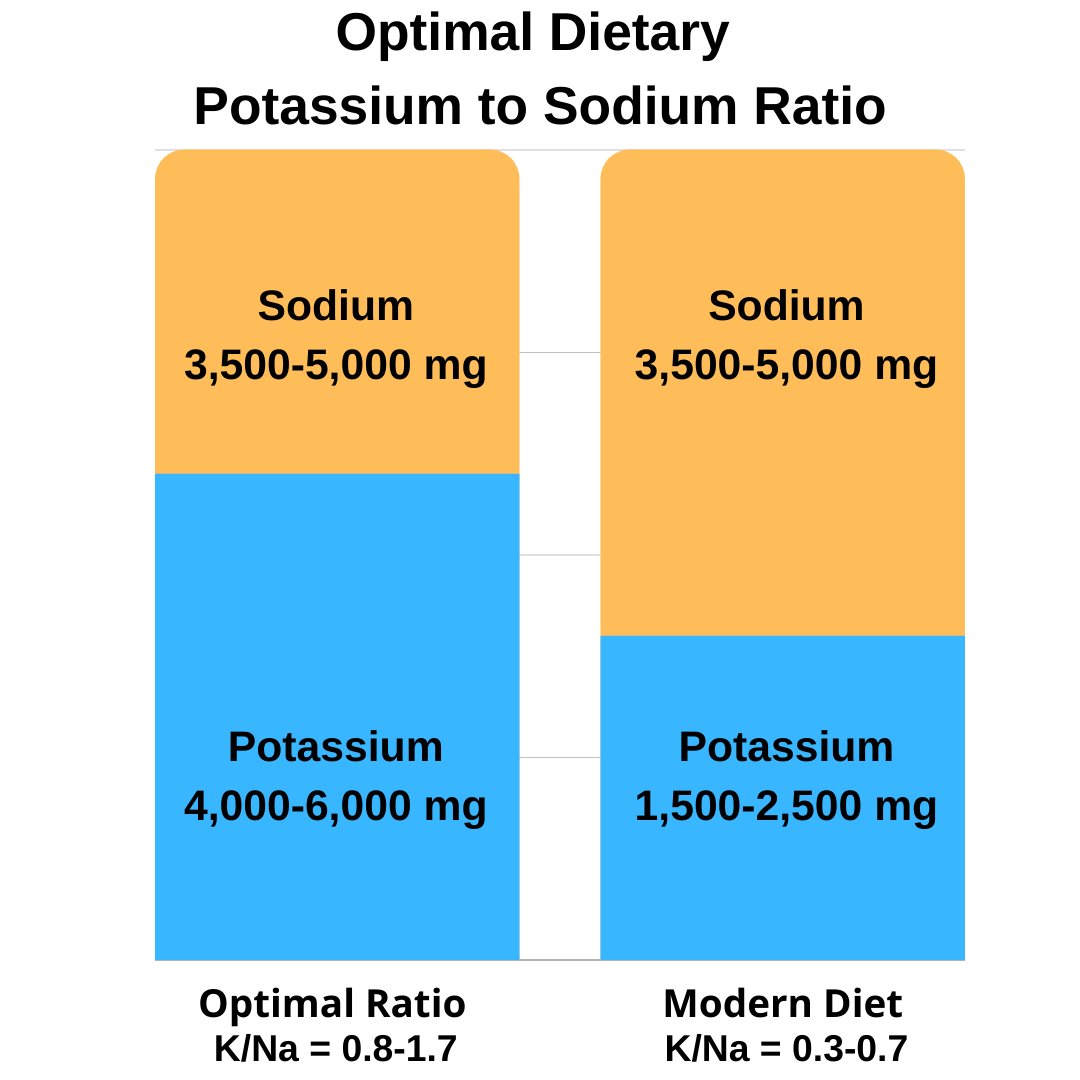
How much potassium a person should consume per day depends on many factors, such as blood pressure, genetics, and sodium intake.
There is also a lot of variability in people’s blood pressure responses to low and high sodium/potassium intake.
There is also a lot of variability in people’s blood pressure responses to low and high sodium/potassium intake.
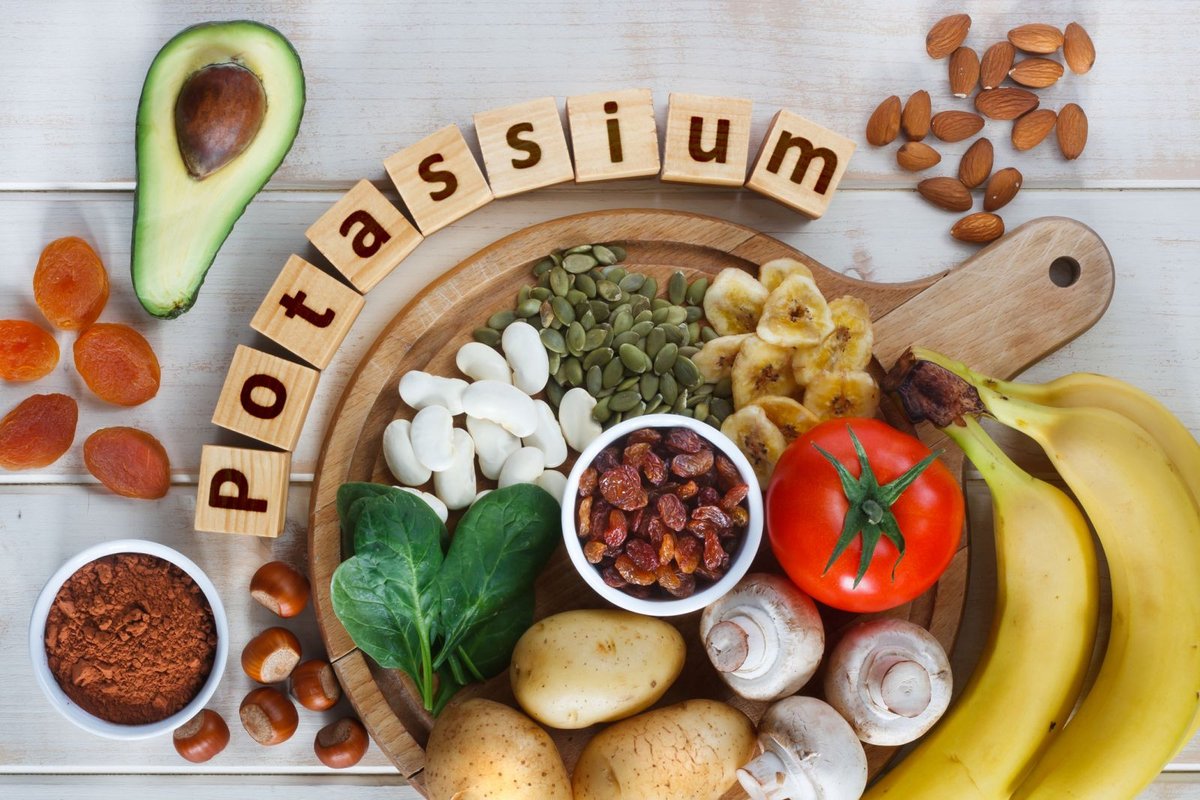
Bananas have potassium but there are at least 8 other foods with more potassium than bananas
The highest one being white potatoes - 1000 mg from 1 medium potato
The highest one being white potatoes - 1000 mg from 1 medium potato

Learn all about potassium and the other minerals from my book with @drjamesdinic The Mineral Fix
Over 500 ratings!
amzn.to
Over 500 ratings!
amzn.to

Loading suggestions...