

Rest defence is a critical but often overlooked aspect of modern soccer tactics.
It refers to the defensive structure a team maintains while they are in possession of the ball, preparing for a potential loss of possession.
Let’s break it down: 👇🏻👇🏻

While a team attacks, they don’t fully commit all players forward. A well-structured rest defence ensures that if the ball is lost, the team is ready to win it back quickly or limit the opposition’s counterattack.

•Compactness: Keep players close together to deny space.
•Positioning: Ensure players are positioned to cut off passing lanes.
•Balance: Maintain enough players behind the ball to deal with transitions.
The moment a team loses the ball is called the defensive transition. Teams with a solid rest defence can immediately press to win the ball back (counter-press) or delay the opposition’s counterattack.
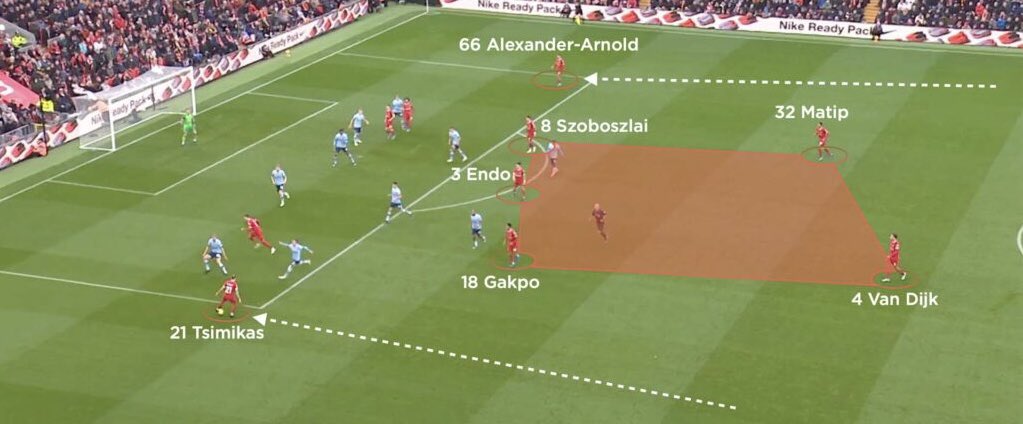
•A fullback pushing forward for width, while the opposite fullback stays back to maintain balance.
•Midfielders holding deeper positions to prevent the opposition from exploiting central spaces in transition.
In elite soccer, transitions are often where goals are scored. A poor rest defence can lead to being caught out of position, while a strong rest defence prevents this and can even create opportunities to regain possession high up the pitch.
•Pep Guardiola’s Manchester City: Known for controlling the ball and having players positioned to counter-press immediately after losing possession.
•Jurgen Klopp’s Liverpool: Rest defence underpins their high-pressing and gegenpressing style, cutting off counters before they develop.
•Defensive Midfielders: Act as the anchor, breaking up counters. Examples include Rodri, Casemiro, and Declan Rice.
•Centre-backs: Must stay alert to opposition runs and clear any long balls over the top.
•Fullbacks: Adjust their positioning to balance attacking involvement and defensive responsibility.
•Positional Play Drills: Ensuring players occupy the right spaces.
•Transition Scenarios: Simulating losing possession and recovering defensive structure.
•Video Analysis: Reviewing how the team’s rest defence was exploited and adjusting tactics accordingly.
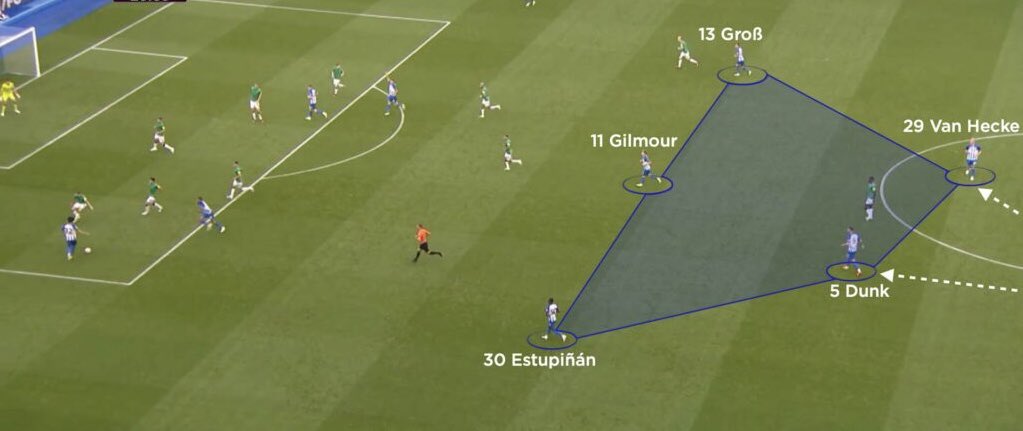
Rest defence is about being proactive, not reactive. It’s a safeguard that ensures your team is always prepared to handle the chaos of losing possession, turning defence into attack seamlessly.
Have you noticed your favorite team’s rest defence in action? Let’s discuss! 🗣️⚽

@jb_soccercoach" target="_blank" rel="noopener" onclick="event.stopPropagation()">youtube.com

@Coach_Osku
@MoSouisse
@JustcoachMD
@PeterPrickett
@CoachingFamily
@CoachingManual
@TheS_Resource
@CoachUdofia
@ViCoCoaching
@Leecosgrove10
@power_ray
@BreakthruSoccer
@ExchangeCoaches
@ManCoachNet
@Smedley033
@205_Academy
@JGFootball2023
@GRFootball
@RJPcoach
@Coach_Temisan
@CoachDavidBaird
@SSPlanner
@Coach_B_Godwin
@ViCoCoaching
@SessionShareNet
@SSPlanner
@touchtightcoach
More from this author
The Box Midfield in Soccer: A Tactical Breakdown The “box midfield” is an increasingly popular concept in modern soccer, often used by top managers t...
Overlapping vs. Underlapping Runs in Soccer: Explained Let’s break them down! 🧵👇 https://t.co/pPma1yQZaM
Thread: How to Utilize Width and Length in Soccer: Key Principles In and Out of Possession 🧵👇🏻 https://t.co/fAGw1uGfmF
Thread: How to Play Through a High Press in Soccer We break it down here 🧵👇🏻 https://t.co/uPFqGNpQAe
Recent Threads
I’ve recently seen a lot of people criticizing smaller indie projects for releasing merchandise or doing kickstarter funding to fund their projects. T...

I compiled all the specific references I noticed in May's moveset! #イニブ #g_bd #g_bdr #GBDR https://t.co/PvNHzH6yj6

taekook taguan ng anak au wherein jk received a surprising gift from their xmas party… [ christmas special 🎄] https://t.co/WY3C450KpV

@HitWithAHeart I hear him before I see him. The weight of his steps on the stairs. Slower than usual. Measured. Like he’s already bracing for whatev...

(1/7) I'm not going to do a full trailer breakdown for Zach Cregger's Resident Evil film, since we have an early form of the script you can place a lo...

Nikola Jokic is 0-6 against 50+ win teams in the playoffs. https://t.co/l5hCeVCoUj

Popular Threads
Here's 40 TikTok hooks that could make you go viral. (Not in any particular order) //THREAD//

A thread: Pakistani newspaper Dawn's front pages from 4th december 1971 to 20 December to see how they kept their own people in the dark. This was on...

The ICT Mentorship Core Content Month 1 Summarized: https://t.co/6tXJxPMDhm

Top-40 Footballers with Most Goal Contributions (Goals + Assists) in history. [ A MEGA THREAD ] https://t.co/gAb3QcqdYQ

Winning the Chevening Scholarship + 12 Strong Samples of the Chevening Essay There are four important Essays on the Chevening Scholarship application...

Top 20 Players with the most goals + assists in football history, only players with assists available (following the Opta criteria for assists) Seaso...
